Podcast Episodes
Back to Search
How Did God Make Us Alive? Colossians 2:13–15, Part 2
The plights of our sinful state — deadness, blindness, hardness, and inability — were all resolved decisively in the moment God made us alive.
3 years, 1 month ago
How Dead Are We Before Christ? Colossians 2:13–15, Part 1
Death before life is the testimony of all who really live. Do you know how bleak things were before God brought you to life?
3 years, 1 month ago
The Glorious Reality Baptism Reveals: Colossians 2:11–12, Part 3
Our union with Christ in his death and resurrection should tangibly, observably define how we live in this world.
3 years, 1 month ago
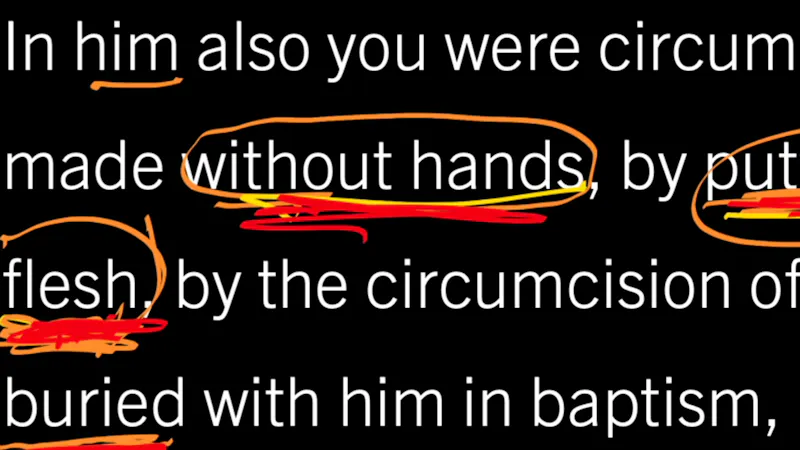
What Is a Circumcision Without Hands? Colossians 2:11–12, Part 2
What is the body of the flesh, and how do you put it off? What exactly is cut away in this “circumcision of Christ”?
3 years, 2 months ago
The Sign of Circumcision and Baptism: Colossians 2:11–12, Part 1
Christians have received a circumcision that is “made without hands.” What is this circumcision, and what does it do?
3 years, 2 months ago
Filled with the Head of All Authorities: Colossians 2:6–10, Part 4
To be filled in Christ is to possess the riches of his inexhaustible love, unsearchable wisdom, and unrivaled rule.
3 years, 2 months ago
All Deity in Christ Bodily Now: Colossians 2:6–10, Part 3
The incarnation of the Son of God reveals any denigrating of the human body as a man-made, deceitful philosophy.
3 years, 2 months ago
What Is Wrong with Philosophy? Colossians 2:6–10, Part 2
Christ is the treasure chest of wisdom and knowledge. Any philosophy that would exclude him excludes Wisdom himself.
3 years, 2 months ago
The Divine Tradition of Walking in Christ: Colossians 2:6–10, Part 1
Faith rooted in Christ, built on him as its firm foundation, will not be blown about by every new gust of doctrine.
3 years, 2 months ago
Spiritual Antibodies Against Delusion: Colossians 2:4–5
Many people are deceived by false teaching and lost while believing that they know the truth. How do we resist such deceptions?
3 years, 2 months ago