Episode Details
Back to Episodes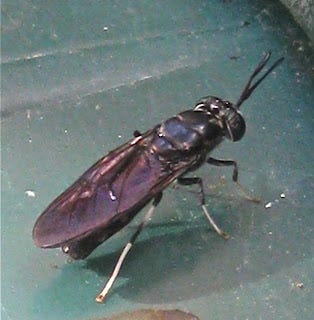
What's That Critter in My Compost & Worm Bins?
Description
In Episode 206 of the Garden Basics with Farmer Fred podcast, we did a deep dive into worm bins (Oops. That sounds like a new, bad reality sports competition TV program). Sacramento County Master Gardener Susan Muckey told us everything we need to know to start vermicomposting, the end result being raising worms to create excellent quality compost for your garden. One thing she warned us about is mentioned in the short podcast segment, above. And it may be a critter that might have initially shocked you when you opened up your worm bin or turned your compost pile: the soldier fly.
The adults look like inch-long black wasps and do a fair share of loud buzzing when disturbed. But the soldier fly is harmless...to you. They do not bite, they only live a couple of days, usually die soon after having sex and laying eggs on the tops of partially composted kitchen scraps. Some critters have a nice life.
The soldier fly larvae - the maggots - are also about an inch long, gray-white, and segmented. When exposed to light, they will scurry deeper into the compost bin, where they are voracious feeders on decaying, nitrogen-rich foods.
Those maggots are very good decomposers of organic material, helping along the process in your compost bin. According to Oregon State University, the soldier fly also inoculates the compost with beneficial bacteria from other sources. Because they are such efficient feeders of manures, their presence can limit the growth of nuisance fly species in that same manure pile.
Soldier flies can be found throughout the U.S., wherever there is moist, rotting food. Depending on the composting system, soldier flies and their larvae may be either good guys... or a major detriment.
In a regular composting bin, the soldier fly larvae are a welcome addition, speeding along the decomposition. Soldier flies do such a good job digesting your garbage, there are websites that will be glad to show you how to build a system to raise soldier flies.
It is their appetite that is a double edged sword for home composters, especially vermicomposters.
In a vermicomposting system - a worm bin such as the Can O' Worms - soldier fly larvae are competing with the worms for food. Plus, they consume so much material, they generate a lot of heat. And in the summer, that may be more heat than your composting worms would be willing to tolerate. Temperatures over 90 degrees will bring worm work to a near halt in a worm bin, or worse, unless you work to keep them cooler.
For worm aficianados, several university studies offer these tips if you want to remove the soldier flies and their larvae from your vermicomposting system and attempt to keep them out:
• Make sure you have enough leaves, dry grass, shredded paper and other organic "brown" material in the pile to cover the nitrogen food sources by at least two to four inches.
• Be sure to bury food scraps deeply in the pile and cover them well.
• Put window screen over any holes in the bin and glue it down with a waterproof caulking (like an exterior household caulk) on the inside of the bin to help exclude the flies in their egg laying stage.
• Birds love soldier fly larvae so you can remove them and feed them to chickens. Or just toss them on the ground and other birds may find them.
Or, remove the maggots and put them into another compost bin or pile. Of my composting systems, my favorite is the Tumbleweed, which produces usable compost quicker than the
Listen Now
Love PodBriefly?
If you like Podbriefly.com, please consider donating to support the ongoing development.
Support Us