Episode Details
Back to Episodes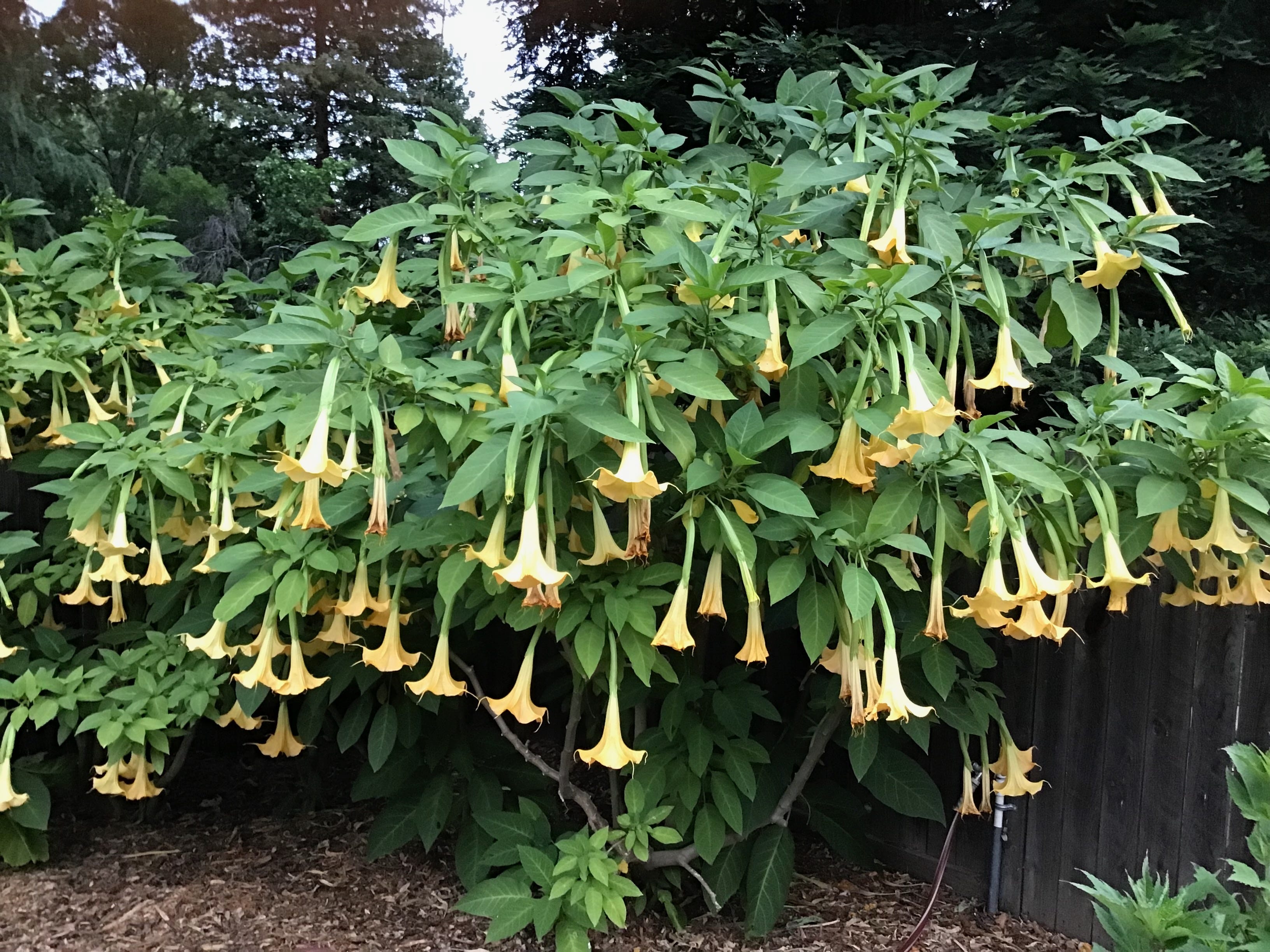
Garden Shows for the Nose
Description
GARDEN SHOWS FOR THE NOSE
Looking for a garden show for your nose? There are a wide variety of fragrant plants that do well in various USDA zones, providing olfactory pleasure at various times of the year. Besides such sensory stalwarts as gardenias and roses, there are many other aromatic perennials and shrubs that can add a welcome scent to your evening stroll through the yard.
• Brugmansia versicolor ‘Charles Grimaldi’ (pictured above, USDA Zones 9, 10). Also known as “Angel’s Trumpet”, this is a fast-growing, flowering shrub that can get 10 feet tall in two or three years. The show-stopper part of this plant is the nearly non-stop bloom in mild areas. This Brugmansia features huge (over a foot long), yellow, trumpet-shaped flowers. An added bonus in late spring and early summer is the warm evening aroma of those blooms, when the air is still: a perfume-like scent that hits your nose as soon as you step into the yard. It does best with some afternoon shade and regular watering. A word of warning about this plant: all parts are considered poisonous, so it may not be right for the gardener living with indiscriminate munchers, either pets or children. However, there are plenty of other plants available that give off a warm-weather show for the nose in the evening:
• Nocturnal daylilies (Hemerocallis). Most USDA zones. Nocturnal daylily flowers open late in the afternoon and stay open throughout the evening until the morning. Many named hybrids are available, including the fragrant Arctic Ruffles, Nathan Carroll, Full Moon Rising and Winds of Tide.
• Tuberose (Polianthes tuberosa). Most USDA Zones. The blooms of this perennial tuber, a native of Mexico, will fill your backyard with a heady scent during summer evenings. The grass-like leaves can get to three feet tall, with white, tubular flowers clustered at the top. A good choice for containers, the tuberose needs regular water to look its best. If your winter temperatures stay above 20 degrees, the rhizomes can stay in the ground all year. Otherwise, lift and store in a protected area.
• Flowering Tobacco (Nicotiana sylvestris). Most USDA zones. The fragrant, tubular flowers of this tender perennial (usually planted as an annual) are attractive to hummingbirds and butterflies. The plant itself gets about four to five feet tall and two feet wide. Another flowering tobacco variety with great nighttime aroma is the ‘Grandiflora’ (Nicotiana alata).
• Four O' Clocks (Mirabilis jalapa). (Most USDA zones; treat as an annual in colder regions.) This tuberous rooted perennial grows quickly to three feet high and wide, with trumpet-like flowers in white, red or yellow that open at about the time you get home from work. Although the top will die back from a freeze, it will usually sprout the following spring.
• Star Jasmine (Trachelospermum jasminoides). (USDA zones 7-10) A popular evergreen twining vine. It is most noted for the fragrance of its small, white flowers this time of year. Can be used against a trellis, or as a spreading ground cover. Does well with afternoon shade and regular water.
• Moonflower (Ipomoea alba). (USDA zones 9-10, treat as a summer annual elsewhere). A relative of the morning glory, the moonflower is a perennial vine that shoots up 20 feet or more in one season, perfect for a fence or trellis. The six-inch white flowers are quite fragrant, and open in the evenings or cloudy days.
• White Evening Primrose (Oenothera caespitosa). (Most USDA zones). Grows about a foot tall and wide. This perennial has fragrant, three-inch white flowers that put on their profuse blooming show during summer evenings.
Other fragrant shrubs for daytime aroma
• Banana shrub (Magnolia figo, formerly Michelia figo). (USDA Zones 8-10). This e