Episode Details
Back to EpisodesThe Bloody Chamber
Description
Bluebeard and his bloody chamber full of murderous secrets is widely known as one of Charles Perrault’s fairy tales, but it’s part of a larger family of folk tales and ballads we examine in this episode.
Our show begins with a brief summary of this tale in which a young woman is courted by the mysterious and strangely whiskered nobleman, Bluebeard. After lavishly entertaining the woman and her family in his castle, it’s agreed they should marry. Soon thereafter, Bluebeard departs on a journey leaving his bride keys to all the rooms of his estate, all of which to which may use — but one. Curiosity, however, getting the better of her, she unlocks the forbidden door and must face Bluebeard’s murderous rage at her disobedience.
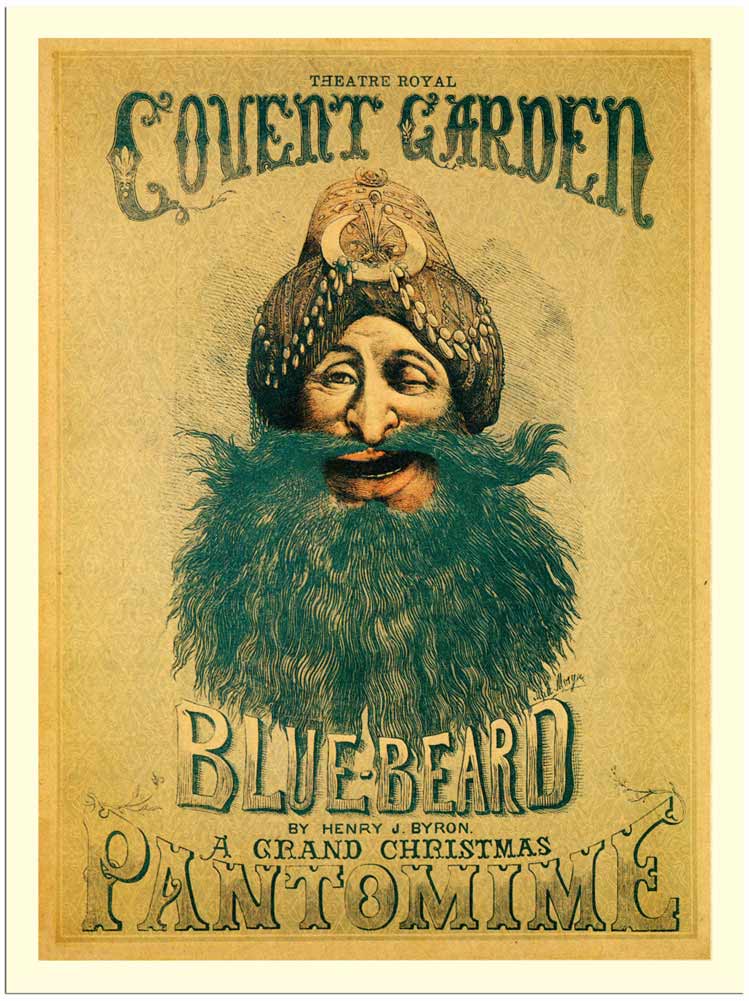
Perrault’s 1697 story, which draws upon older folk tales, is primarily known thanks to its inclusion in collections of fairy tales intended for children. Today, however, you’re unlikely to find the gruesome yarn anthologized for younger readers. If included at all, it may be sanitized, as it was in the 1970 children’s record from which we excerpted a clip at the show’s open.
Along with fairy tale collections and cheaply printed chapbooks, the Bluebeard story was largely preserved through theatrical representation. We look at a number of productions from the late 18th and early 19th century that treated the story in a semi-comic or melodramatic fashion, often combining elements of the Italian Commedia dell’arte, such as Harlequin and his antics. Wilkinson provides of some readings of the comedic dialogue as well as stage directions which often made the “bloody chamber” a lavishly designed and spooky centerpiece of the production.
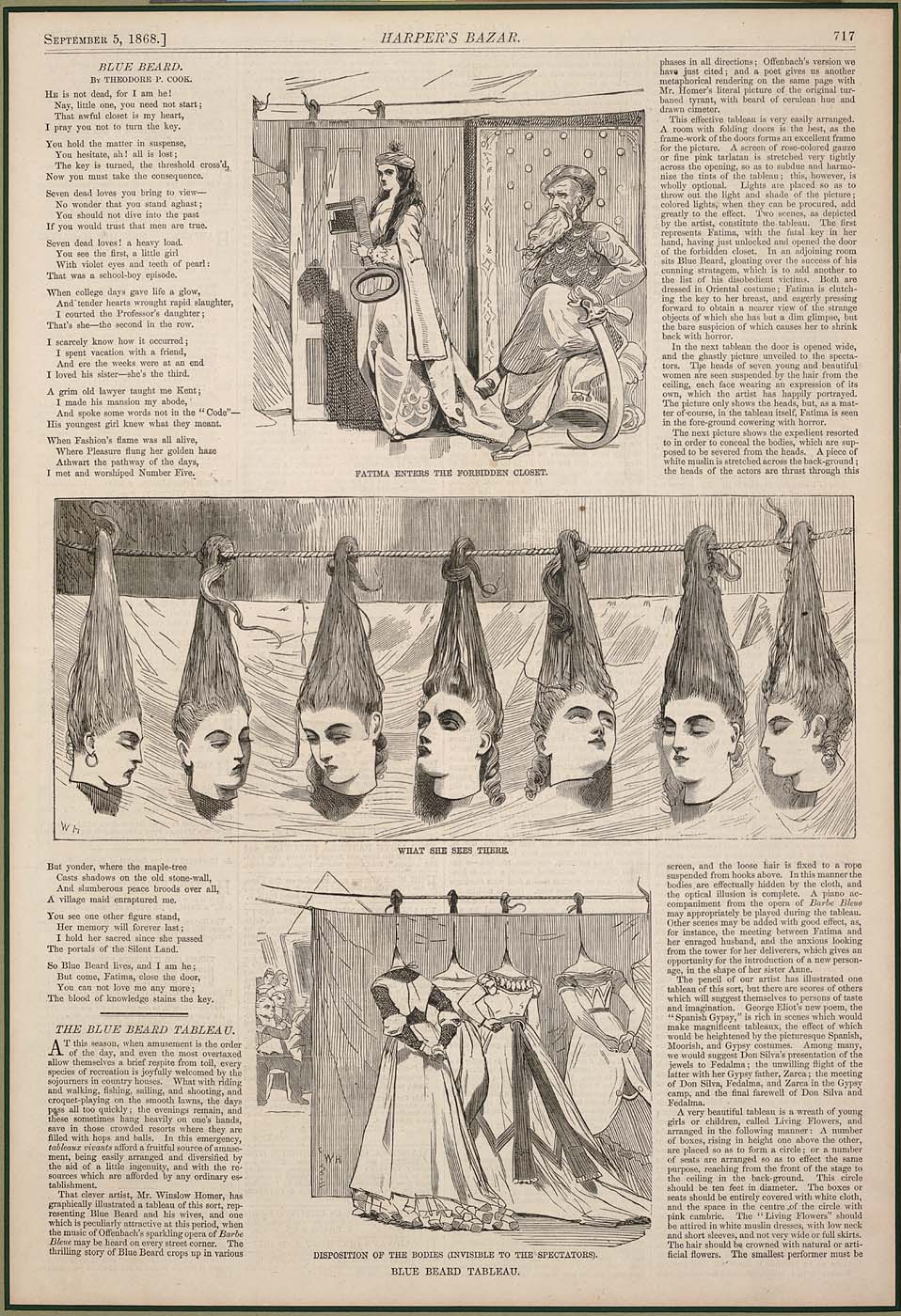
Particularly important to how were think of Bluebeard today is the 1798 production Blue Beard, or Female Curiosity!, which moved the story to Turkey in order to exploit a growing fascination with the East. This image of Bluebeard and indeed its importance in the English-language repertoire is suggested by the inclusion of the play in the 1993 Jane Campion film, The Piano, a story set during this period. The theatrical tradition of representing Bluebeard’s wives as bloody heads severed from their bodies is demonstrated in this scene as well as many 19th-century photographs of such stagings.
Listen Now
Love PodBriefly?
If you like Podbriefly.com, please consider donating to support the ongoing development.
Support Us