Episode Details
Back to EpisodesThe Baba Yaga
Description
This episode explores the Russian witch, the Baba Yaga, tales in which she appears, possible origins, and regional variations on the character.
We begin by retelling one of the skazi (folk tales) in which she’s particularly well-definined, “Vasilisa the Beautiful,” a version recorded in the mid-1800s by the folklorist Alexander Afanasyev, Russia’s answer to the Brothers Grimm, .
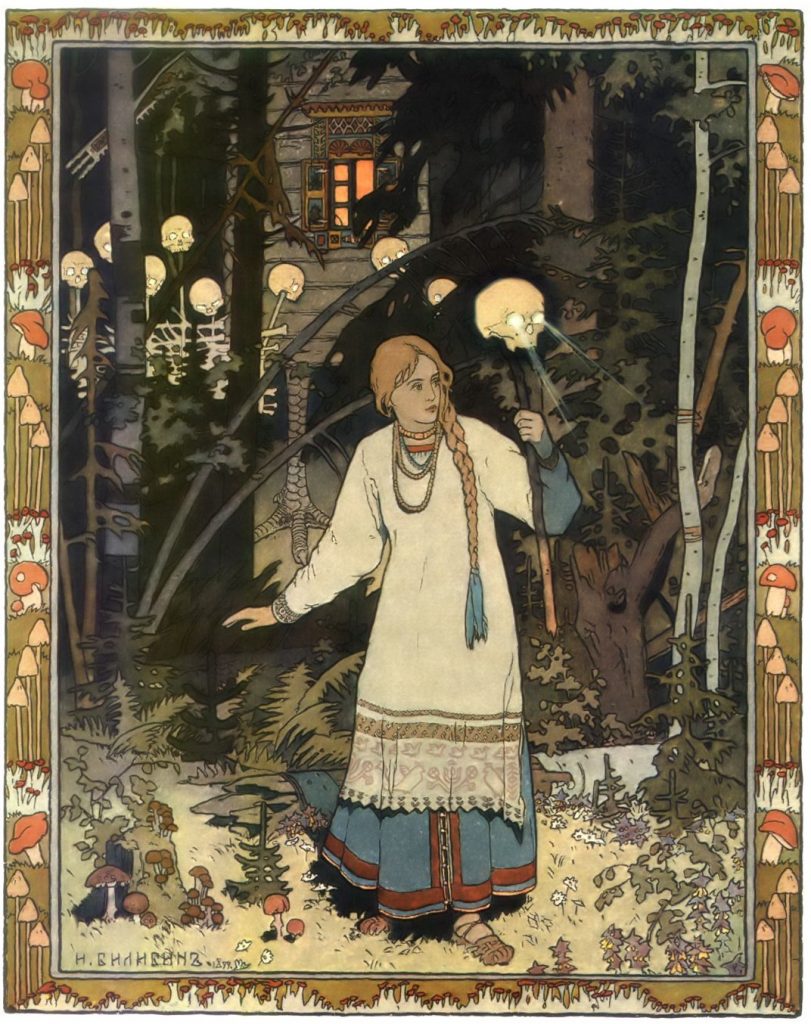
Without spoiling the story, I can say that it bears some parallels to “Cinderella,” with a wicked stepmother and step-sisters grievously imposing on the young Vasilisa and sending her into an encounter with the Baba Yaga. She is aided in the tale by a magic doll bequeathed her by her dying mother.
Like nearly all Baba Yaga stories, this tale features the witch’s famous house perched atop two immense chicken legs on which it turns to reveal it’s entrance if the proper spell is spoken. Around the house, in this story as in most others, is a fence made of human bones and topped by skulls.
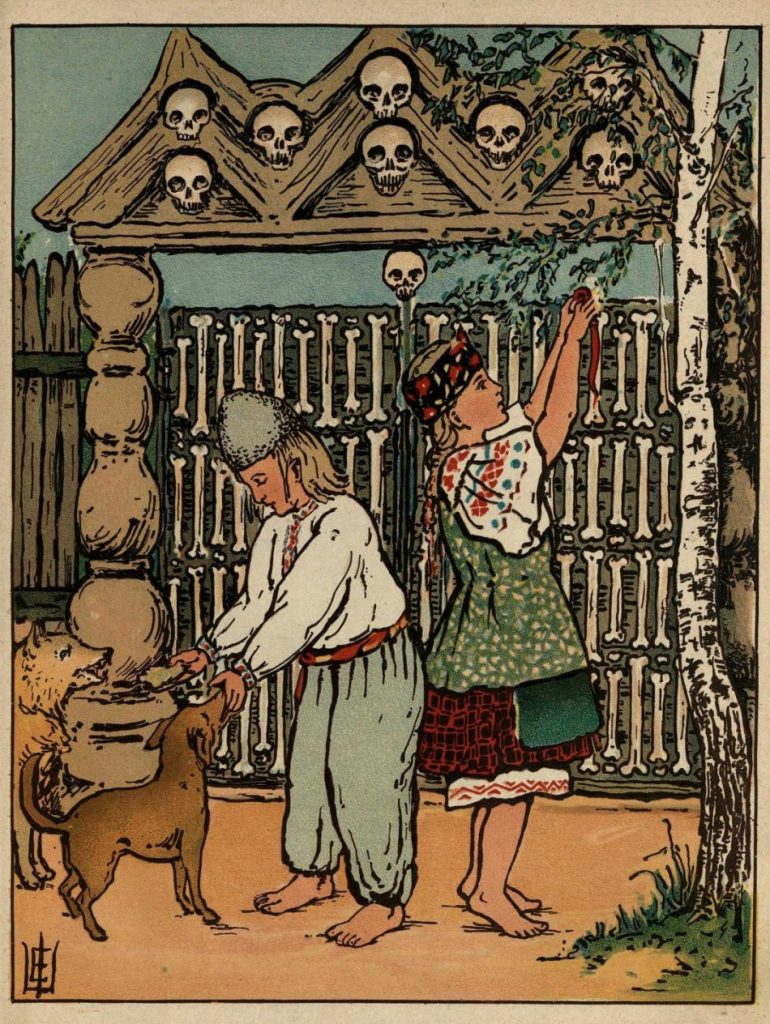
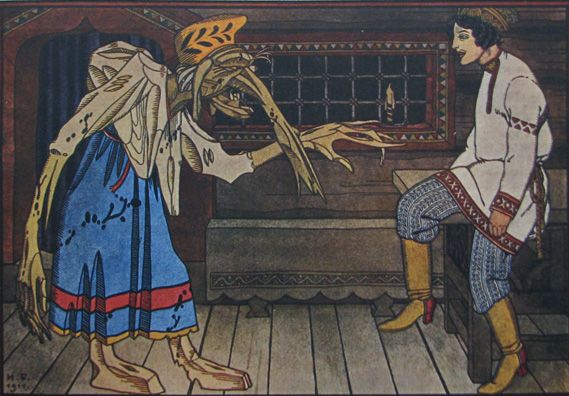
The witch herself is not much described in the text of “Vasilisa,” but in the folklore of the Eastern Slavs, she is generally imagined as an hunchbacked old crone, usually large, and with a large nose, sometimes said to be of iron, as are her teeth sometimes. She’s also occasionally described as an ogress because of her nasty habit of eating visitors, especially children, or those who fail her when she puts them to work (what she often does with visitors).
Listen Now
Love PodBriefly?
If you like Podbriefly.com, please consider donating to support the ongoing development.
Support Us