Episode Details
Back to EpisodesDrowned in Blood: Butcher Lore
Description
Our seasonal look at butcher lore begins with the slaughter of an immense ram as related in the centuries-old English song, “The Derby Ram” (AKA “The Darby Ram”). In the lyric, a butcher and his boy assistant are “washed away in the blood,” giving us our episode’s title. The song is roughly enacted in an old Christmas folk play from Derbyshire, “Old Tup” (an old local word for “ram.”) We hear a montage of snippets of the song from The Kossoy Sisters, John Kirkpatrick, John Roberts, and Matt Williams.
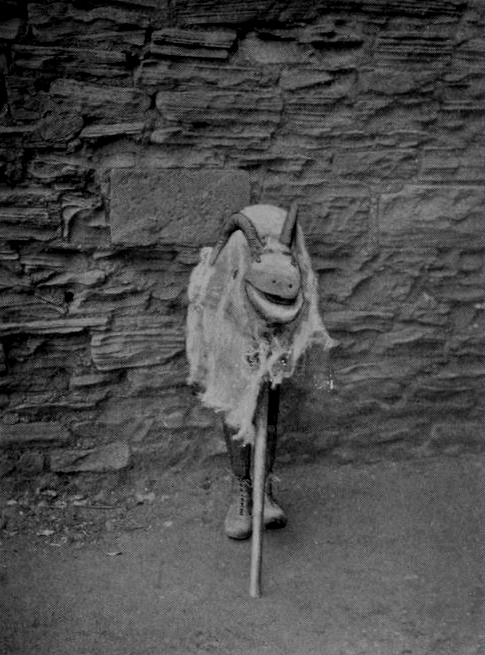
While the 19th-century trend among folklorist to view mummer’s plays like this as vestiges of ancient pagan rites is no longer accepted, the notion does suggest our next topic: a Germanic emphasis on sacrifice during the month of November, which the Anglo-Saxons called Blod-monath (“month of sacrifice.”) We look at the Scandinavian yuleblót marking the beginning of Winter and its connection to Freyr and his sister Freyja, both symbolized by boars or swine sacrificed in this rite. Along the way, we hear Mrs. Karswell read a famous 11th-century account by the chronicler Adam of Bremen describing particularly spectacular sacrifices said to be offered in the ancient temple that once stood outside Uppsala, Sweden. We also touch upon the Anglo Saxon Modranicht or “Night of the Mothers,” which was celebrated on Christmas Eve.
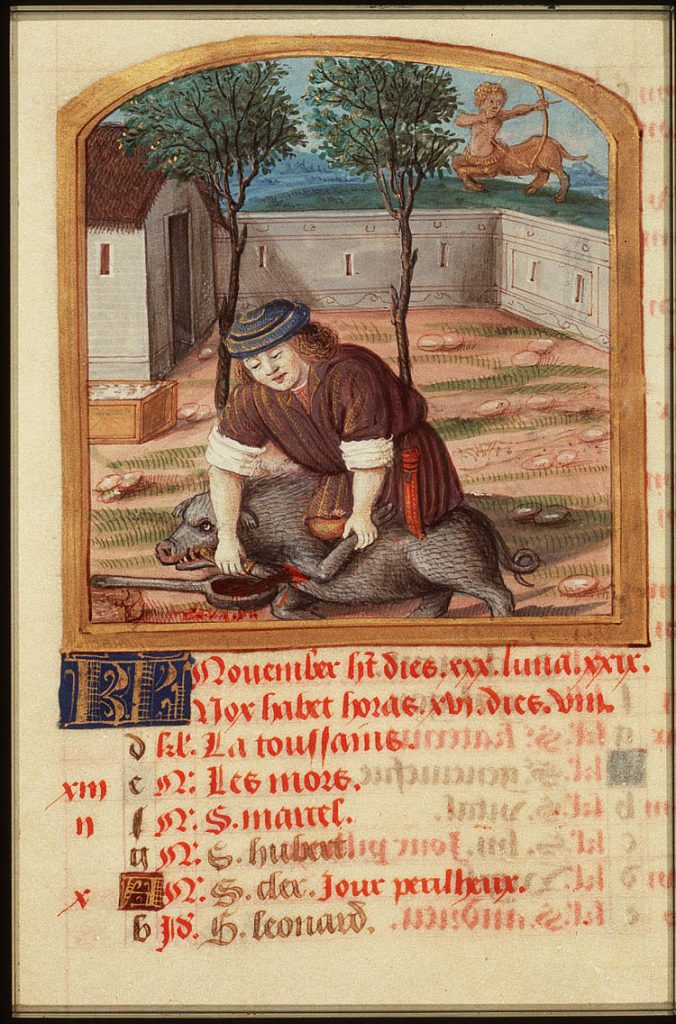
Next we discuss the slaughter of swine, November’s traditional “Labor of the Month”among medieval peasantry. Its aristocratic equivalent is the boar hunt carried out in November and December. We have a look at the serving of boar’s head at Christmas among the nobility and hear a snippet of the medieval Boar’s Head Carol as well as a whimsical tale told at Oxford supposedly explaining how the boar’s head custom arrived at Queen’s College.
Listen Now
Love PodBriefly?
If you like Podbriefly.com, please consider donating to support the ongoing development.
Support Us