Episode Details
Back to EpisodesA Journal of the Plague Year
Description
The Great Plague of London of 1665 to 1666 is vividly portrayed in Daniel Defoe’s A Journal of the Plague Year, which we’ll be examining closely in this episode. As the text is quite entertaining (much more so than his better known Robison Crusoe) we’ll be hearing more extensive quotes from the material than usual, delivered as usual by our diligent reader Mrs. Karswell.
We begin with a look at the presumed connection between the nursery rhyme, “Ring Around the Rosie” and the Black Death. Though the facts here may not satisfy our desire for macabre secrets hidden in plain sight, we will find evidence for something similar in a children’s song we review at the show’s conclusion. We hear a snippet of the song as rendered in the game Dead Space.
Defoe’s book occupies a strange place between history and historical fiction. As Defoe was 5 years old in 1655 and the book was published in 1722, the story is technically a work of fiction. However, the narrative is an excellent window into contemporary perceptions of the tragedy as well as treasure house of factual information. Characters within the story are nearly all actual individuals. Particular events described have widely been corroborated in contemporaneous accounts. Particular dates and locations are also meticulously anchored in reality – so much so, that scholars have frequently treated it as a contemporaneous source. Hints given in the text suggest that Defoe was in fact telling the story of his uncle, Henry Foe, who lived through the Great Plague in London and shared a profession (saddler) with the story’s narrator.
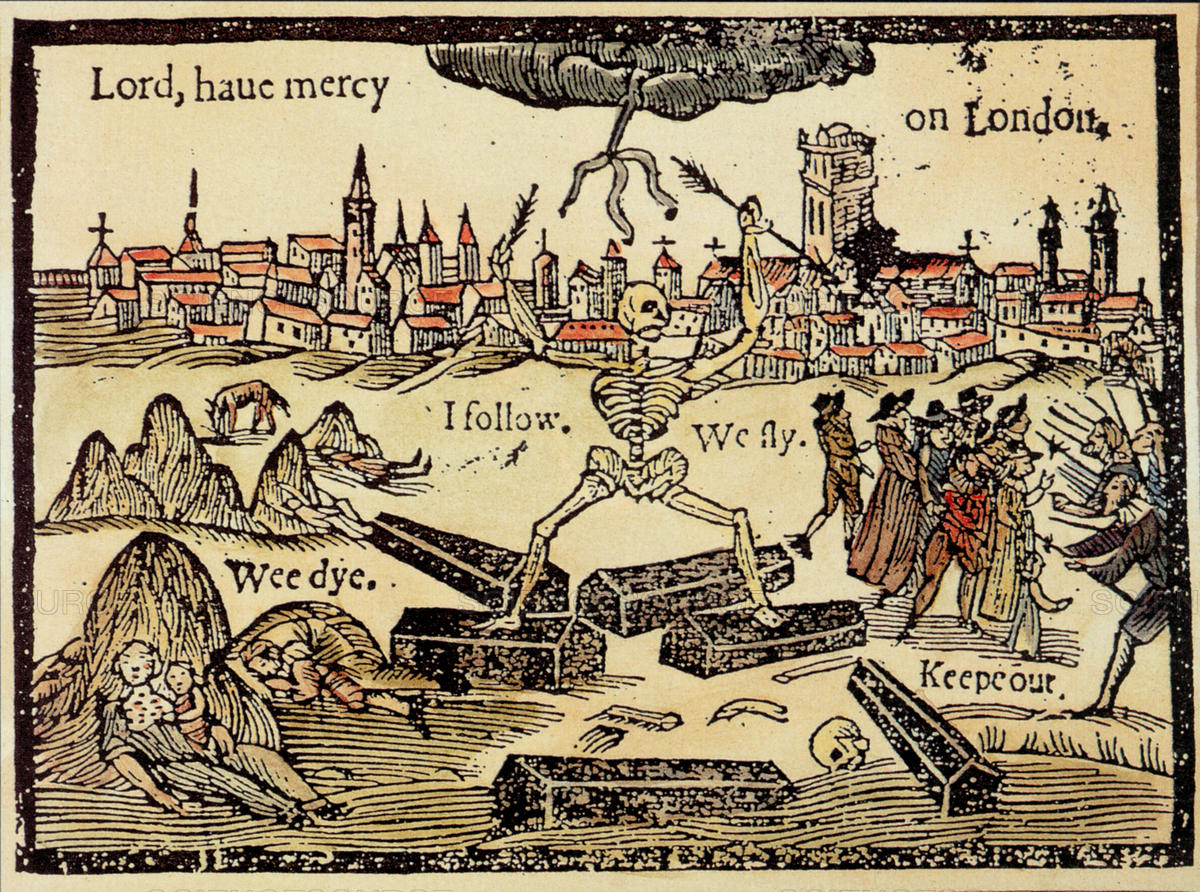
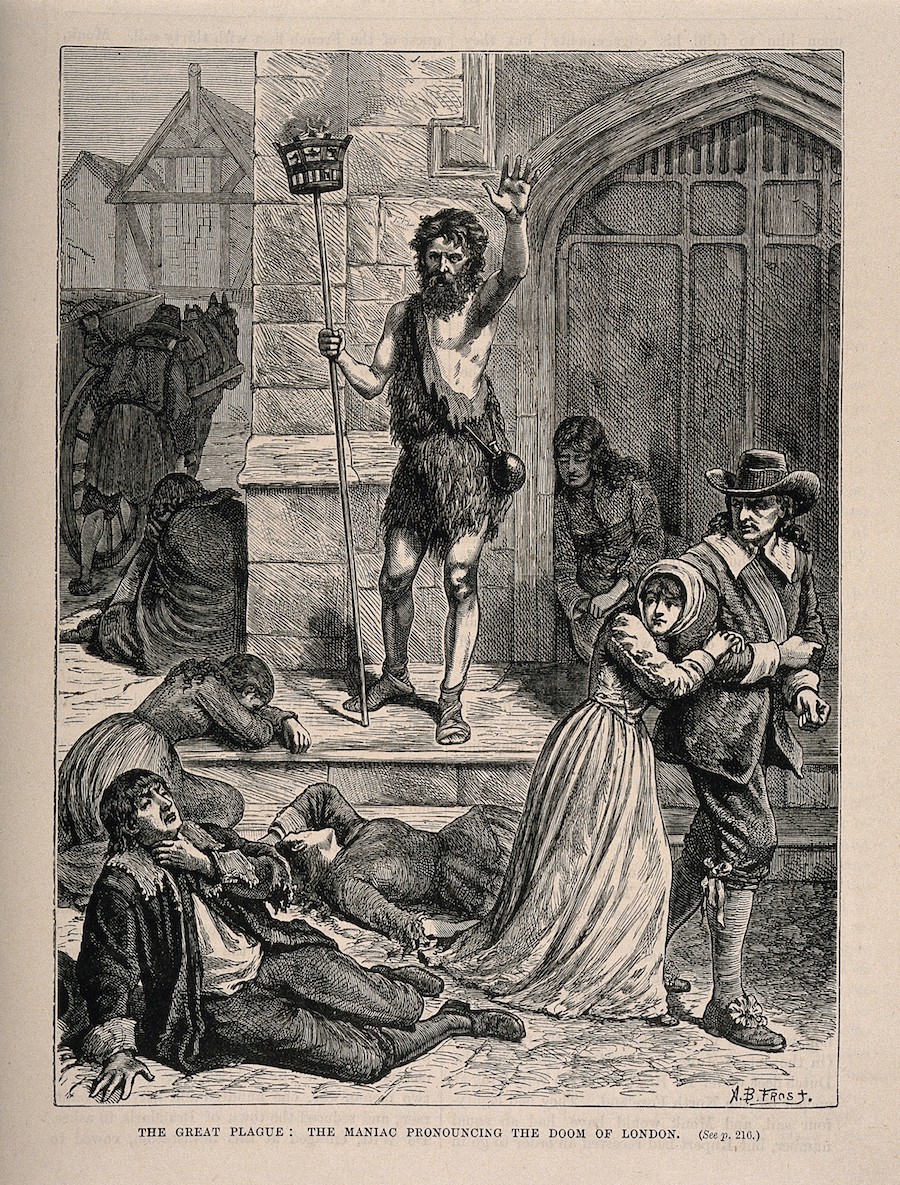
Part of what makes the book so fascinating is Defoe’s meticulous cataloging of the way in which Londoners reacted to (and anticipated) the plague in terms of omens and astrological predictions and biblical prophecies articulated in pamphlets, broadsheets, and almanacs of the day. Here, the sighting of two comets over England as well as the biblical and numeric significance of the approaching year 1666 play a large role. He also describes predictions of doom were also shared by visionaries and eccentric personalities on the city’s streets, such as those shared by the Quaker Solomon Eccles, known to Londoners as “Solomon Eagle,” a self-styled prophet who roamed the city with a pot of burning coals atop his head.
Listen Now
Love PodBriefly?
If you like Podbriefly.com, please consider donating to support the ongoing development.
Support Us