Episode Details
Back to EpisodesDark Fairy Tales, The Girl With No Hands
Description
“The Girl with No Hands” is the name of a a folk-tale motif shared by a number of gruesome fairy stories in which the the amputation of the heroine’s hands allows her to escape death, the Devil, or a repugnant suitor.
(NOTE: For details on the 2022 Bone and Sickle shirts mentioned in the show, please visit boneandsickle.com, or go directly to our Etsy shop.)
We begin our show with a religious legend differing in narrative details but sharing the amputation theme. It’s a medieval story told in Eastern Orthodox lands of the terrible cost of bad manners at a funeral, specifically that of the Virgin Mary. As a further preliminary to our stories, we also offer a quick rundown on the Aarne–Thompson–Uther system of folk-tale classification, in which “The Girl with No Hands” is identified as ATU 706.
The oldest written example of this motif is the Italian story “Biancabella,” from Le piacevoli notti (“The Pleasant Nights”), a book published in two volumes between 1550 and 1553. The author, Giovanni Francesco Straparola, appears to have modeled his collection on Boccaccio’s Decameron as it uses a similar frame-story, Straparola’s involving characters pleasantly passing their nights (hence the title) in the telling of tales. Among the stories Straparola included, is the first version of “Puss in Boots.”
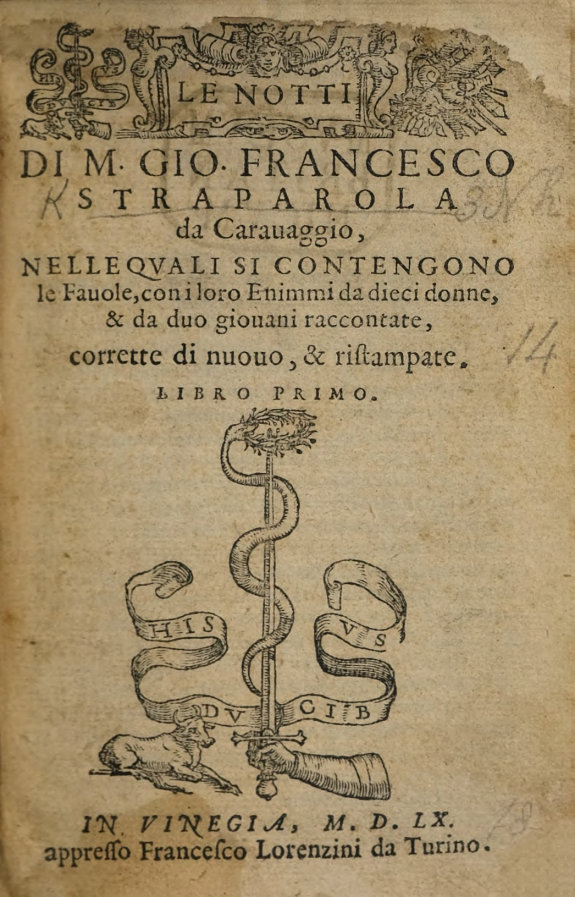
I won’t spoil listeners’ pleasure in hearing Mrs. Karswell read for you the original text but will divulge that its hand-losing heroine Biancabella shares a birth kinship with a serpentine fairy; also, that her hands are sacrificed in an effort to convince her wicked stepmother that her orders to execute her step-daughter have been carried out, and that guilty parties endure in the end a fiery foretaste of hell.
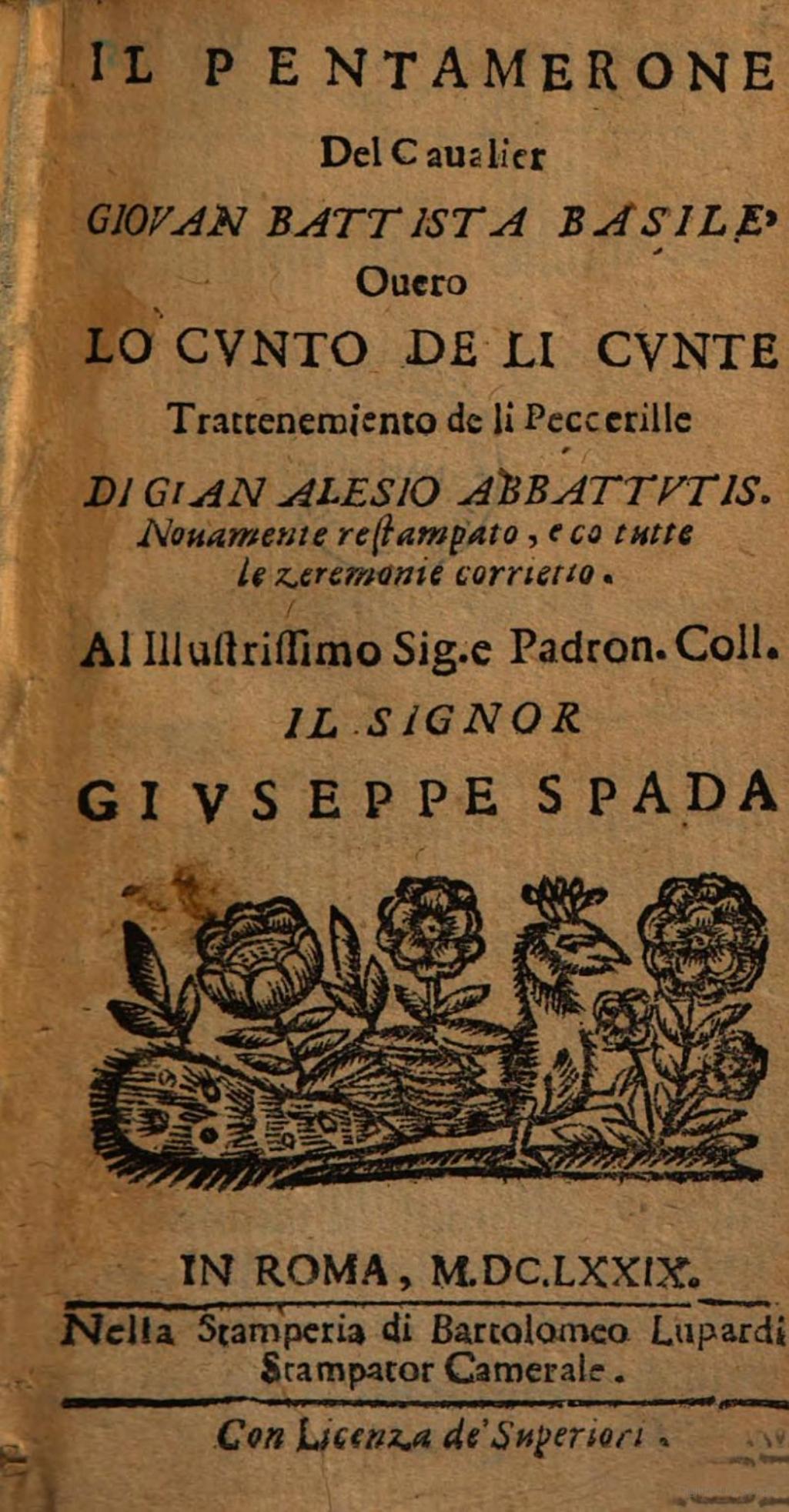
Our second story is “Penta the Handless” from Il Pentamerone (or “The Tale of Tales”) was written about a century later, in 1634, by the Italian poet Giambattista Basile. This collection of stories also makes use of the framing device, having the stories told by a group of courtiers attempting to cheer a melancholy princess. Among the 50 stories included are the first written versions of Cinderella, Rapunzel, Sleeping Beauty, and Hansel and Gretel.
In this story, Penta’s mutilation is self-inflicted as a means of repelling the incestuous advances of her brother. Her royal sibling has an exotic means of expelling her from the kingdom, namely, sealing her in a tarred chest and casting her into the sea (a motif that dates back to the plays of Euripides or even the story of the infant Moses).
Listen Now
Love PodBriefly?
If you like Podbriefly.com, please consider donating to support the ongoing development.
Support Us