Episode Details
Back to Episodes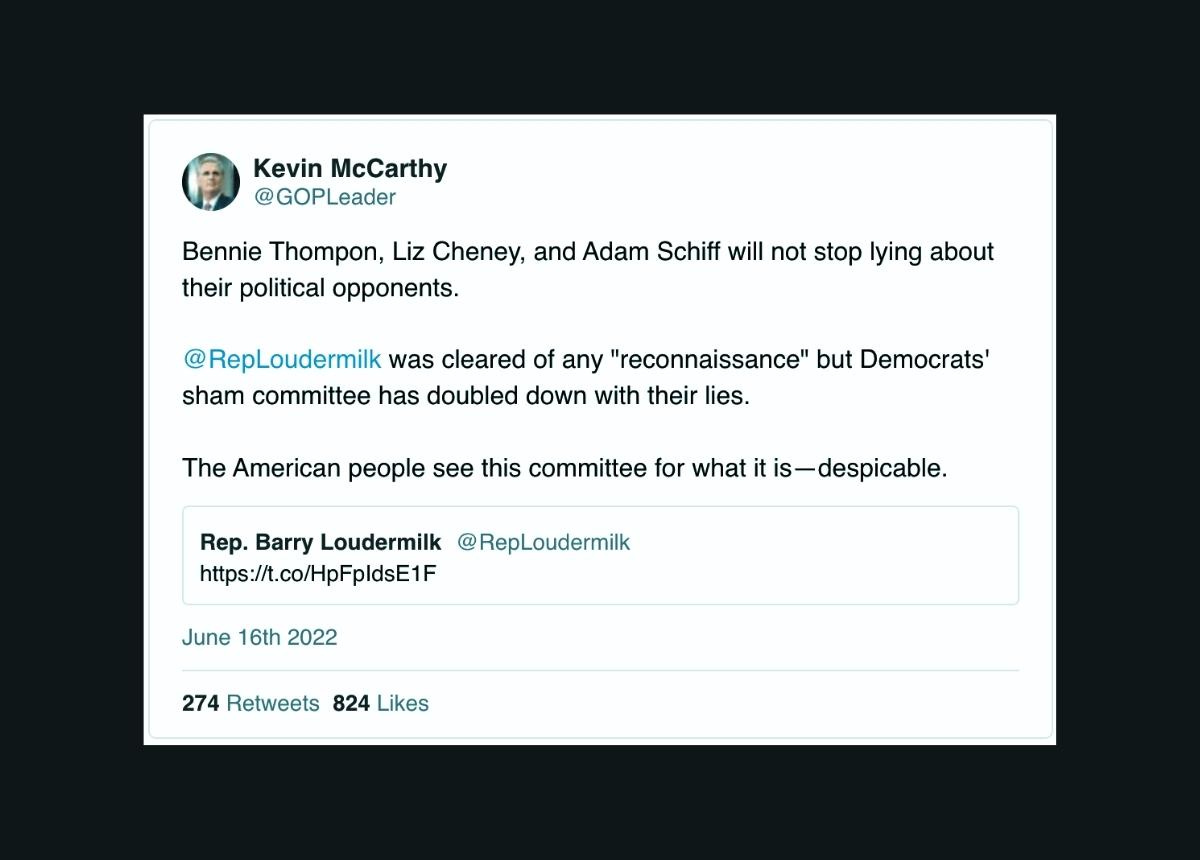
Why the January 6 committee is failing to slow Trump's attempted coup
Description
We fool ourselves if we believe that the televised hearings of the January 6 committee are changing the direction of the Republican Party, or that the hearings will end the attempted coup that Trump launched immediately after the 2020 election. The G.O.P. is becoming ever more divorced from reality. Trump’s attempted coup continues unabated.
The first three hearings of the House January 6 committee demolished the myths of voter fraud repeated incessantly by Trump and his supporters and amplified by Republicans in Congress. A parade of Republican witnesses — including his attorney general William Barr, Ivanka Trump, and his own campaign lawyers — testified that they knew Trump lost the election, and told him so. Trump was also informed that the demands he was making of his Vice President Mike Pence to block his defeat were illegal.
Yet the Republican response to those hearings has ranged from indifference to hostility. Representative Kevin McCarthy, the Republican leader of the House, wrote on Twitter that the members of the committee “will not stop lying about their political opponents,” and he calls the committee “despicable.”
On Friday, speaking at the Faith and Freedom Coalition conference in Nashville, Trump repeated his Big Lie — as if the hearings never happened — and once again berated Pence, charging that his former Vice President “did not have the courage to act” in trying to unilaterally reject the Electoral College votes that were being cast for Joseph R. Biden Jr.
Why aren’t the hearings slowing the Big Lie or Trump’s continuing attempted coup?
First, the Lie is now fully entrenched in the Republican Party, a central tenet of G.O.P. dogma. It has become the vehicle by which Republican candidates signal their fealty both to Trump and to a broad range of grievances — some imaginary, some derived from the so-called “culture wars” — that now constitute the Republican brand.
So far, at least 108 Republican candidates who embrace the Big Lie have won their nominations or advanced to runoffs, and there is no sign that the hearings have reduced the intensity of their demagoguery. Voters have chosen eight Big Lie candidates for the U.S. Senate, 86 Big Lie candidates for the House, five Big Lie candidates for governor, four for state attorney general and one for secretary of state.
In Michigan, the Republican race to challenge Governor Gretchen Whitmer is led by Ryan Kelley, a real estate broker who was arrested this month and charged with participating in the January 6 assault on the Capitol. Republican nominee for Michigan attorney general Matthew DePerno led a November 2020 lawsuit over an election night tabulation error in Antrim County that Trump supporters have seized on in their efforts to perpetuate unfounded claims of fraud. (DePerno has promised to lead criminal investigations of alleged fraud in 2020 despite the conclusion by Republican state senators that his allegations are “demonstrably false.”) Secretary of state nominee Kristina Karamo served as an observer in Detroit during the 2020 absentee ballot count and claimed, without evidence, that she had witnessed fraud.
In Arizona, the leading Republican candidate for governor, Kari Lake, has made the stolen election claims central to her campaign. Mark Finchem, a candidate for secretary of state, was at the front steps of the Capitol on January 6. And Blake Masters, who aims to challenge incumbent Democrat Senator Mark Kelly, says without evidence that “one-third of the people outside the Capitol complex on January 6 were actual F.B.I. agents.”
In Pennsylvania, Republican senate candidate Mehmet Oz has embraced the Big Lie. Gubernatorial nominee Doug Mastriano also asserts it, and has said that the Republican-controlle