Episode Details
Back to Episodes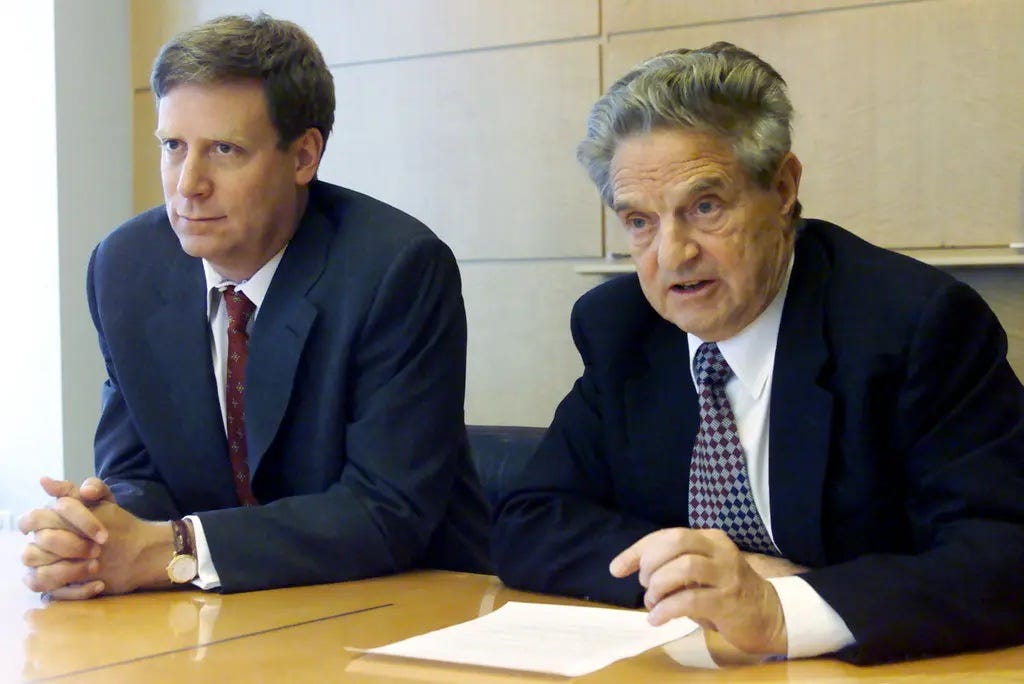
A great interview with Stanley Druckenmiller
Description
I don’t listen to as many interviews and podcasts as I used to, or indeed as I should (more fool me), but this interview this week with legendary investor, Stanley Druckenmiller, happened across my desk and I highly recommend it, if you can find the time. It’s long, but well worth it.
Druckenmiller founded Duquesne Capital in 1981 and closed it 2010 with some $12bn in assets. He is said to have made $260 million in 2008 alone. He was also, from 1988 to 2000, lead portfolio manager of George Soros’ Quantum Fund. (Many of the best parts of the interview regard what he learnt from Soros).
There are great stories, insight and wisdom, and a great deal to learn from him.
Here are some of my take-aways:
In his 45 years as a chief investment officer, today’s set-up is like nothing Druckenmiller has ever seen, because the bond market is so distorted with all the central bank buying of the last 12 years. He is not sure how it pans out. Normally, if he sees a bear market, he would hide in bonds. But that is not such an obvious option, when is inflation 8% and they are only yielding 3%. (Currently he seems to be mostly on the sidelines - more on this in a moment).
“Once inflation gets above 5% it has never come down unless the Fed funds rate gets above CPI. And that is currently 8%.” He doesn’t think the Fed funds can get to 8%.
He is generally bearish regarding today’s markets, but also makes the point that he has an overly bearish mindset, and part of his process is managing that. 90% of his fortune, and of any good short-seller, he says came on the long side, in growth stocks (in his case). The maths is with you.
Think a year ahead
Stock markets are predictive - particularly companies within the stock market. The homebuilders, the truckers, retail - they can all tell you where the economy is going 6 months or a year from now. (He thinks a recession is likely).
Retail investors tend to focus on what’s happening right now, and that is why they do not outperform. Current fundamentals are already reflected in the price. His advice is to focus intensely on what moves the stock price - what’s going to change 18 to 24 months from now? Will the company be in better shape? How are people going to react to that change?
“My number one advice: Do not invest in the present. The present does not move stock prices. Change moves them.”
He is not a fan of the diversification advocated in business schools. A big problem for investors is stale longs and stale shorts, he says. One should have a good knowledge of all asset classes and be able to switch between them. The act of doing that keeps you on your toes. It keeps you thinking and questioning.
If you have an idea, it often pays to act quickly on it, then do the research later. Today markets move quickly and there is often not time to wait on a good idea. If an idea appeals intuitively and fits with his macro thinking, he tends to invest quickly and then do further research. If he is wrong, he can get out quickly. Good ideas tend to spread fast in the market - people talk. When an idea catches on, a security moves fast, erasing much of the trade potential, so it is important to be in as early as possible. Soros has spoken of this strategy in his books as well.
Never mind the market, what about you?
A key thing he learned from Soros is that “sizing is 70% to 80% of the equation ... Part of the equation is seeing the investment, part of the investment is seeing myself in a good trading rhythm. It’s not whether you’re right or wrong it’s how much you make when you’re right and how much you lose when you’re wrong.”
“I believe in streaks,” he says, “Like in baseball. Sometimes you’re seeing the ball, sometimes you’re not, and one my number one jobs is to know when I’m hot and when I’m not. When I’m hot,