Episode Details
Back to Episodes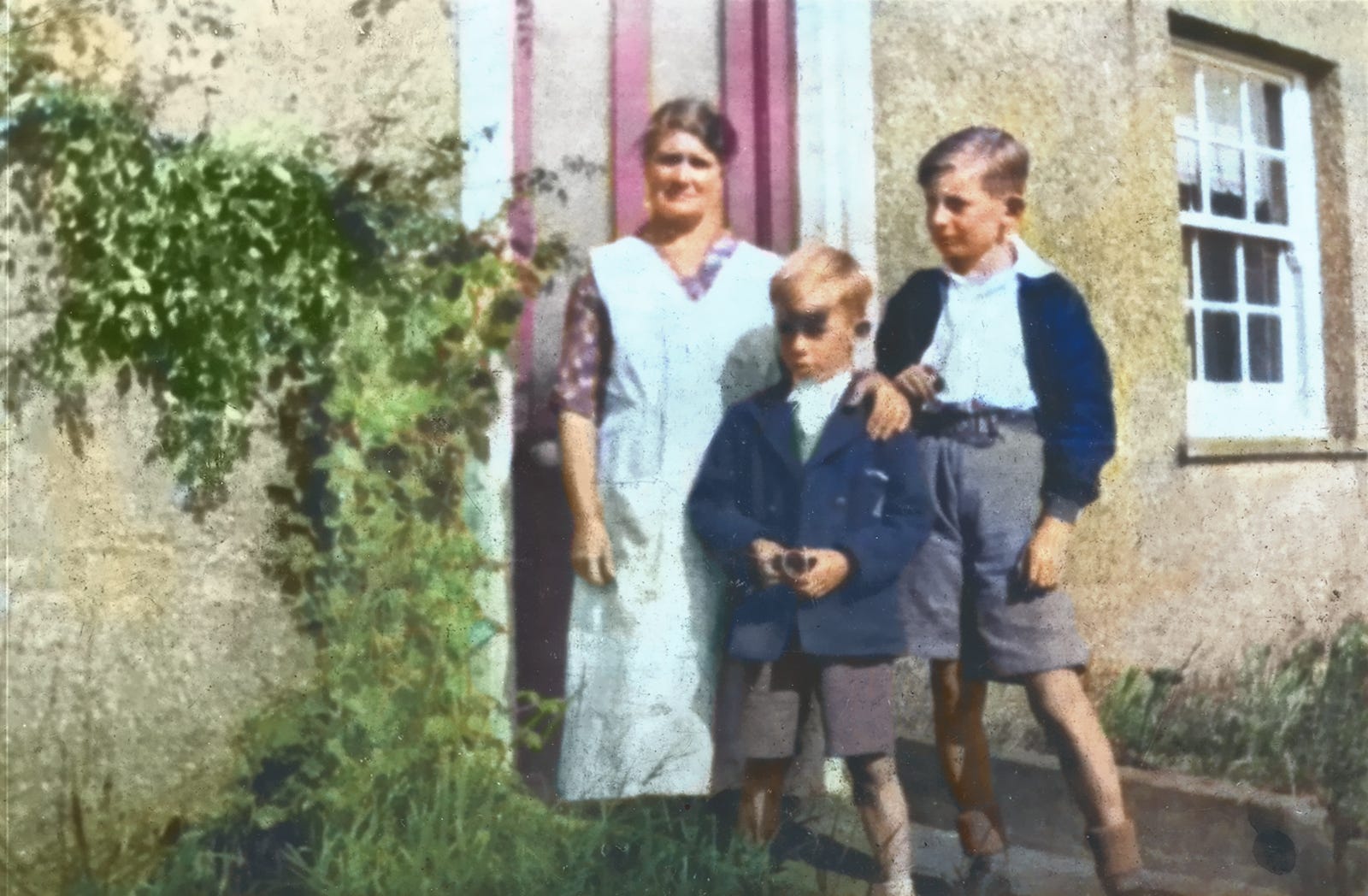
My mission to revive my father’s long-lost WW2 musical masterpiece
Description
I have an odd professional life. I double as a financial writer and a comedian. It seems to work. I specialise in unacceptable songs. You’re bound to have stumbled across one of them at some point. Apparently, I’m Nigel Farage’s favourite comic.
I’ve just made what many would consider a comical investment. I have put more money than I care to think about into a theatrical venture on which I am almost certainly going to lose my shirt. It’s got a cast of over 50, a 15-piece orchestra and more. But I don’t care, because this is more important than money.
My father, Terence Frisby, had a full and successful life. His play There’s A Girl In Soup was, for a time, the longest-running comedy in the history of the West End and a worldwide hit with runs on Broadway and across Europe (in Paris with Gérard Depardieu, in Rome with Domenico Modugno). It was made into a film with Peter Sellers and Goldie Hawn, and my father won the Writer’s Guild Award for the screenplay. His sitcom Lucky Feller, starring David Jason as one of two working-class brothers living in a council flat in south-east London (sound familiar?) was one ITV’s most successful sitcoms of the 1970s, and, another of his sitcoms, That’s Love, would become one of ITV’s most successful sitcoms of the 1980s. He made fortunes, lost fortunes, won awards, had a string of high profile court cases and beautiful girlfriends, a glamorous wife (my mum) - for a bit - and plenty of fresh air.
But there was one thing that nagged away at him constantly, like squirrels in the attic of his mind. It was that he never saw the best thing he ever wrote on the West End stage or on screen. That thing is Kisses on a Postcard.
How Kisses on a Postcard got its name
In 1940, when my father was seven and his brother, my uncle Jack, was eleven, they were evacuated from their family in south-east London to escape the Blitz. Millions of children across the country met with the same fate. Neither they nor the parents knew where they were going, who they would be staying with or for how long.
“Whatever happens, you stay together,” insisted their mum, my grandmother. “You got that? You stay together!”
Then, to turn it into an adventure for the two boys, she invented a secret code for them.
“When you get there,” she said, handing them a stamped, addressed postcard, “you find out your new address, you write it on this card and you post it to me. Got it? Now, here’s the code. You know how to write a kiss - with a cross? Well, put one kiss if it's horrible and I'll come straight there and bring you back home. You put two kisses if it's all right. And three kisses if it's nice. Then I'll know.”
The two boys were put on a train along with the rest of their school, each with a gas mask, some sandwiches and a label round their neck with their name on. They ended up in a tiny village in Cornwall, where they were herded into the school hall and picked at random by whichever local would take them.
Jack and Terry were chosen by a Welsh ex-coal miner and his wife, Auntie Rose and Uncle Jack, who lived in a tiny cottage by the railway with their soldier son Gwyn.
Inside, they found a room packed with things: a cat curled beside the stove: a canary in a cage; oil lamps - there was no electricity here; and two First-World-War shells in their cases, over six inches tall, standing on either side of the clock on the mantelpiece. Outside in the yard, there was a pig and chickens; beyond that a valley with endless woods, a rushing river, fish to catch, streams to dam, paths, tracks, a quarry to climb. And, best of all, at the bottom of the yard lay the main line from London to Penzance. Trains!
That night, on a borrowed mattress on the floor, staring at the postcard, they considered their code. They covered the