Episode Details
Back to Episodes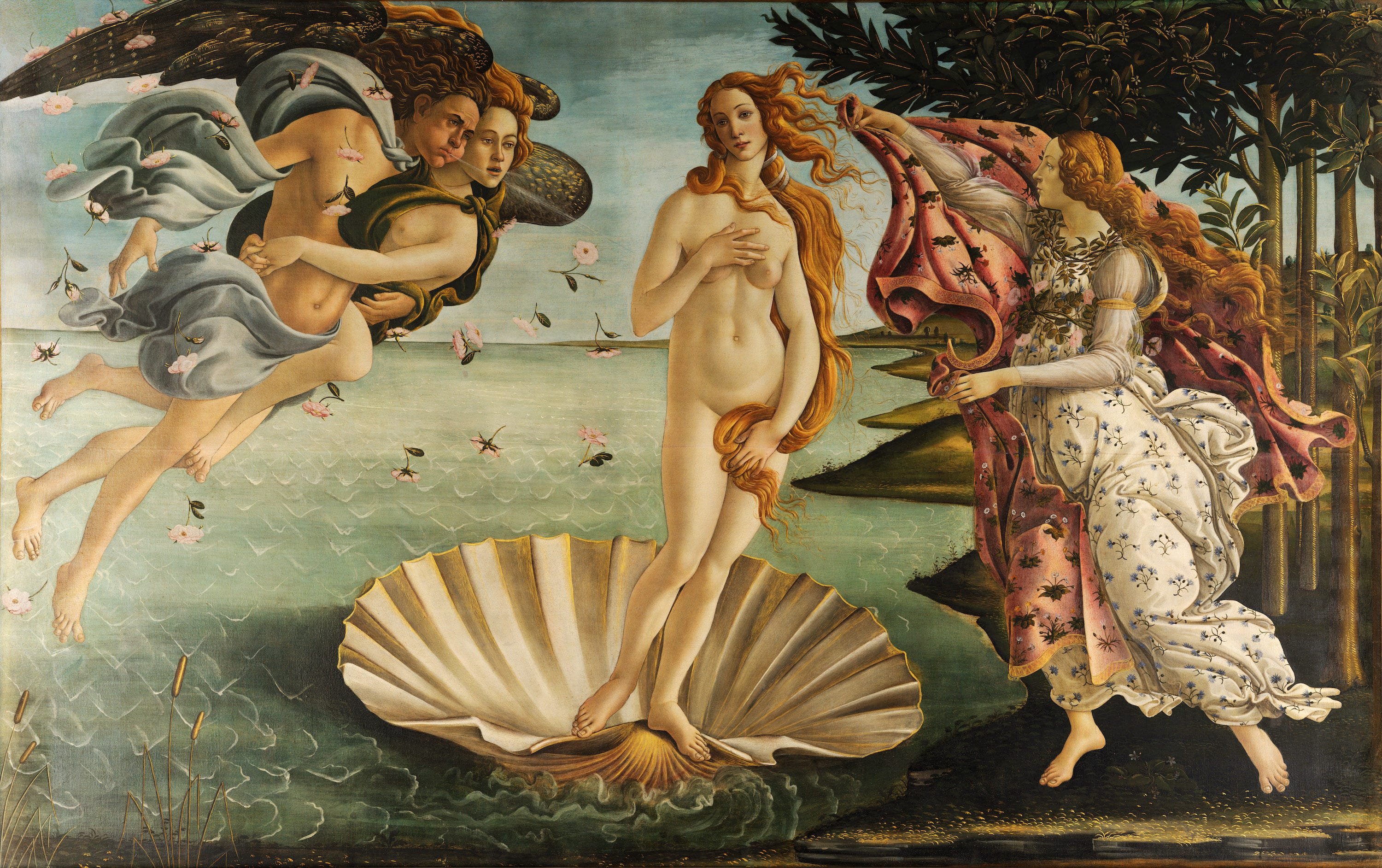
On the beauty of redheads
Description
Back in the early 1990s comedienne Mandy Knight did a show at the Edinburgh Fringe called, “Some of my best friends are ginger”. I always thought it was an inspired title, exposing a double standard that still persists today, and it always stayed with me.
Then, a few years back I presented a series for Italian TV about beauty, Senso Della Bellezza - Sense of Beauty - and we did a feature on red heads.
I thought it would be a nice piece today to mine that feature and expand on it, explore the history of redheads, and thereby celebrate the unjustly mocked 1% of the global population that carry the MC1R gene.
The Book of Genesis is perhaps the first book to have been written down and, in the book of Genesis we have the first celebrity redhead, and a victim of some treachery, Esau.
Esau came home hungry one day after a long shift in the fields, and his brother Jacob offered him a bowl of soup, but only in exchange for something: his birthright, his first-born son status. Esau, who seems to have been a bit of short-term thinker, put his stomach first and he accepted. Thus did Jacob inherit, and so did Jacob - and not Esau - go on to become one of the Fathers of the Israelites. All things considered, it was probably better for the Israelites that he did.
Esau was born red all over “like a hairy garment”, and one interpretation is that Esau had some recessive Neanderthal gene - the theory is that Neanderthals had red hair, although I do not suggest red heads are any more Neanderthal than the rest of us. The genetic mutation responsible is different to the one that which causes red hair in modern humans.
Red hair occurs most commonly in people of Germanic or Celtic origin. Ireland has the most red heads per capita at around 10%, but the highest density of red heads and thus the red head capital of the world is actually Edinburgh. No wonder Mandy’s show did so well there.
It’s thought that the reason red heads are more commonly found in colder climates is that it is actually an advantage to be pale, where sunlight is sparse. The lighter skin of red heads improves the absorption of sunlight, which is vital for the production of vitamin D by the body.
Red hair is also relatively common among Ashkenazi Jews. Many Jews in literature have been portrayed with red hair. Shylock in Shakespeare’s Merchant of Venice and Fagin in Dickens’ Oliver Twist, being two of the most famous. Judas, the betrayer of Christ, is often portrayed as a redhead.
During the Inquisition in Italy and Spain, where red hair is less common, those with red hair were identified as Jews, even if they weren’t actually Jewish.
Today the commission for Racial Equality do not monitor cases of discrimination and hate crimes against redheads
Redheads were first mentioned in literature by the Greek poet Xenophanes around 500BC describing the Thracians, who it seems were red headed and blue eyed.
The Ancient Greeks seemed to be particularly admiring of red heads. In men red hair was associated with honour and courage, while in women red hair was associated with beauty. Homer says the heroes Menelaus and Achilles were both redheads, while Helen of Troy, the most beautiful woman that ever lived, was also a red head.
Aphrodite, Goddess of beauty and love was also red headed. (During the Renaissance, Botticelli and, especially, Titian were always painting beautiful women with red hair to the extent that titian now means auburn).
The hair of female statues in Ancient Greece was often painted red - the Greeks loved the colour red.
Many slaves in ancient Greece and Rome were the northern territories. Red headed slaves would often fetch a higher price, as they were thought to bring good luck. Red wigs were given to actors depicting slaves in Greek and Roman theatre.
Indeed one fringe theory to explain modern mocking of redheads is that it stems from the Roman subjugation and persecuti