Episode Details
Back to Episodes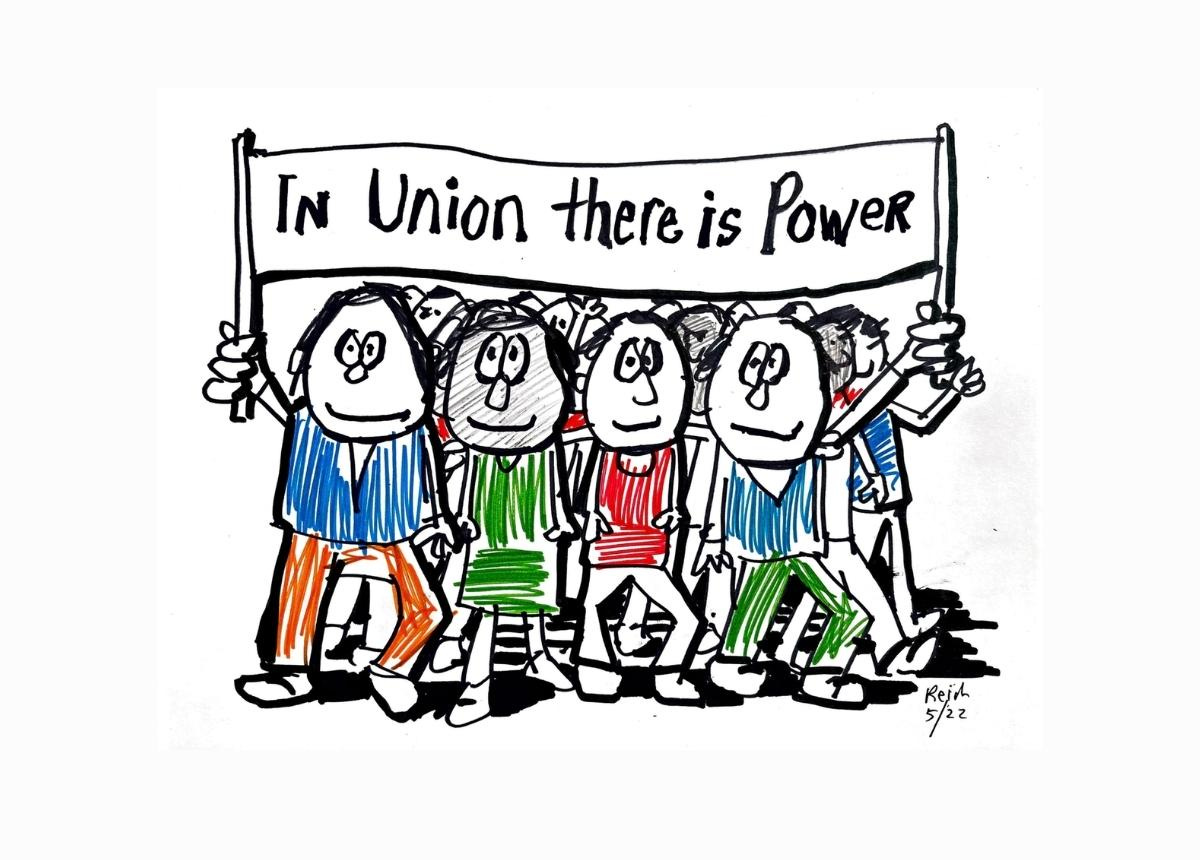
Why unions are coming to the new economy
Description
Yesterday, the Game Workers Alliance (a union of quality assurance workers at Activism subsidiary studio Raven Software) won their vote to form a union. This may not seem like such a big deal, but it is. The games industry is large and growing. Quality assurance testers do the grunt work of rooting out bugs and potential problems in the weeks and months before games are released publicly. These jobs are typically among the lowest in the game industry, with demanding workloads finding and cataloging issues within a project’s timeframe. That these workers are unionizing marks a major turning point in worker organizing of the new economy.
Meanwhile, Starbucks Workers United has now unionized more than 80 Starbucks stores across the United States, and filed over 100 cases of unfair labor practices against the Seattle-based coffee giant. Howard Schultz, who returned to head the company in April, has a union busting record that goes back to the origins of the company, and is vowing to stop the drive toward unionization. But he can’t stop it.
Workers at a Trader Joe’s branch in Hadley, Massachusetts have begun organizing at the upscale supermarket chain. It would be the first unionized Trader Joe’s store out of more than 530 locations in the US. “We organized ourselves. With the same instinctive teamwork we use every day to break pallets, work the load, bag groceries, and care for our customers, we joined together to look out for each other and improve our workplace together,” workers wrote in an announcement letter to Trader Joe’s CEO, Dan Bane.
Workers at Amazon warehouses continue to organize, against fierce anti-union headwinds coming from Jeff Bezos and other Amazon executives.
Unions are coming to the new economy of grunt jobs in high-end corporations.
Between October 1, 2021 and March 30, 2022, the National Labor Relations Board recorded a 57 percent increase in workers filing for the petitions to allow union elections.
What’s going on?
1. Part of the reason for the upsurge is the so-called “labor shortage” which — as I’ve stressed — is actually a shortage of jobs paying living wages. At least for now, workers have bargaining leverage to demand better pay.
2. Another part is related to the pandemic and its psychological effect on many workers who have begun asking themselves why they’ve settled for lousy jobs and often unsafe working conditions, especially when corporations are scoring record profits and CEOs of big firms are taking home record multiples of the typical workers’ wages. More than at any other time in the last three decades, workers are telling employers “you can take this job and shove it.”
3. A third part of the revival of unions relates to America’s retreat from globalization. Four decades ago, when corporations began to move (or threaten to move) their operations offshore to hire lower-wage workers, American blue-collar workers lost their bargaining clout. Unions went into retreat. But starting with Trump and continuing with Biden — along with global supply bottlenecks that are now convincing corporations to bring suppliers home — outsourcing is in sharp decline. (Yesterday, Biden
Listen Now
Love PodBriefly?
If you like Podbriefly.com, please consider donating to support the ongoing development.
Support Us