Episode Details
Back to Episodes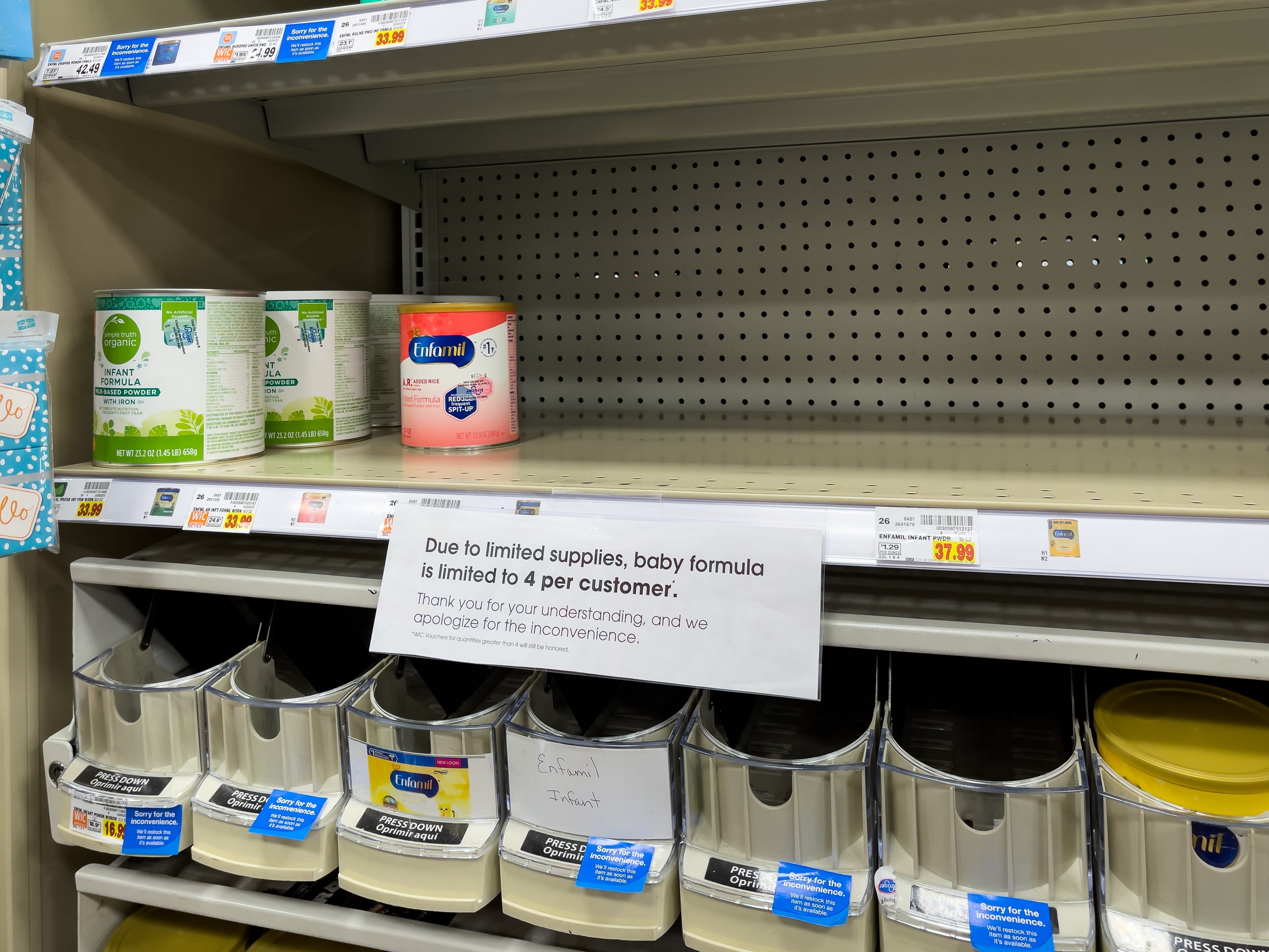
The Weekly Round-Up May 9-15
Description
The Infant Formula Problem and Emergency Management
I have talked about supply chain issues on The Todd DeVoe Show and Business Continuity Today. And When we discussed this issue, it was more about how the cost of items across the spectrum are increasing.
The other day, I was grocery shopping with my 9-year-old daughter, and she noticed that when we checked out, the baby formula was behind a locked cabinet. She is a very observant child and inquisitive. She asked me what was that and why was it protected. I told her that it was baby formula and that because it was so expensive, at times, people try to steal it.
On our way home, she contemplated that problem for a while and asked me why can't we help babies with getting the formula. I am always honest with her and explained that the government has programs. My wife is a social worker and I used her as an example of how social services work. And then we discussed Women Infant and Children (WIC) support, and more specifically how that helps with buying food for babies. She was satisfied with that answer. Until we got home.
It is strange how the world works because when we got home, the news story on TV was about the infant formula shortage and how online, private sellers are gouging prices, marketing cans for double or triple their usual price and many large retailers are sold out altogether. Then our conversation we got into was about how the supply of the formula was disrupted, which caused the price to increase and that some people cannot afford the formula and resort to thievery.
I share this story with you because the collective we (or the royal we) have decided that society will look after those in need when it comes to infants and children. That there is a role for government agencies to perform. However, in this crisis, should it be more than social services responding to the event?
Is This Crisis an Emergency?
This got me thinking about how as emergency managers, how do we look at each crisis that comes across our news wire. I am not arguing that we need to have emergency management involved in the supply chain crisis or even the issues of the formula shortage. However, the formula problem can become, and I might say, is a true health care crisis for the poor and women and children on the margins.
How did This Crisis Start?
Let's first explore how the formula shortage began. As I stated, the ongoing supply chain disruptions have been the cause of shortages of a wide range of consumer goods. In February, the current lack of baby formula became worse after manufacturer Abbott issued a recall for products made at a Michigan plant and sold under the Similac, Alimentum, and EleCare labels.
The reason for the recall call Four children — one in Minnesota, one in Texas, and two in Ohio — fell ill with bacterial infections, and two died. The deaths of the infants, caused the FDA to shut the factory down.
What is the impact of the shutdown?
The states seeing the worst shortages include Texas, Tennessee, Missouri, Iowa, North Dakota, and South Dakota — all with out-of-stock rates of about 50 percent. A total of 26 states have out-of-stock rates of 40 to 50 percent.
San Antonio's out-of-stock rate has climbed to 57 percent among metro areas, with Memphis and Nashville at 52 percent and Houston and Des Moines at 50 percent.
According to news reports, Abbot is working to address the issues and resume production of infant formula products. Brian Dittmeier, senior director of public policy at the National WIC Association stated that Abbott is the exclusive supplier for more than half the nation's WIC agencies, through which more than 1.2 million infants receive formula benefits, Dittmeier said. Such benefits are typically limited to various formulas, but agencies have waived some requirements to give families more flexibility during the shortage.
Formula Has Become A Public