Episode Details
Back to Episodes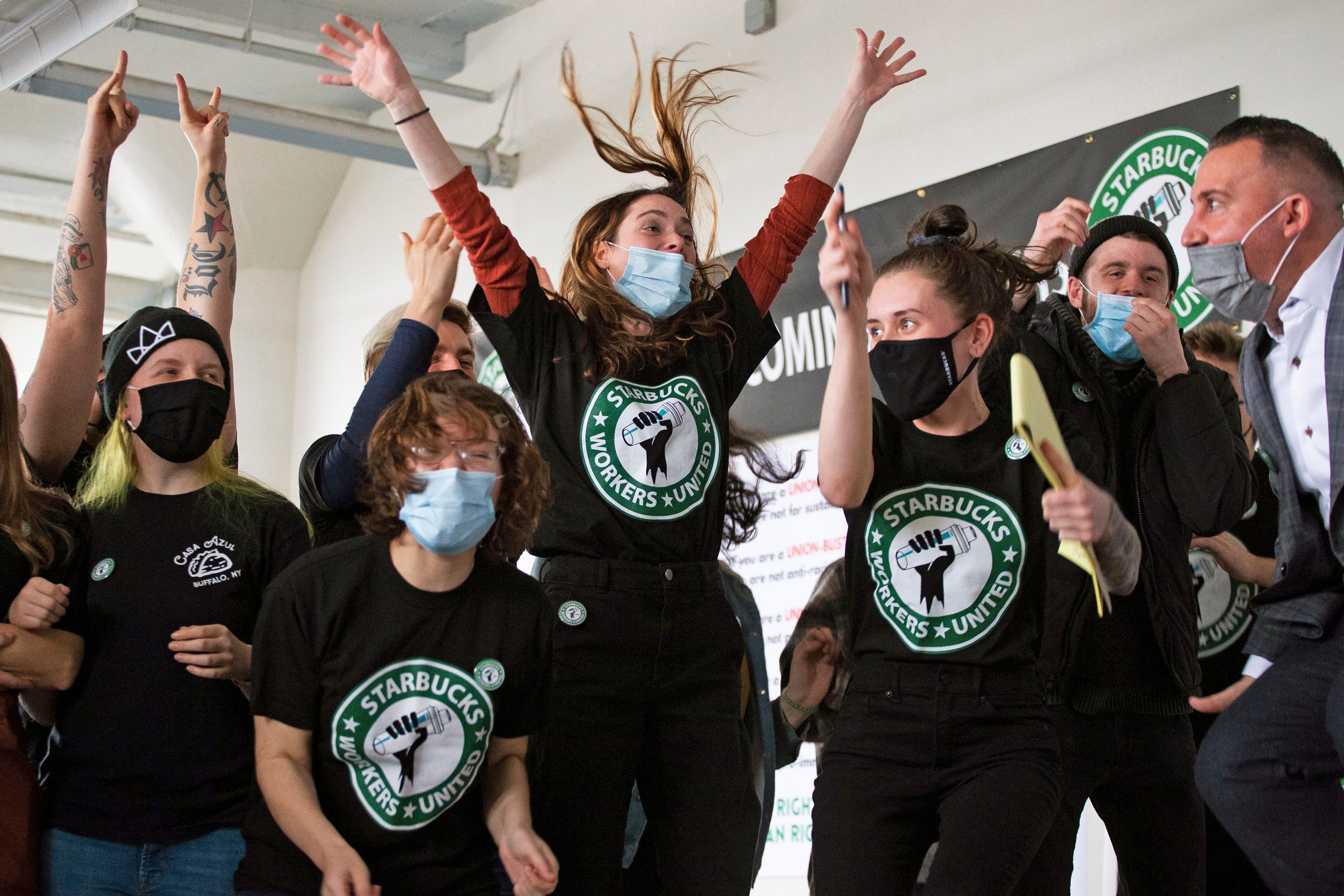
One small step for Starbucks workers, one giant leap for workers across America
Description
Thank you for subscribing to my newsletter on power, politics, and the real economy. If you’d like to support this work, please consider becoming a paid subscriber.
Workers in one Starbucks store, in Buffalo, New York, made history yesterday by becoming Starbuck’s first unionized workplace. It’s a watershed for the biggest coffee seller in the world, which operates 8,953 stores in the United States — and which has done everything in its power to keep its workers from forming a union.
The vote itself was tiny. Nineteen baristas and shift supervisors voted in favor of unionizing, 8 voted against. But it marked a huge victory, nonetheless. Starbucks had waged a massive anti-union campaign in Buffalo — sending out-of-town managers and even executives into stores to discourage unionizing, closing down some stores, and packing remaining stores with new employees in order to dilute pro-union employees’ voting power.
For years, Starbucks workers have complained about the company’s labor practices, claiming that chronic understaffing has created a chaotic work environment, erratic hours, and difficulty in taking sick days. Despite episodic commitments by Starbucks management to change, the complaints have continued. They intensified during the pandemic when overstretched Starbucks employees also had to deal with new health risks and safety protocols.
The union election marks one of the highest-profile union wins in memory for U.S. restaurant workers, who are among the least unionized in the country and whose pay and benefits are among the lowest in all of corporate America. It’s certain to encourage more unionizing efforts among workers in restaurant chains.
What occurred yesterday at one Starbucks store is part of a much larger pattern — a surge in strikes and labor actions across America.
Kellogg’s striking workers are still holding the line and refusing to allow the company to separate employees into tiers (with newer workers getting lower pay and benefits). Today, Kellogg's said it will start hiring permanent replacements for the striking workers. Hiring permanent replacements is technically legal, but rarely done because it can poison labor-management relations for years.
Amazon warehouse workers in Bessemer, Alabama will get another chance to unionize (the National Labor Relations Board found that Amazon used unfair labor practices in the recent election there).
The United Mine Workers have been striking at the Warrior Met Coal company in Alabama for the last eight months, one of the longest strikes this century.
Three thousand student workers at Columbia University have been on strike for six weeks to demand better pay and health care (on Tuesday, at least one hundred members of the Columbia faculty joined them on the picket line).
What’s going on? Partly, low-wage workers have more bargaining leverage now than they’ve had in years. As the pandemic recedes (let’s hope it continues to), consumers are spending at a higher rate than they have in over twenty months. To respond to this surge in pent-up demand, employers are seeking workers.
But at the same time, workers across America are taking a fresh look at their jobs. Record-high “quit” rates and near record low rates of labor-participation suggest that a significant number are asking themselves if they want to go back to their old jobs — and are answering “no.”
Part of the “no” is an unwillingness to settle for their former wages and working conditions — especially in big companies (like Starbuck