Episode Details
Back to Episodes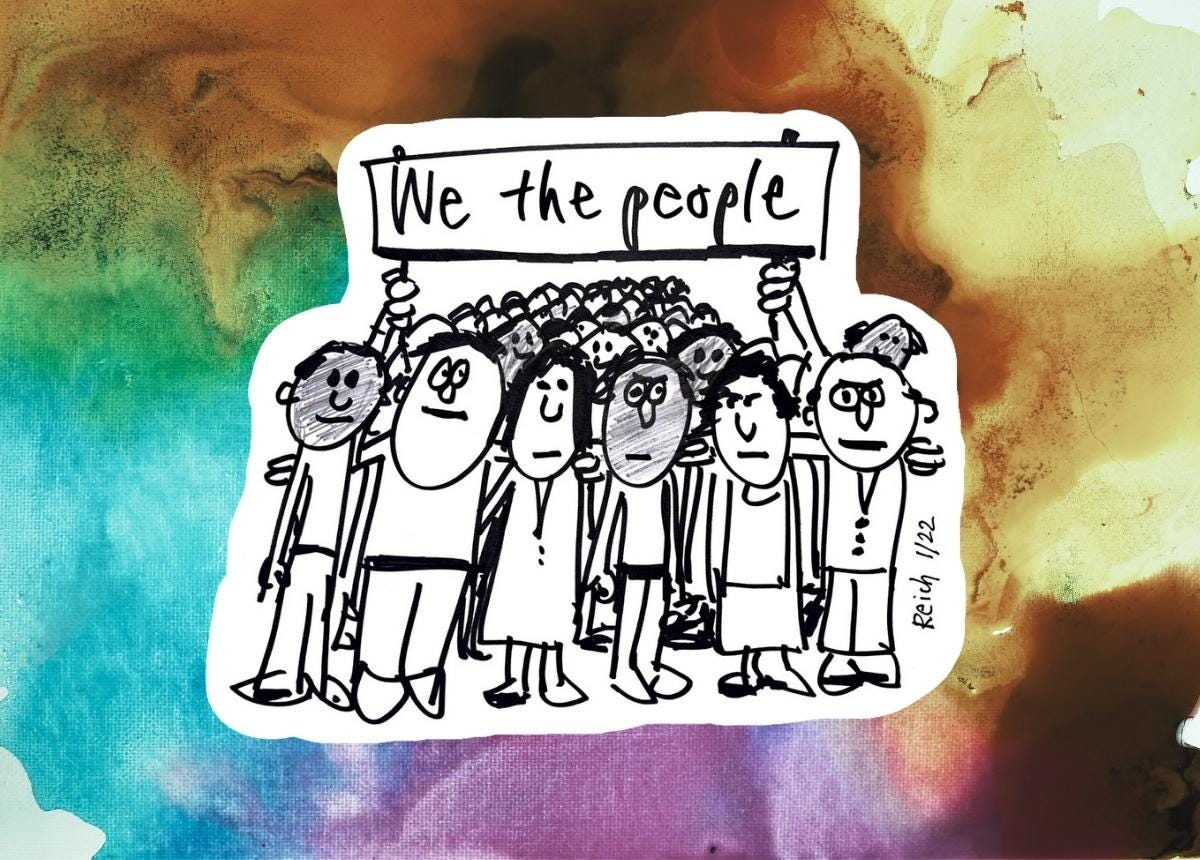
Is there still a common good?
Description
We’ve gone through the shameful first anniversary of the attack on the U.S. Capitol and of the refusal of 147 members of Congress (all Republicans) to certify all the electors from states that voted for Biden, on the basis of no evidence of fraud. So far, no political figure has been charged with any criminal wrongdoing. We’ve seen 34 voter-suppression bills enacted by 19 Republican state legislatures; at least 8 give state legislatures the power to disregard election outcomes. More than 400 additional voter suppression measures are now being prepared. And we are now witnessing a struggle in the Senate to reform the filibuster so that voting rights legislation can be enacted. All of which raises a basic question: Is there still a common good?
I was at the impressionable age of fourteen when I heard John F. Kennedy urge us not to ask what America can do for us but what we can do for America. Seven years later I took a job as a summer intern in the Senate office of his brother, Robert F. Kennedy. It was not a glamorous job, to say the least. I felt lucky when I was asked to run his signature machine. But I told myself that in a very tiny way I was doing something for the good of the country.
That was more than a half century ago. I wish I could say America is a better place now than it was then. Surely our lives are more convenient. Fifty years ago there were no cash machines or smart phones, and I wrote my first book on a typewriter. As individuals, we are as kind and generous as ever. We volunteer in our communities, donate, and help one another. We pitch in during natural disasters and emergencies. We come to the aid of individuals in need. We are a more inclusive society, in that Black people, LGBTQ people, and women have legal rights they didn’t have a half century ago.
Yet our civic life—as citizens in our democracy, participants in our economy, managers or employees of companies, and members or leaders of organizations—seems to have sharply deteriorated. What we have lost is a sense of our connectedness to each other and to our ideals—the America that John F. Kennedy asked that we contribute to.
Starting in the late 1970s, Americans began talking less about the common good and more about self-aggrandizement. The shift is the hallmark of modern America: From the “Greatest Generation” to the “Me Generation,” from “we’re all in it together” to “you’re on your own.” In 1977, motivational speaker Robert Ringer wrote a book that reached the top of The New York Times bestseller list entitled Looking Out for # 1. It extolled the virtues of selfishness to a wide and enthusiastic audience. The 1987 film Wall Street epitomized the new ethos in the character Gordon Gekko and his signature line, “Greed, for lack of a better word, is good.”
The last five decades have also been marked by growing cynicism and distrust toward all of the basic institutions of American society. There is a wide and pervasive sense that the system as a whole is no longer working as it should. Racism, xenophobia, and religious intolerance are on the rise.
A growing number of Americans feel neglected and powerless. Some are poor, or Black or Latino. Others are white and have been on a downward economic escalator for years. Some have been seduced by demagogues and conspiracy theorists.
Thanks for subscribing to my letter. If you’d like to support this effort and be part of the conversation, please consider a paid or gift subscription.
Is there a common good that still binds us together as Americans? Yes, and it’s not the whiteness of our skin, or our adherence to Christianity, or the fact that we were born in the United States. We’re bound together by the ideals and principles we share, and the mutual obligations those principles entail.
After all, the U.S. Constitution was designed for “We the people” seeking to “promote the general welfare”—not for