Episode Details
Back to Episodes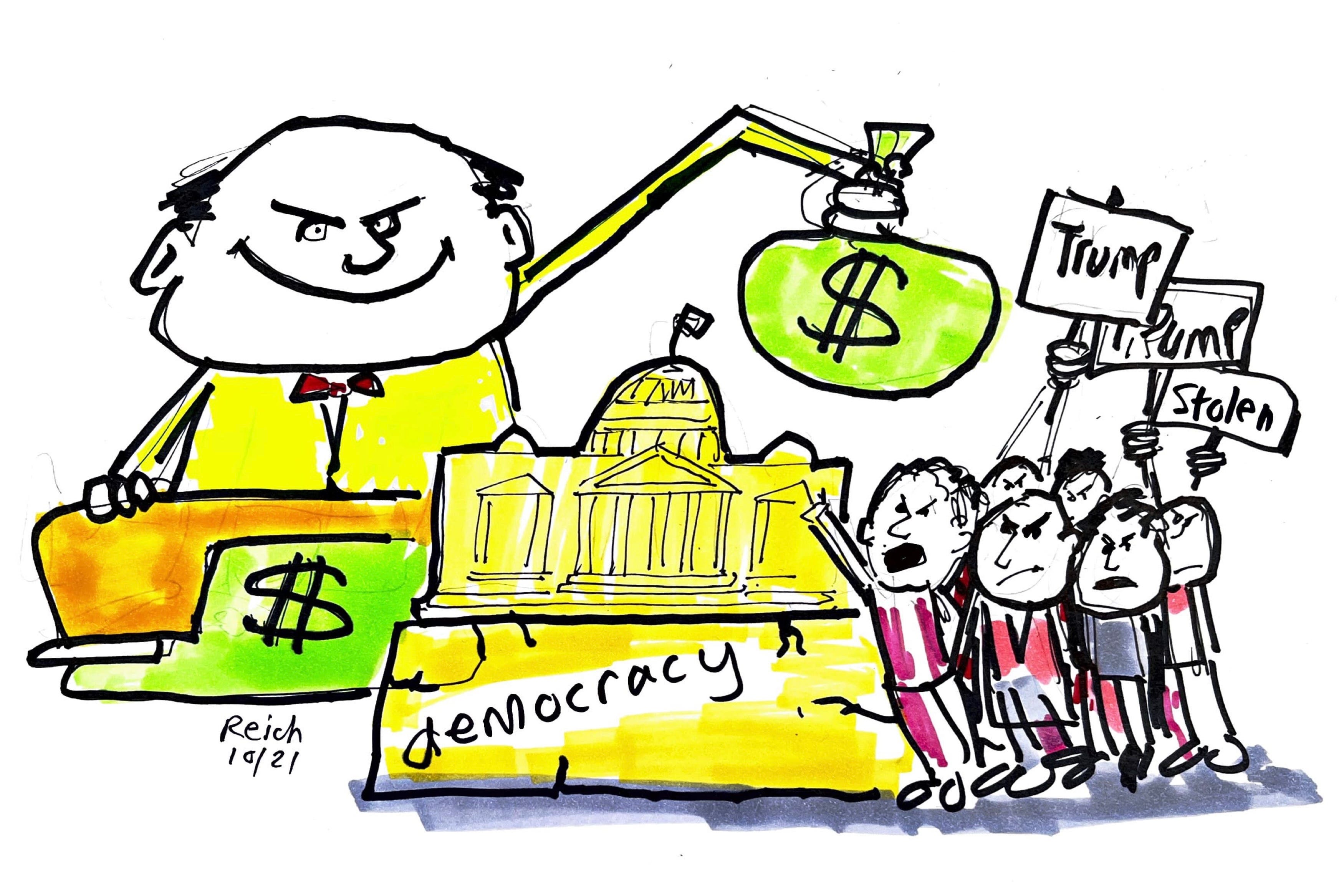
Why isn't corporate America behind the pro-democracy movement?
Description
Capitalism and democracy are compatible only if democracy is in the driver’s seat.
That’s why I took some comfort just after the attack on the Capitol when many big corporations solemnly pledged they’d no longer finance the campaigns of the 147 lawmakers who voted to overturn the election results.
Well, those days are over. Turns out they were over the moment the public stopped paying attention.
A report published last week by Citizens for Responsibility and Ethics in Washington shows that over the last year, 717 companies and industry groups have donated more than $18 million to 143 of those seditious lawmakers. Businesses that pledged to stop or pause their donations have given nearly $2.4 million directly to their campaigns or leadership political action committees.
But there’s a deeper issue here. The whole question of whether corporations do or don’t bankroll the seditionist caucus is a distraction from a much larger problem.
The tsunami of money now flowing from corporations into the swamp of American politics is larger than ever. And this money – bankrolling almost all politicians and financing attacks on their opponents – is undermining American democracy as much as did the 147 seditionist members of Congress. Maybe more.
Democratic senator Kyrsten Sinema — whose vocal opposition to any change in the filibuster is on the verge of dooming voting rights — received almost $2 million in campaign donations in 2021 despite not being up for re-election until 2024. Most of it came from corporate donors outside Arizona, some of which have a history of donating largely to Republicans.
Has the money influenced Sinema? You decide: Besides sandbagging voting rights, she voted down the $15 minimum wage increase, opposed tax increases on corporations and the wealthy, and stalled on drug price reform — policies supported by a majority of Democratic Senators as well as a majority of Arizonans.
Over the last four decades, corporate PAC spending on congressional elections has more than quadrupled, even adjusting for inflation.
Labor unions no longer provide a counterweight. Forty years ago, union PACs contributed about as much as corporate PACs. Now, corporations are outspending labor by more than three to one.
According to a landmark study published in 2014 by Princeton professor Martin Gilens and Northwestern professor Benjamin Page, the preferences of the typical American have no influence at all on legislation emerging from Congress.
Gilens and Page analyzed 1,799 policy issues in detail, determining the relative influence on them of economic elites, business groups, mass-based interest groups, and average citizens. Their conclusion: “The preferences of the average American appear to have only a miniscule, near-zero, statistically non-significant impact upon public policy.” Lawmakers mainly listen to the policy demands of big business and wealthy individuals – those with the most lobbying prowess and deepest pockets to bankroll campaigns