Episode Details
Back to Episodes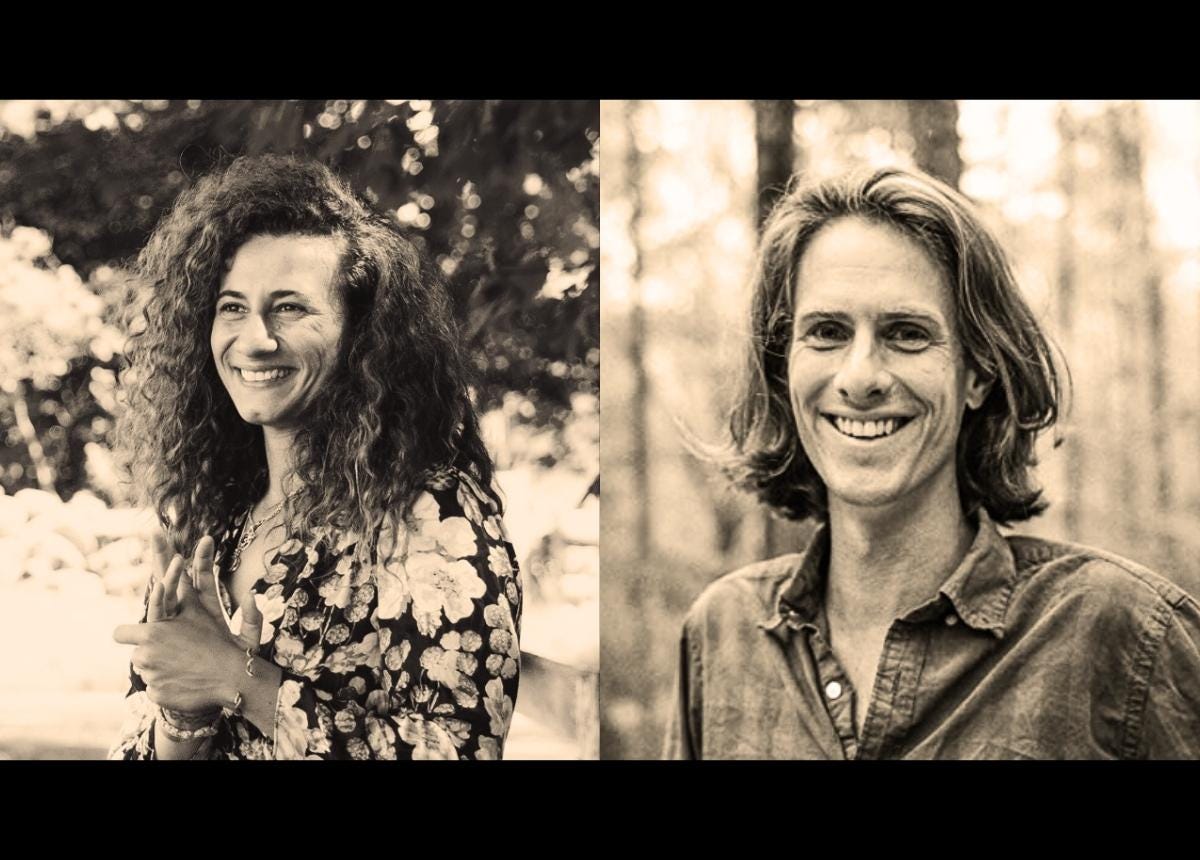
Need a bit of a pick-me-up? Let me introduce you to two young people.
Description
These are hard times to keep your spirits up. Thinking you might need a bit of a boost, I’d like to introduce you to two young people who give me hope about the future of American politics.
The first is Chloe Maxmin. I met her a few years ago when, still in her early-twenties and an unapologetic progressive, she had been elected to the Maine House of Representatives. She was the first Democrat ever to represent her district — Maine’s Lincoln County, the state’s most rural. The county also among the poorest, where 1 in 5 children grow up in poverty. And it’s staunchly conservative, having voted Republican by an average of 16 percentage points in the preceding three elections.
When I met her, Maxmin was preparing to run for the state Senate. Several old Maine pols (I lived in Maine back in the last century and know its politics quite well) told me she didn’t stand a chance. But in 2020 she won — and in the process, knocked off the state Senate’s Republican leader, the most powerful Republican politician in Maine.
How did she pull off these upsets? I’ll get to that in a moment.
Maxmin exudes optimism, energy, and tenacity. She is also very smart. She says she’d always imagined running when she was in her thirties. She thought she needed a couple of graduate degrees, a settled life, and maybe a family to welcome her home. But in 2018, as the climate crisis worsened, she realized there was no need and no time to wait.
The second person I’d like to introduce you to managed both her campaigns. Canyon Woodward was brought up in a rural part of Southern Appalachia. Maxmin and Woodward met each other in college and decided that the only way to begin solving the climate crisis and the injustices it was spawning was to get involved in politics from the ground up. Both had watched for years as rural America was abandoned by Democrats. They decided to buck that tide.
So, how did Maxmin and Woodward do it? They developed the most grass-roots of all grass-roots strategies.
Maxmin herself knocked on tens of thousands of doors. She connected with persuadable Trump voters who had never before spoken with a Democratic candidate. But she didn’t just talk to them. She had conversations with them, then followed up with more conversation. Those conversations were about “kitchen-table” issues — problems that were on the voters’ minds, as well as their thoughts and values.
As she describes it, during her campaign for the Maine House she walked down a dirt road leading to a nondescript trailer. After knocking on the door, it cracked open to reveal a man who was reluctant to hear from her. She introduced herself nonetheless and asked him about the issues he cared about most in the coming election. After they talked for a time, he told her: “You’re the first person to listen to me. Everyone judges what my house looks like. They don’t bother to knock. I’m grateful that you came. I’m going to vote for you.”
When I asked about her approach to politics, Maxmin told me rural communities are moral communities that respond more to personal stories and values than to specific policies. Building trusting relationships is the key. This takes time and effort and demands humility and a willingness to learn. As Maxmin and Woodward explain in their book,
Listen Now
Love PodBriefly?
If you like Podbriefly.com, please consider donating to support the ongoing development.
Support Us