Episode Details
Back to Episodes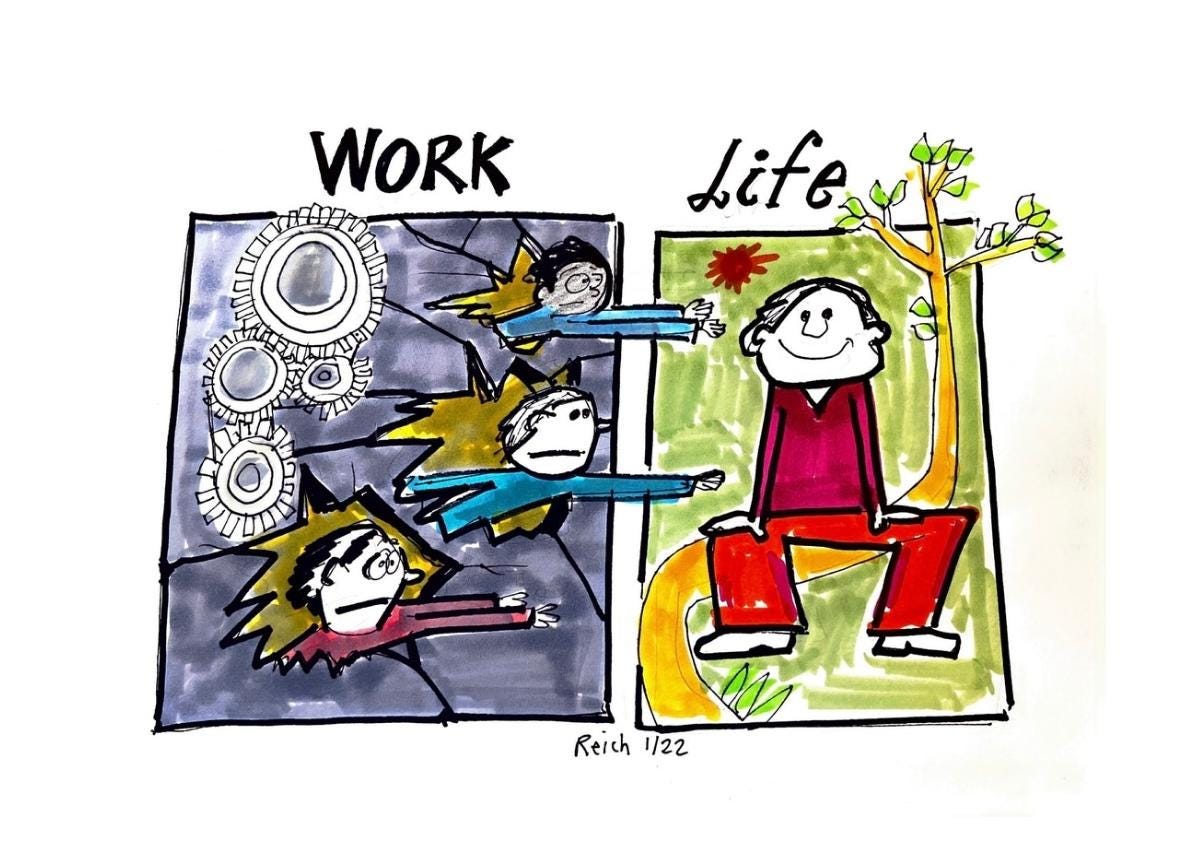
The End of Work
Description
Across America, hospitals are pushed to the limit because so many health care workers have quit just as Omicron is surging.
But hospitals aren’t alone, and Omicron isn’t the only culprit. We’re witnessing one of the most profound changes in the American labor force in a half century, at least since middle-class women entered paid work in large numbers during the 1970s. Only this time, women and men aren’t entering work. Many are leaving it (or at least, the way work has been organized).
For decades, work has had a total grip on most people's lives because there have been so few alternatives to either working full time (often 50 or 60 hours a week, sometimes at two or more jobs), or not working at all and worrying about making ends meet. Instead of working to live, most of us have been living to work.
Yet in recent months there’s been something of a sea change. The so-called “quit rate” of workers voluntarily leaving their jobs has reached record levels. The labor-force participation rate (the percent of people of working age who are in the workforce) is remarkably low for this point in a recovery. More workers are on strike than at any comparable period in the last thirty years.
As secretary of labor, I used to hear people complain that they needed more work or better pay. Now, I’m hearing lots of people say “I don’t want to work this hard any more,” or “I’ll be damned if I’m going to spend the rest of my life in this rat race,” or “They can’t pay me enough to sacrifice my life like this,” or “I want to be in control of my life.”
The GenZ’s I teach are even more adamant about not devoting their lives to work. “Life is too short” — they tell me.
The pandemic has surfaced many issues that have been smoldering for years -- mandatory overtime, stagnant wages, dangerous working conditions, insecure employment, employment discrimination, and lack of paid sick leave or paid family leave.
It has also forced -- or allowed -- many people to reconsider what they want from work and from their lives.
Donald Sull, Charles Sull, and Ben Zweig recently conducted a massive study of workplace data for the MIT Sloan Management Review, including more than a million Glassdoor reviews. What are employees complaining about at companies losing the most workers in this tsunami of resignations? Interestingly, not mainly pay. Complaints about pay ranked 16th of the issues that predict quits. The biggest predictor is a toxic culture – workplaces that fail to promote diversity, equity, and inclusion; that don’t make workers feel respected and valued; and make them to feel insecure. No one likes to be underpaid. But it turns ou