Episode Details
Back to Episodes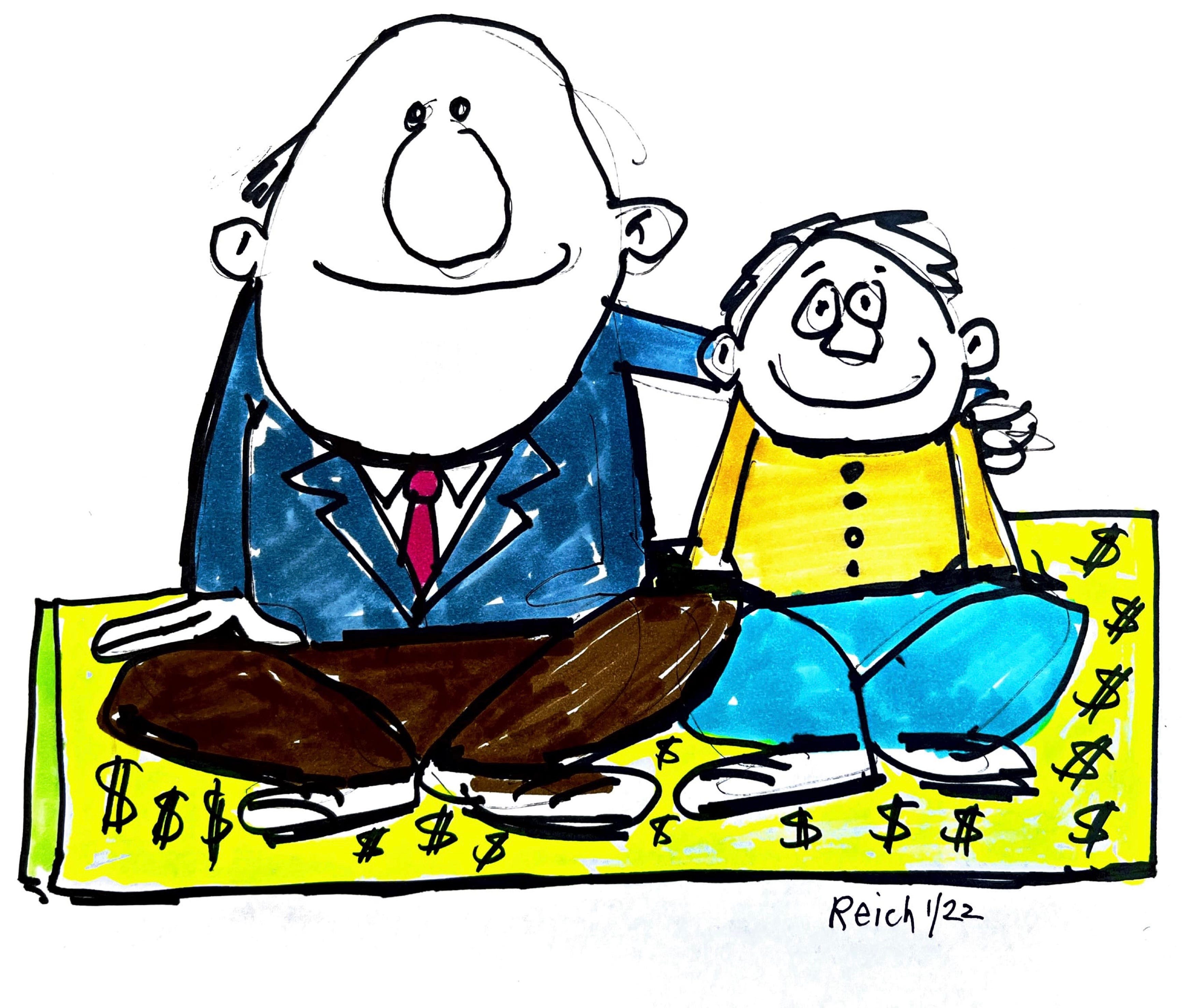
Share the profits!
Description
In light of the news this week that the economy has been growing at a record rate (and corporate profits are also hitting record highs, the stock market notwithstanding), several of you have asked me specifically what can be done to spread the benefits of economic growth. I have a few ideas, which I’ll share with you in coming weeks.
One idea is an old one that was tried with great success but is now all but forgotten. It’s called profit-sharing. It emerged from the tumultuous period when America shifted from farm to factory. In 1916, Sears, Roebuck and Co., then one of America’s largest corporations with over 30,000 employees, announced that it was embarking on a major experiment — profit-sharing. The firm gave workers shares of stock, making them part owners.
Shortly thereafter, the Bureau of Labor Statistics issued a report on profit-sharing, suggesting it as a way to reduce the “frequent and often violent disputes” between employers and workers. Profit-sharing gave workers an incentive to be more productive since the success of the company meant higher profits would be shared. It also reduced the need for layoffs during recessions because payroll costs dropped as profits did.
Profit-sharing proved a huge success. Other companies that joined the profit-sharing movement included Procter & Gamble, Pillsbury, Kodak, and U.S. Steel.
By the 1950s, Sears workers had accumulated enough stock that they owned a quarter of the company. And by 1968, the typical Sears salesperson could retire with a nest egg worth well over $1 million (in today’s dollars).
There was a downside. When profits went down, workers’ paychecks would shrink. And if a company went bankrupt, workers would lose all their investments in it.
The best profit-sharing plans have been in the form of cash bonuses that employees can invest however they wish, on top of predictable wages. At Lincoln Electric, for instance, which has had profit-sharing since 1934, employees receive a profit-sharing cash bonus worth, on average, 40 percent of their annual base earnings.
But profit-sharing with employees has all but disappeared in large corporations, which since the start of the 1980s — and the advent of corporate “raiders” (now private-equity managers) — have focused on maximizing shareholder returns. Sears phased out its profit-sharing plan in the 1970s (and filed for bankruptcy protection in 2018).
Yet profit-sharing with top executives has soared — as big Wall Street banks, hedg