Episode Details
Back to Episodes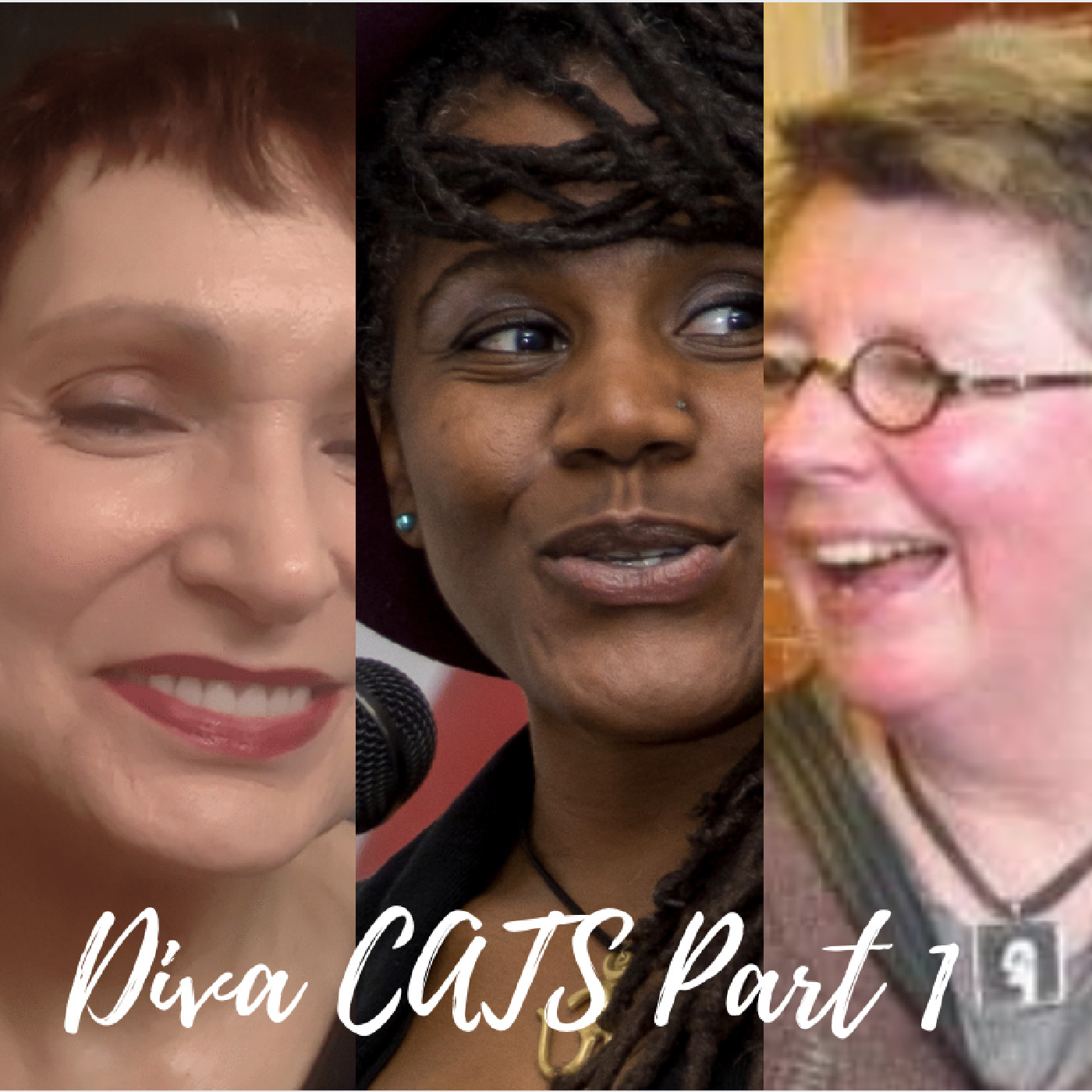
13: Forget Pipe Cleaners: Why Real Cultural Organizing Is Not What You Think It Is – Part 1
Season 1
Episode 13
Published 5 years, 3 months ago
Description
Episode 13: DIVA CATs
Threshold Questions and Delicious Quotes
What’s A CAT?
I usually bring a packet of seeds and give everybody some seeds. Because I think that that's what we're doing. Planting those seeds in our field, right, ... because we're growing things and that notion of working with people, collaborating conceiving things together, imagining things together and co- creating things together. Roseann Weiss
Actually, I don't teach, Parker Palmer says, you can't teach anybody anything, you can't teach math, can't teach science, you can't teach art, all you can teach is who you are. And so, I've spent most of my life being a listener and listening for stories and then helping people tell their stories, Con Christeson
I make art in the community I'm a community caregiver, whatever is required, that's what I'm going to do. I'll go clean up the “beep” I just beeped myself. You know, sometimes I make that “beep”, and sometimes I clean it up. Pacia Anderson
How does your work show up in the community?
Taking what I've learned ... making work with other people, creating things that are visible to the community, building a community around the studio that I have in the Cherokee Arts District here in St. Louis ---a laboratory. Con Christeson
I find that I'm a conduit or perhaps a bridge would be another way to talk about it. and maybe that's what training is. connecting people, putting people together, finding ways to put things in front of people that might be useful to them. Roseann Weiss
What questions should activist artists be asking?
...have you been asked for your help? Have you been invited to do this particular thing? How do you know the people that you want to offer your help to even need your help? How do you know that your help isn't harmful? Pacia Anderson
And if I if I'm going to consider myself successful. I want to know that you can answer the question, how do you see yourself? How do you see others and how do you see others seeing you? Con Christeson
How do we gather what do we do when we gather? How do we make sure that everyone knows that they're welcome? How do we make it so that we can continue to do so for a purpose that benefits all of us and encourages the best parts of our humanity? Pacia Anderson
Transcript
November 17, 1998, St. Louis Missouri. The subtly illuminated room is filled by a circle of 18 utilitarian chairs. A large sheet of butcher paper spans backstage wall. At the very top, a five-inch-high hand lettered heading shouts out “SESSION 1: GETTING TO KNOW OURSELVES.” A series of questions are scrawled underneath.
What is Art? -What is Community?
What is Community Development?
What is the History and Ecology of Arts-based Community Development?
Where do I fit in this landscape?
A young woman carrying a backpack approaches the circle tent