Episode Details
Back to Episodes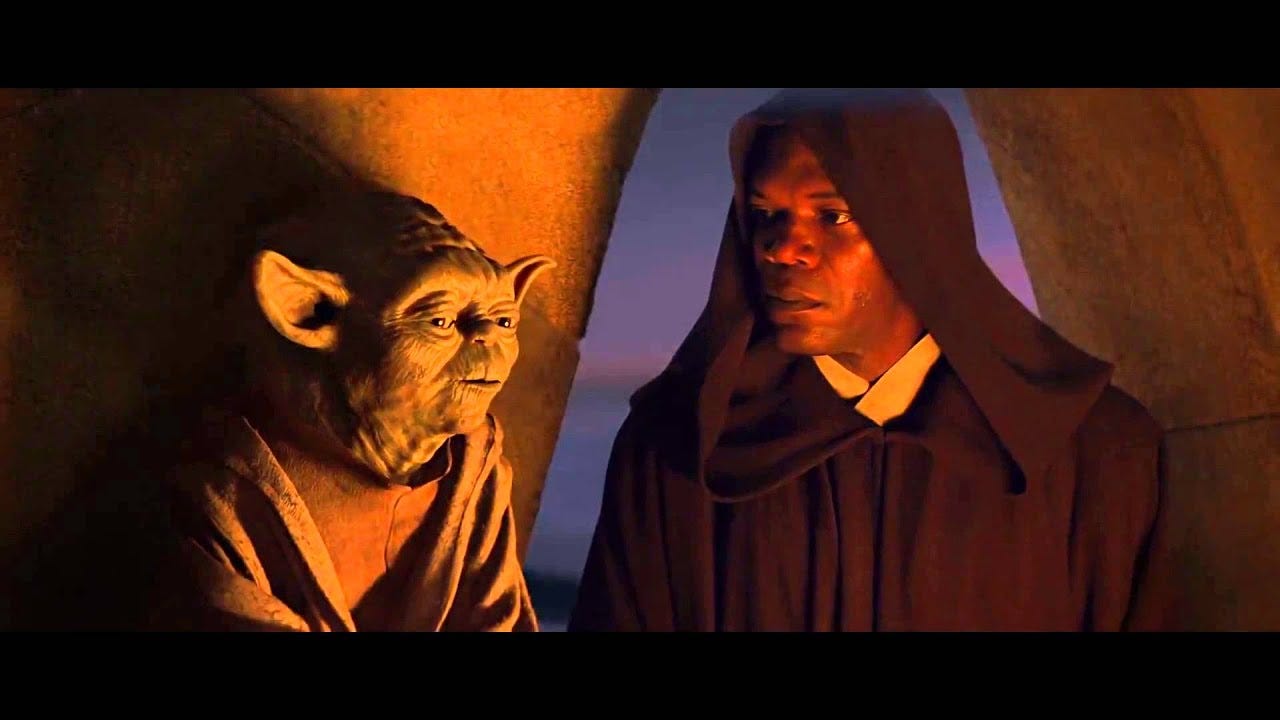
Always two there are
Description
A couple of posts ago, I talked about whether church should be thought of more as a family (or community) or as a society (or enterprise). I ended up arguing that both were important, and needed to be held together.
And this got me thinking.
Have you ever pondered just how many different aspects of Christian teaching are exactly like this—consisting of two truths that need to be held together at the same time?
Always two there are
At the risk of opening a can of bantha fodder with all you Star Wars nerds out there, one of the very few interesting things to emerge from the otherwise execrable Episode I: The Phantom Menace was the elucidation of the ‘rule of two’. The evil Sith lords, it seems, were very much into ‘two’ as a number.
‘Always two there are’, croaks Yoda, ‘no more, no less; a master and an apprentice’.
Which is a tad ironic coming from Yoda, because it’s not just the Sith. The whole ridiculous philosophical mashup of the Star Wars universe (of which Yoda is the main spokes-jedi) also depends on a basic dualistic fight between two—between the good side and the dark side of the Force.
But how are those two related?
In Star Wars (as in its ancient real world ancestor, Manichaeism), the two are in constant tension and war, striving for supremacy.
In other philosophies (like Buddhism and Gnosticism and all forms of mysticism), the basic two-ness of the world is resolved by downplaying, denying or demonising one side of it—the physical world and its suffering is bad, nasty and not quite real; only the spiritual, non-physical realm is real and good and worth pursuing.
And in modern rational humanism (following Hegel) we are confident that we can think the two antithetical sides together, and by so doing come to some new and greater synthesis. To which I would say—two world wars, and 100 million killed in genocides? Synthesize that!
However, the biblical universe has its own distinctive approach to the ‘twoness’ of reality. Think, for example, about the following pairs of theological truths:
* God’s sovereignty and human responsibility, in our conversion and in the rest of our Christian lives;
* God’s providential upholding of the creation at every moment, and the rational, cause-and-effect functioning of the world day by day;
* the divine authorship and human authorship of Scripture;
* the full divinity of Jesus Christ and his full humanity;
* God’s immanent, close presence with all of us and his holy transcendent otherness, far above all of us;
* the ‘vertical’ element of our church gatherings (our engagement with God himself) and the ‘horizontal’ element (our engagement with each other);
* the fact that we are fully and completely justified by Christ’s blood, and yet at the same time remain sinful in our character and behaviour (simul justus et peccator as Luther put it; ‘at the same time justified and a sinner’);
* the reality of of being seated at God’s right hand now, and yet remaining fully here in this present evil age—our eschatology is now but not yet;
* we stand before God as individuals and grow as individuals; and yet we are unavoidably part of a corporate body as well (whether that is all of humanity in Adam, or the body of Christ).
Perhaps you can think of others.
It is very striking how many of the great truths of Christian revelation consist of two truths held together at the same time—neither denying one side nor the other, nor seeking to resolve the apparent tension between them.
In fact, the history of Christian heresy and error could be told as the failure to hold two truths fully together, either by downplaying one truth or the other, or by thinking t