Episode Details
Back to Episodes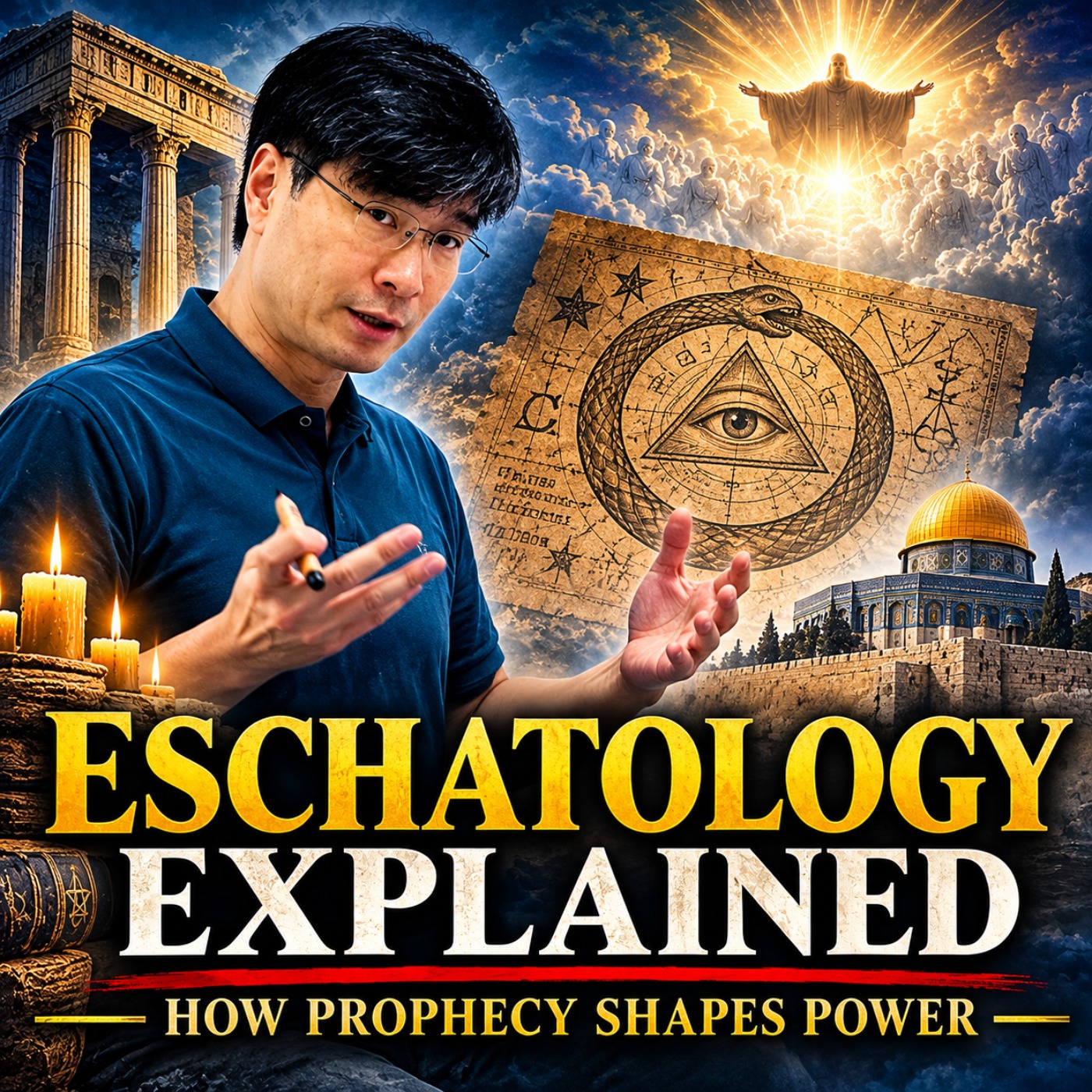
Why Do People Believe the World Must End?
Description
How can beliefs about the end of the world become forces in politics and history?
This episode explores the lecture's theory that eschatology—the study of the end of history—can provide powerful narratives for people seeking influence and control. The discussion moves from the occult and secret societies to Hermetic philosophy, with its ideas about mind, correspondence, polarity, and cause and effect.
It then examines how biblical stories can be reinterpreted through Kabbalah, using Adam and Eve, King David, and the idea of repairing the world to explore the relationship between sin, humility, spiritual reunion, and human desire.
The lecturer connects these traditions to a broader theory of political power and collective imagination. Some claims about hidden groups and modern governments are speculative and should be evaluated critically rather than treated as established history.
For listeners interested in eschatology, Hermetic philosophy, Kabbalah, occult traditions, and the intersection of religion and geopolitics, this episode offers a provocative exploration of belief and power.
Eschatology Explained: End-Times Beliefs and Politics
Eschatology Explained: How Prophecy Shapes Power
Hosted on Acast. See acast.com/privacy for more information.