Episode Details
Back to Episodes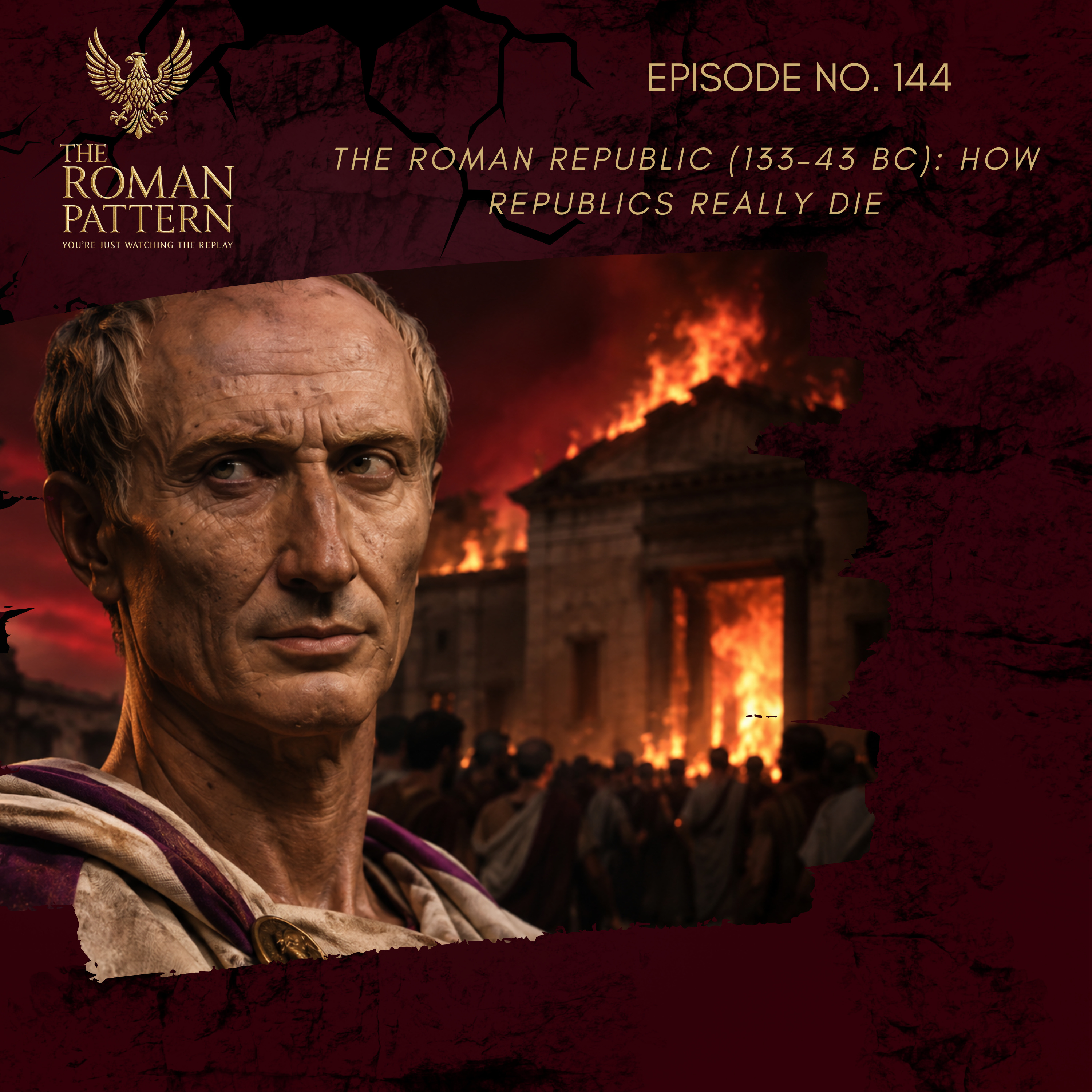
The Roman Republic (133–43 BC): How Republics Really Die
Description
The fall of the Roman Republic took about ninety years, from the killing of Tiberius Gracchus in 133 BC to the Second Triumvirate and the proscriptions of 43 BC, and most of the rules that ended it were broken by men who said they were saving it.
This is the last episode of the series, and it lays the whole collapse out as one chain of precedents. We follow the deposing of the tribune Octavius and Nasica's mob on the Capitol, the Senate's emergency decree against Gaius Gracchus in 121 BC, Marius and the armies that looked to their general for land, the Social War, and Sulla's march on Rome, his proscriptions and his dictatorship with no end date. Then come Pompey's private army and his extraordinary commands, the money of Crassus, the First Triumvirate and the deal at Luca, bought elections, years with no consuls, and the Senate house burning as Clodius's funeral pyre. Every break came with a reason, and every one made the next one easier.
The chain closes with Caesar crossing the Rubicon, the dictatorship for life, the amnesty after the Ides of March, Octavian taking the consulship with an army, and the Lex Titia turning a private deal into a legal office. We finish with the historians who disagree, Erich Gruen and Harriet Flower, and with what the pattern looks like in a polarized republic today, where each side bends a rule by pointing to the last time the other side bent one.
This is my reading of the evidence, and serious historians argue against it, so read them too and make up your own mind.
THE FALL OF THE ROMAN REPUBLIC SERIES
The Roman Constitution and Cannae → Tiberius Gracchus → Gaius Marius → The Social War → Sulla → Spartacus → Marcus Crassus → Pompey → Julius Caesar → The First Triumvirate → The Murder of Clodius → Crossing the Rubicon → The Ides of March → Cicero → The Pattern (you are here)
Cincinnatus and Scipio Africanus, the two bonus episodes you asked for, are coming soon and will sit at the start of the playlist.
NEXT EPISODE: Actium (31 BC): The Battle That Actually Ended the Republic, the start of our next series, The Roman Revolution.
The Money, Borders, Power framework primer is episode 115.
CHAPTERS
0:00 How the Roman Republic really died
2:53 Why no single day killed the Republic
8:04 Tiberius Gracchus and the first broken rule, 133 BC
10:26 Gaius Gracchus and the emergency decree
12:15 Marius, Sulla and armies loyal to their generals
19:02 Pompey, Crassus and the First Triumvirate
21:53 Bought elections and the burning Senate house
23:41 The pattern behind every broken rule
27:19 Caesar, the Ides and the end in 43 BC
30:00 The historians who disagree, and the lesson for today
SOURCES
Ancient: Plutarch, Lives of the Gracchi, Marius, Sulla, Pompey, Caesar and Cicero; Appian, Civil Wars; Sallust, The War with Catiline; Polybius, Histories, Book 6; Cicero, Letters to Atticus; Asconius, Commentary on Cicero's Pro Milone.
Modern: Ronald Syme, The Roman Revolution (1939); Erich Gruen, The Last Generation of the Roman Republic (1974); Harriet Flower, Roman Republics (2010); Edward Watts, Mortal Republic (2018).