Episode Details
Back to Episodes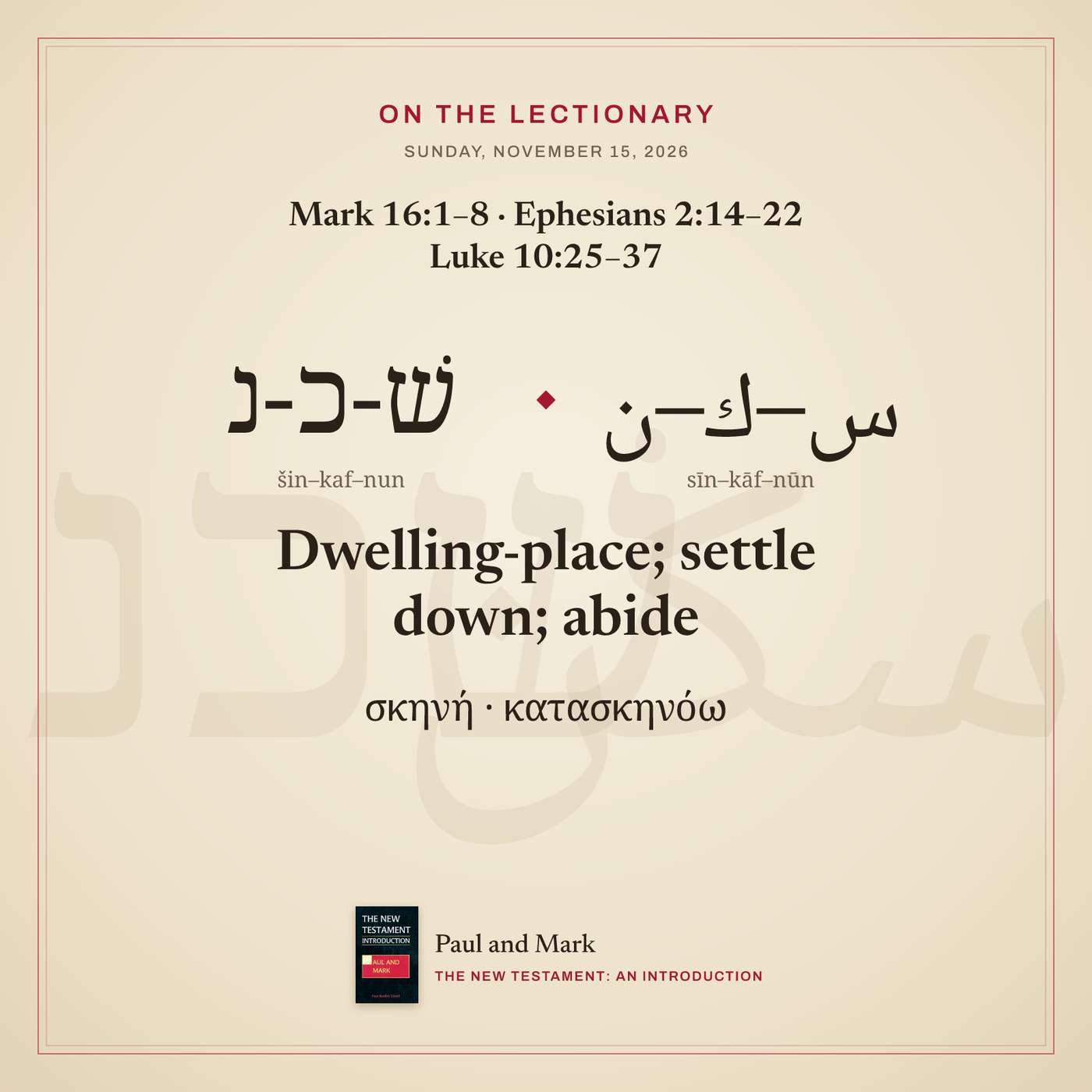
Mark 16:1-8 · Ephesians 2:14-22 · Luke 10:25-37 — Sunday, November 15, 2026
Description
A daily note from the team at OCABS.ORG, drawing on the published works of Fr. Paul Nadim Tarazi, with citations to his books and lectures.
Readings: Mark 16:1-8; Ephesians 2:14-22; Luke 10:25-37.
Mark's resurrection account ends not with an appearance but with an empty tomb and a command: Peter and the disciples are told to meet Jesus in Galilee. Fr. Paul reads this as Mark's deliberate undoing of Peter, "the main anti-hero" of the Gospel who keeps faltering, now given a chance to start over outside Jerusalem. Galilee stands for territory outside Judea, a wilderness place that in Fr. Paul's lectures parallels the earlier scene of Jesus praying in a lonely place before dawn; the same Greek word for 'early' ties the two episodes together. The women's silence and fear at the tomb, and Salome's presence alongside the two Marys, mark the still-hesitant Jerusalemite community, bound to the temple, being summoned toward the wider mission to the nations.
Ephesians describes Christ as the one who tore down "the middle wall of separation" between Jew and Gentile, ending the hostility carried by the law of commandments and making the two into one new man. Fr. Paul shows how the passage piles up words built on the Greek root oik-, "house": no longer strangers and sojourners but members of the household, built upon the apostles and prophets, growing into a holy temple, a dwelling place of God in the Spirit. This building language, echoed from Colossians, presents the reconciled community itself, not a place in Jerusalem, as the site where God dwells, joined together through access to the Father in one Spirit.
Asked who counts as neighbor, Jesus answers with the Samaritan who alone stops for the wounded man while the priest and Levite, already finished with their business in Jerusalem, pass by. Fr. Paul's lectures note the trap in the lawyer's question: one must not place oneself as the Levite judging who deserves help, but as the man on the road, and then "go and do what the Good Samaritan did." The command "Go and do likewise" answers the opening question about inheriting eternal life, and elsewhere Fr. Paul treats this love of neighbor as the whole of the law's commands, summed up without exception for outsider or stranger.
The root pair of the day · שׁ-כ-נ šin–kaf–nun, מִשְׁכָּן miškan · س–ك–ن sīn–kāf–nūn, مِسْكِين miskīn · dwelling-place; settle down; abide. Miškan and miskīn root the note's discussion of Ephesians' building language: Christ's one new man grows into a holy temple, a dwelling place (katoikēterion) of God in the Spirit. The Greek skene, tent, and kataskenoo, to dwell, echo miškan, the tabernacle where God said, 'let them make me a sanctuary, that I may dwell among them.' The reconciled community itself becomes that dwelling, not a place in Jerusalem. cf. The Consolation of Consonants
Sources: Tarazi, The New Testament: An Introduction, vol. 1, Paul and Mark, p. 82; Tarazi, The New Testament: An Introduction, vol. 4, Matthew and the Canon, p. 281; Orthodox Audio Bible Commentary, Mark (vol. 41), part 1, at 2:42:25; Tarazi, The New Testament: An Introduction, vol. 3, Johannine Writings, p. 259; Tarazi, Colossians and Philemon: A Commentary, p. 97; Tarazi, Colossians and Philemon: A Commentary, p. 53; Tarazi, Ephesians and 2 Thessalonians: A Commentary, p. 58; Tarazi, Ephesians and 2 Thessalonians: A Commentary, p. 68; Tarazi, Ephesians and 2 Thessalonians: A Commentary, p. 31; Tarazi, The Rise of Scripture, p. 467; Tarazi, Colossians and Philemon: A Commentary, p. 27; Tarazi, Decoding Genesis 1–11, p. 353; Orthodox Audio Bible Commentary, Luke (vol. 42), part 1, at 3:50:26; Tarazi, The Rise of Scripture, p. 55.
Opening music: Taksim Arbi, Bichi Slama, oud (Tunis, Archives de la Parole, 1930s), public domain. Source: g