Episode Details
Back to Episodes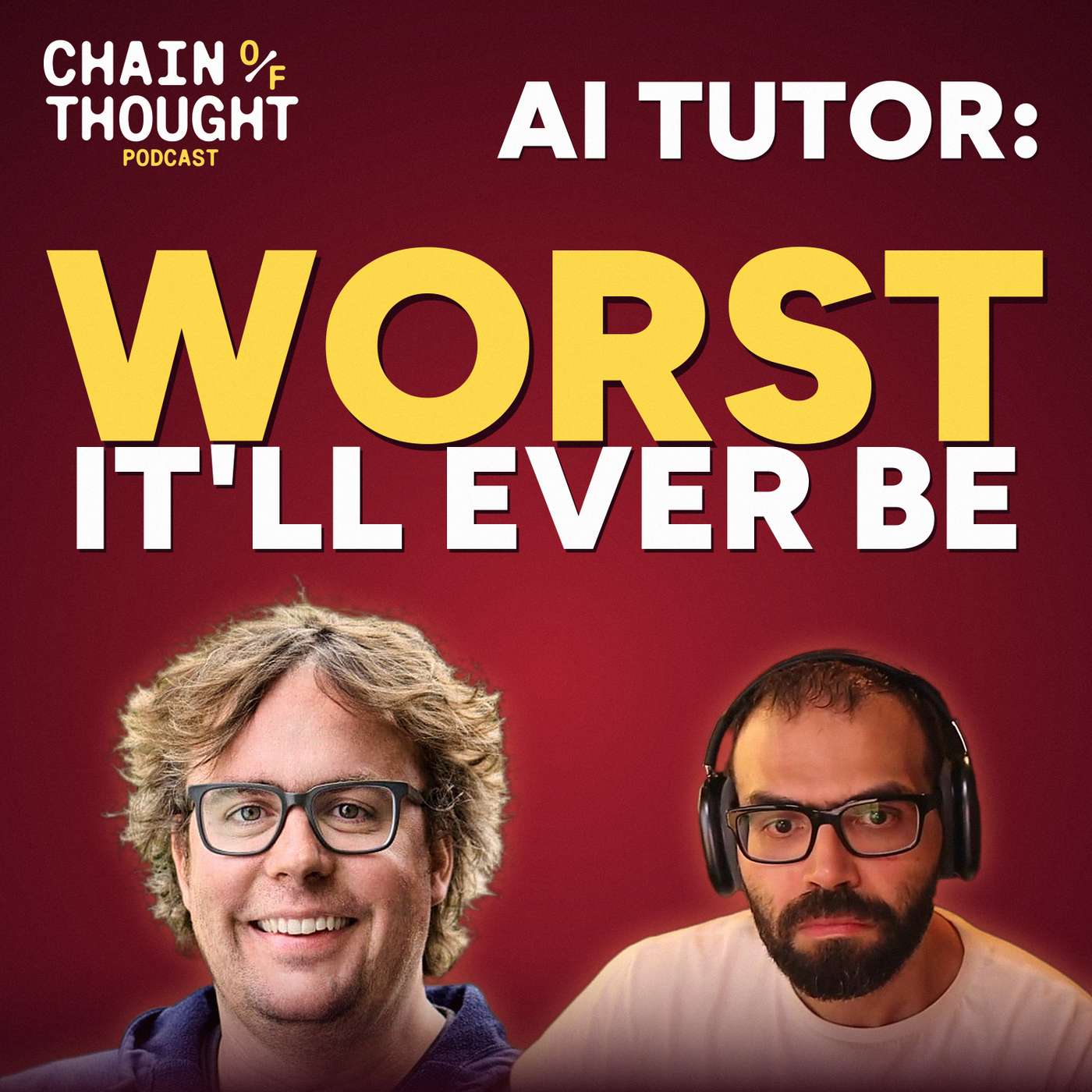
This is the worst AI tutor we'll ever have | DataCamp
Description
DataCamp tested an early version of its AI tutor against its classic courses, and the tutor won: willingness to pay, engagement and satisfaction were all higher. It was also easily ten to twenty times more expensive per hour of learning than DataCamp's previous setup. Financially, Jonathan says, shipping the better product would have made the business worse.
He expects that cost to fall until it looks like the cost of serving DataCamp's interactive courses. The only question, he says, is whether that takes four to eight weeks or another year.
He's building the tutor on that bet.
Jonathan Cornelissen is co-founder and CEO of DataCamp and is joined by Yusuf Saber, DataCamp's Chief AI Officer and the founder of Optima, the learning company DataCamp acquired. They walk Conor through how the tutor works: teaching behaviors it has to show on cue, evals that test each one repeatedly, a mix of models picked for speed and cost, and a latency budget measured in milliseconds.
We cover:
- How DataCamp turns what great human teachers do into about 30 core behaviors, and how the tutor gives feedback: one main issue at a time, hints phrased as questions, and asking before it reveals a solution
- The A/B test against DataCamp Classic, and why Jonathan calls today's tutor the worst one DataCamp will ever have
- The models behind the tutor: Claude Sonnet handles about 70% of the work, Gemini Flash used to handle much of the fast work, and a cheaper tier is starting to take on more
- Why open models keep failing on speed, hosting and caching, even after one outperformed DataCamp's best model at the time
- Going from almost nothing to a run rate of over a million hours of learning a year, and why the same three-hour course can take one learner half an hour and another six hours
- Pre-generating responses while the learner thinks, and why a stronger model lets them aim for cache hit rates in the mid-90s
- What Bloom's tutoring research says, why doing better on a test isn't proof of learning, and what happens to junior roles when AI takes the grunt work
Connect with Jonathan Cornelissen:
LinkedIn: https://www.linkedin.com/in/jonathan-cornelissen/
Twitter/X: https://x.com/CornelissenJo
DataCamp: https://www.datacamp.com
DataCamp on X: https://x.com/datacamp
Connect with Yusuf Saber:
LinkedIn: https://www.linkedin.com/in/yusuf-saber-ba380b15/
Connect with Chain of Thought host Conor Bronsdon:
Newsletter: https://newsletter.chainofthought.show/
Twitter/X: https://x.com/ConorBronsdon
LinkedIn: https://www.linkedin.com/in/conorbronsdon/
YouTube: https://www.youtube.com/@ConorBronsdon
More episodes: https://chainofthought.show
Chapters:
(0:00) Better product, worse economics
(0:59) How the tutor helps a struggling learner
(7:09) From static courses to AI tutoring
(9:25) Multi-agent architecture behind the tutor
(13:10) Scaling costs and testing open models
(18:30) Economics of cost per learning hour
(22:13) What great looks like for DataCamp
(25:33) Latency budgets and precomputed lesson plans
(32:53) Measuring learning outcomes with Bloom's research
(39:20) AI skills gap for early-career workers
(43:22) Evals built on tutor behavior expectations
(50:12) Closing thoughts on how skills are changing
Thanks to CoralBricks for sponsoring this episode. CoralBricks serves open models through one API, fast and at low cost: Deep