Episode Details
Back to Episodes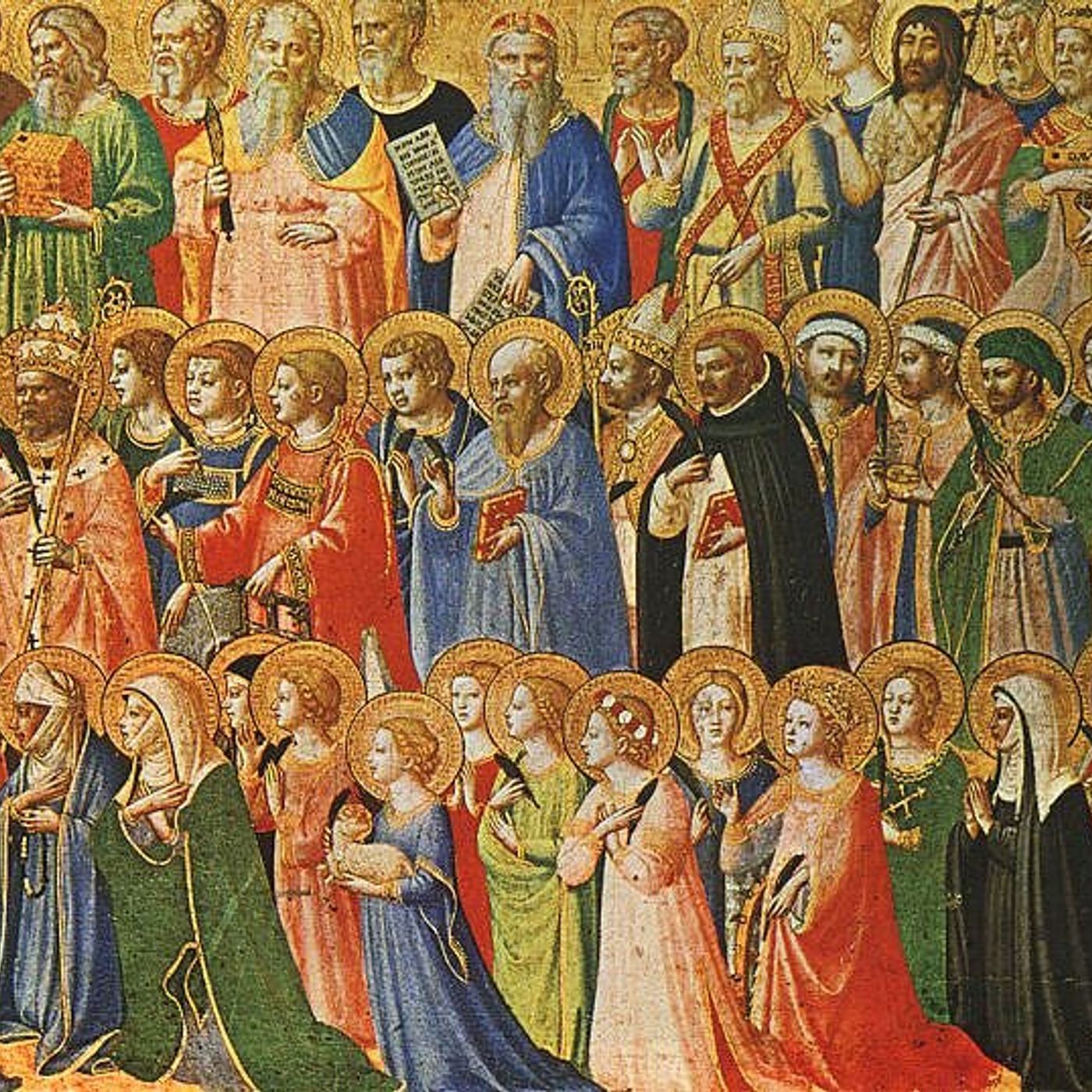
The Saints Can Help You
Published 1 day, 16 hours ago
Description
Why All This Stuff About Mary and the Saints?When new people visit this church, they sometimes have a question. It is a question that comes up quite frequently, actually, from people who are not regular attenders at this kind of church, let’s say. And the question that comes up time and time again is: What’s all this stuff about Mary? Specifically, it is always Mary—everyone wants to know about Mary—and there is a question that comes along with it: What about prayer to the saints? What about Mary? What about prayer to the saints?It is a very interesting question. It is a completely legitimate question to ask. Why all this stuff about Mary? Why all this stuff about the saints? And I think part of the concern there is that when people come to a service like this and they hear these kinds of things happening, they perhaps think that there is some kind of worship of Mary and the saints going on, or that we consider that Mary and the saints are a kind of barrier between us and God, and that we have to go through those people in order to get to God, as it were. They present a kind of barrier to us.Whilst I completely accept that these are legitimate concerns and it is a legitimate question, I think it actually relies on something of a misconception. For you see, we do not worship Mary and the saints, and we do not even pray to Mary and the saints in the sense that is often imagined. To Mary and the saints we give veneration, which means appropriate honour and respect, and we invoke Mary and the saints.Invocation: Asking for PrayerThe concept of invocation, even though the word is not something we use often in everyday speech, is actually quite a familiar concept to us. It means that we are asking the saints to pray for us. We are asking Mary and the saints to pray for us.And there is a simple logic to the invocation of Mary and the saints. It is the same logic that we would apply to one another in the course of our ordinary Christian lives together. The Book of James, for example, says that the prayer of a righteous person availeth much—or, to use slightly more contemporary language, the prayer of a righteous person has great power in its working.So I might ask you to pray for me; you might ask me to pray for you. Why do we do these things? Why do we ask one another to pray for us? It is because we value the prayers of other people. We might even value even more the prayers of people whom we consider to be especially holy. Maybe it is just that we ask people to pray for us if we think it is likely that they will remember to do so.And so that logic—us praying for one another and asking other people to pray for us—that is what invocation is. And this extends, in this view of things, not only to the living, but also to the saints who are in heaven and with God.Of course, in heaven we know that intercession happens in general, because Scripture tells us that Christ is interceding for us before the Father, and the New Testament even says that the Holy Spirit intercedes for us also. So intercession continues in heaven. It is not just something for this world now; it is also something that happens in glory as well. And so we ask the saints to pray for us, confident that they will, confident that they are in God’s presence and that those prayers are meaningful.Communion with the SaintsBut this also raises the question of communion—communion with the saints. Because similarly, when I ask you to pray for me, or if you ask me to pray for you, a sort of connection is made. A sort of communion is developed. It is not just that I am confident that you will go away and pray for me; it is that in some sense I have shared something of myself with you, or you have shared something of yourself with me, and so this creates a kind of communion, a kind of bond, as it were.And so when we invoke the saints—when we ask the saints to pray for us—it is not just a sort of disconnected request, as it were, but it creates a kind of communion. It creates a kind o