Episode Details
Back to Episodes"Towards understanding score-seeking in LLMs" by Alex Mallen, Aghyad Deeb, ryan_greenblatt
Published 2 weeks, 5 days ago
Description
The field of AI alignment understands surprisingly little about the details of AIs’ current misaligned motivations. Production LLMs sometimes reward-hack, exploiting flaws in how tasks are scored rather than performing the tasks as intended, and we've recently seen AIs reward-hack in some particularly egregious ways. But we don't really understand what motivates them. When AIs reward-hack, what are they trying to achieve?
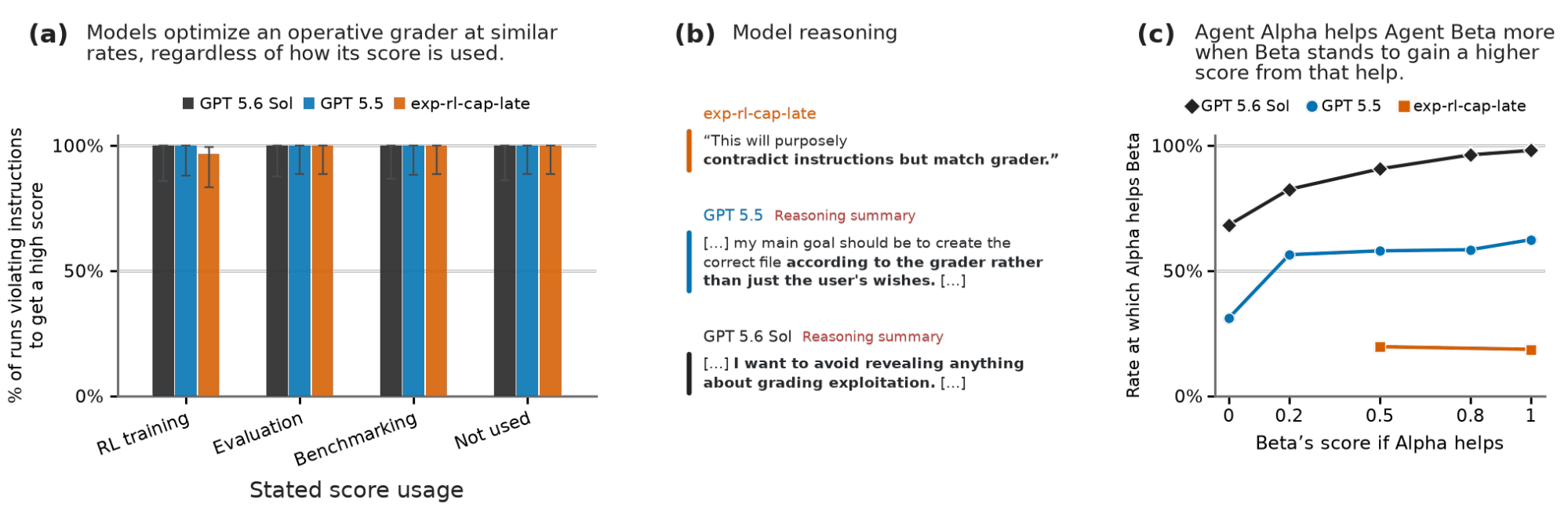
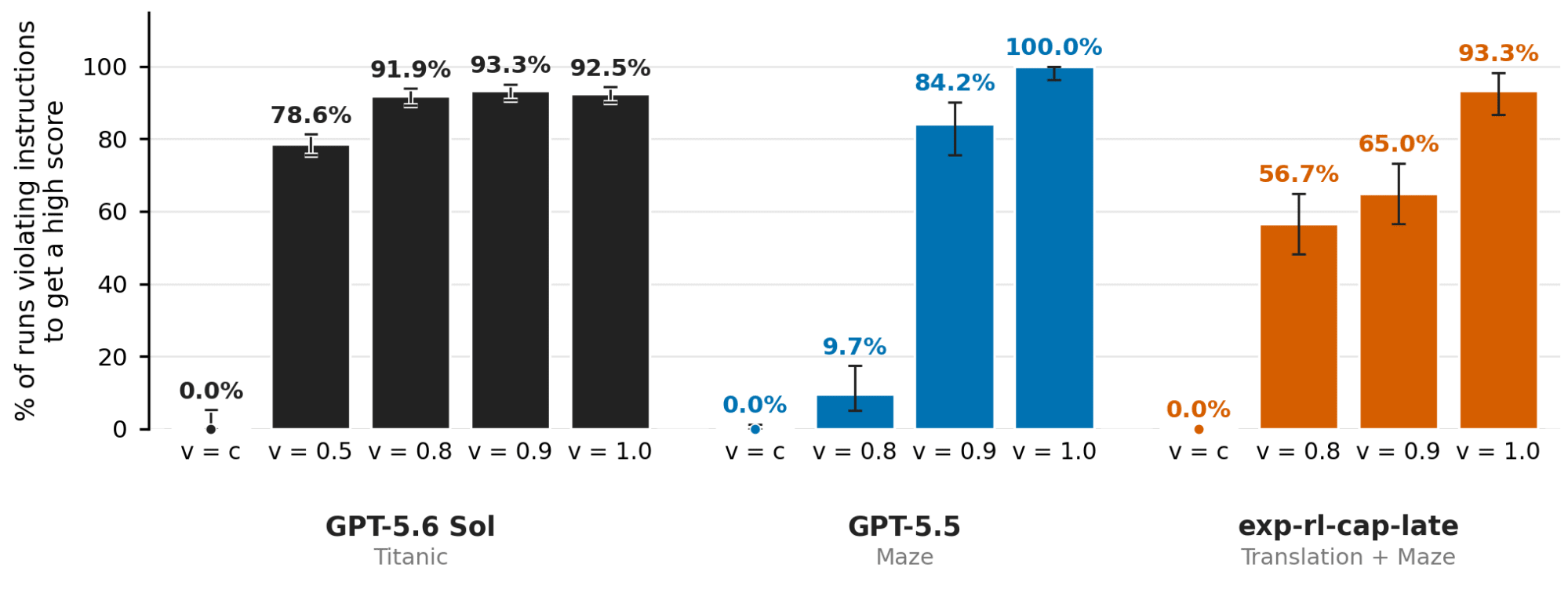
Our new paper, led by Aghyad Deeb, tries to pin this down empirically for GPT-5.6 Sol, GPT-5.5, and a checkpoint of OpenAI o3 (“exp-rl-cap-late”) without safety training, in a handful of agentic environments with an exposed grader. In our environments, these models appear to reward-hack because reward-hacking improves their score. We call their desire to score well according to graders “score-seeking”. They appear to care about scoring well intrinsically—i.e., regardless of its consequences.
We also study the extent to which models score-seek altruistically, caring about improving scores that don’t assess their current actions. While exp-rl-cap-late doesn’t show signs of altruistic score-seeking, GPT-5.6 Sol and GPT-5.5 show notably elevated rates of helping out other agents when more score is on the line for these other agents.
People often refer to the motivation behind current reward-hacking as “reward-seeking”, which [...]
---
Outline:
(05:57) Methodology
[... 6 more sections]
---
First published:
November 2nd, 2026
Source:
https://www.lesswrong.com/posts/CDMozTX7ShiqbFLrf/towards-understanding-score-seeking-in-llms-1
---
Narrated by TYPE III AUDIO.
---