Episode Details
Back to Episodes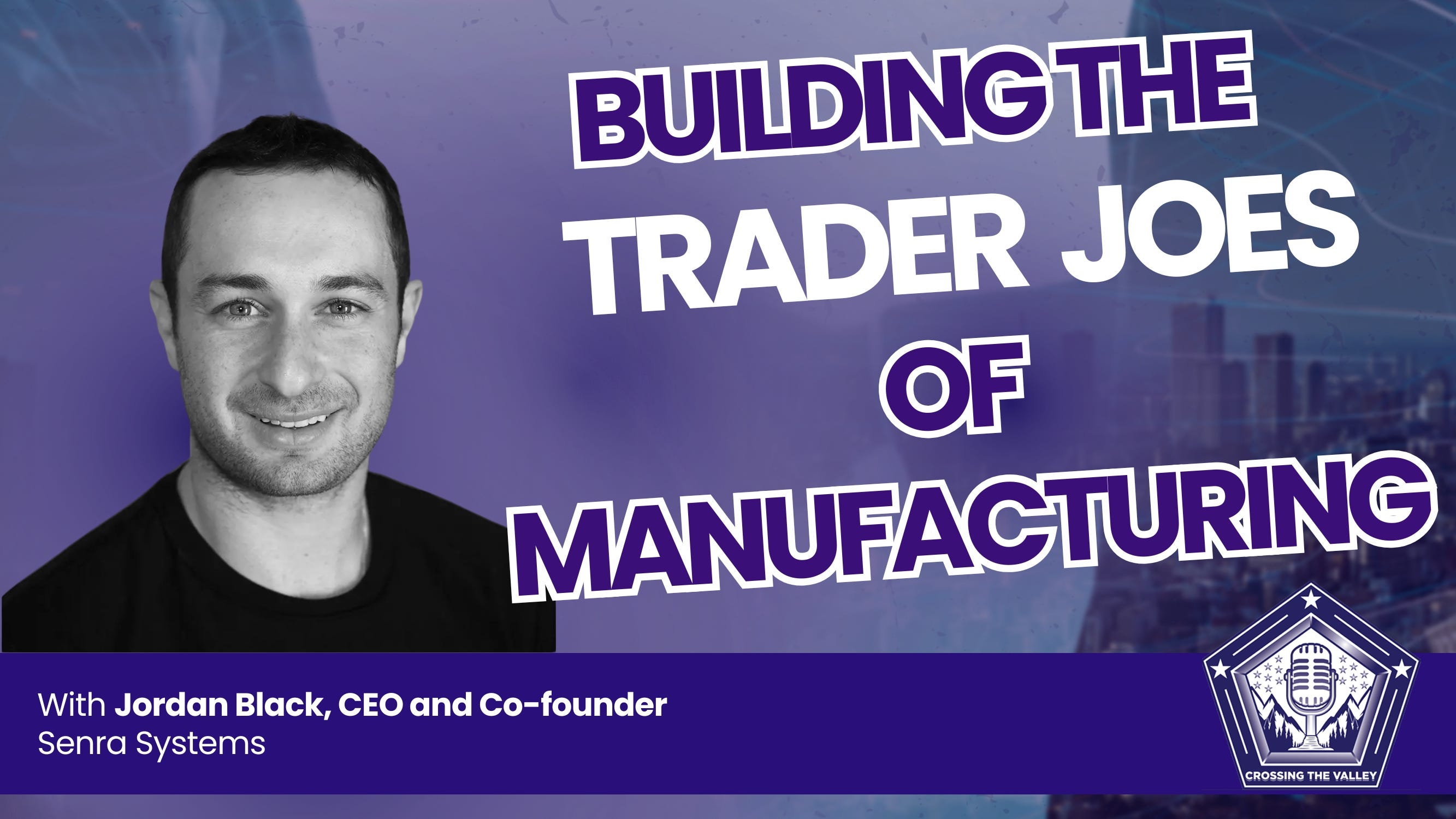
Ep. 97: Why SpaceX Outsourced 95% of Its Wire Harnesses
Description
Jordan Black had spent five years on wire harnesses at SpaceX when he flew to a factory in Mexico that builds automotive harnesses at high rate. One every two minutes. He spoke Spanish to the floor lead and asked to get on the line.
He couldn’t build one.
“I should know this,” he told me. “I’ve been through the wringer at SpaceX understanding how wire harnesses get made, and I couldn’t even build a wire harness down there.” His conclusion was that something in the industry was broken if an expert couldn’t walk into a factory and do the work. He compared it to Wi-Fi. Nobody thinks about how to connect when they walk into their house. A technician on a harness line should get the same treatment.
He left SpaceX on a Friday and started Senra the next week.
About Jordan Black
Jordan’s path into manufacturing went through customer service first. He started as a busboy and host, and he liked making someone’s night out go well. Then he fixed roller coasters at the Santa Monica Pier, at 4 AM, on bad coffee. He interned at Ford. At 21 he interviewed at SpaceX with several teams, and they put him on wire harnessing. He says he had no idea what a harness was until he got to the department.
He stayed in it for years as a manufacturing engineer, then became manager of avionics R&D, which covered machining, PCBAs, harnesses, and electromechanical assembly for rockets and satellites. In that role he brought machining and PCBs in house. Harnesses stayed outside. SpaceX sent him to suppliers in the US and abroad, and what he saw scared him: wooden tables, workers without formal training, and no tools or software telling anyone where a wire goes.
About Senra Systems
A wire harness is every wire that carries power and data through a machine. Jordan describes it as an iPhone charger that can be as long as a space shuttle. Without it, nothing turns on. He knows the cost personally. A rat ate through one wire in his Toyota and the car was dead.
Senra builds these harnesses for aircraft, spacecraft, launch vehicles, satellites, and defense systems. It runs on its own software platform, Amp, which ties quoting, engineering, supply chain, and production together. The company opened its second factory in Cypress, California this year, raised a $65 million Series B in July co-led by Lowercarbon Capital and Interlagos, and is already planning a third factory. The problem it solves emerges from the fact that the average harness technician is about 55 and has done this for twenty or thirty years. Demand for rockets, missiles, cars, and reactors keeps going up. The supply of people who can build harnesses keeps going down.
For more on Senra: https://senrasystems.us/
Follow Jordan: https://www.linkedin.com/in/jordan-black-138419a1/
Follow Noah: https://www.linkedin.com/in/noahsheinbaum/
Follow Crossing the Valley: www.valleycrossers.com
This is a public episode. If you would like to discuss this with other subscribers or get access to bonus episodes, visit www.valleycrossers.com