Episode Details
Back to Episodes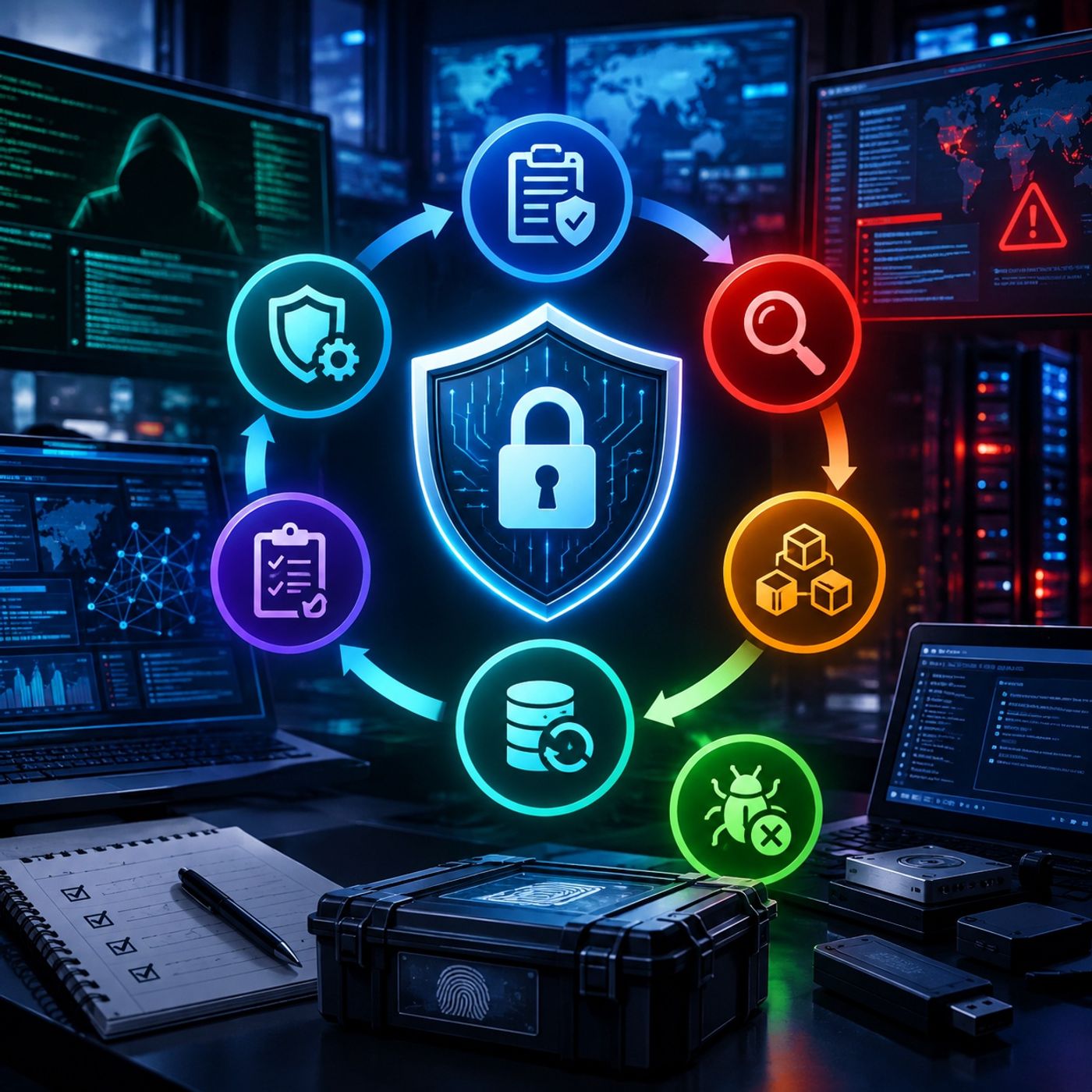
Course 46 - CompTIA Cybersecurity Analyst | Episode 21: Navigating Cyber Incidents
Published 2 days, 8 hours ago
Description
Episode OverviewThis episode provides an end-to-end guide to the cybersecurity incident response lifecycle, explaining how organizations prepare for, detect, analyze, contain, eradicate, and recover from security incidents.Built around the NIST SP 800-61 incident-response framework, the episode connects high-level policy with practical response procedures. It examines how executive-approved policies establish authority, how detailed playbooks translate those policies into actionable procedures, and how organizations prepare personnel, tools, logging, and communications capabilities before a crisis occurs.The episode then follows the incident-response lifecycle from preparation and detection through containment, eradication, recovery, and post-incident analysis. It also examines common threat vectors, incident severity, stakeholder communication, evidence preservation, and the importance of continuously improving the response program.Key Topics Covered1. Incident Response Policy and GovernanceAn effective incident-response program begins with a formal policy approved at the appropriate organizational level.An incident-response policy establishes the overall framework for:
- Roles and responsibilities
- Incident classification
- Authority and decision-making
- Escalation requirements
- Communication procedures
- Evidence handling
- Regulatory and legal considerations
- Coordination with external parties
- Recovery responsibilities
The policy provides the long-term governance structure, while operational procedures and playbooks provide the practical instructions responders use during individual incidents.Policies should be reviewed periodically and updated when organizational structure, technology, threats, or regulatory requirements change.2. Tactical Playbooks and Response ChecklistsA policy defines what the organization intends to do, while playbooks help explain how responders execute specific actions.Incident-specific playbooks can address scenarios such as:
- Malware infections
- Phishing and account compromise
- Web application attacks
- Distributed denial-of-service attacks
- Data breaches
- Ransomware
- Insider-related incidents
- Advanced persistent threats
Checklists can provide phase-specific guidance while still allowing responders to adapt to the circumstances of the incident.3. Pre-Incident PreparationPreparation is one of the most important parts of incident response because critical resources may be difficult to obtain during an active attack.Organizations should prepare:
- Trained incident responders
- Logging and monitoring infrastructure
- Detection sensors
- Forensic capabilities
- Secure communication channels
- Backup and recovery mechanisms
- Contact lists
- Response documentation
- Specialized hardware and software
The episode also discusses deployable incident-response toolkits, including portable hardware and software stored in dedicated cases that can be brought to affected environments when required.The exact contents depend on the organization's infrastructure and response requirements, but may include forensic tools, storage media, network-analysis equipment, cables, adapters, and other diagnostic resources.Continuous TrainingPreparation also requires personnel to understand normal system and network behavior.A strong baseline helps analysts recognize anomalies such as:
- Unexpected network connections
- Unusual authentication activity
- Abnormal processes
- Unexpected data transfers
- Changes to critical systems
Training should therefore combine technical ski