Episode Details
Back to Episodes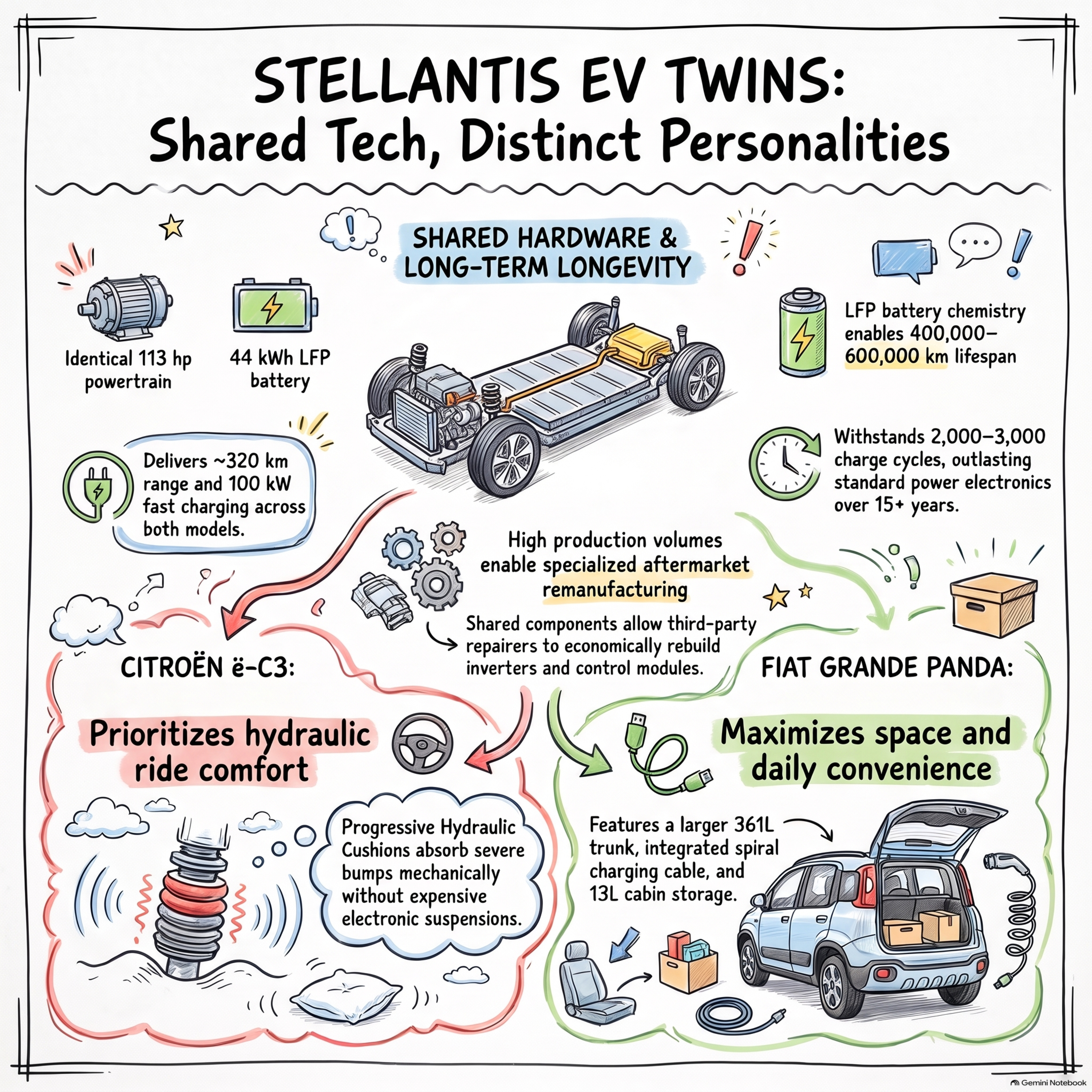
Can Budget EVs Outlast Petrol Cars
Published 5 days, 16 hours ago
Description
- Degradation Resistance: Compared to NMC (Nickel Manganese Cobalt) batteries, LFP chemistry is chemically more stable, highly heat-resistant, and less prone to degradation from frequent charging.
- Lifespan: The battery pack withstands 2,000 to 3,000 full charge/discharge cycles before dropping to 80% residual capacity, yielding a theoretical potential of 400,000 to 600,000 km (or 15–20+ years of operation).
- Fewer Moving Parts: Unlike traditional internal combustion engine (ICE) cars, electric powertrains lack high-wear components such as timing belts, valves, turbos, fuel injectors, and clutches.
- Reduced Failure Points: The absence of these complex mechanical parts eliminates the standard causes of engine breakdown that typically end the lifespan of older petrol or diesel vehicles.
- The Real Critical Factor: Over a 20-year horizon, the primary vulnerability is not the motor or battery cells, but the power electronics (inverters, onboard chargers, DC/DC converters, and logic boards).
- Thermal Cycling & Aging: Electronic components suffer from thermal stress (temperature fluctuations) and the gradual aging of internal micro-capacitors over decades.
- Economy of Scale: Because Stellantis utilizes the shared Smart Car platform and the same Nidec electric motor across hundreds of thousands of units (e.g., Citroën ë-C3, Fiat Grande Panda, Opel Frontera), third-party suppliers will have a massive financial incentive to produce spare parts.
- Remanufacturing Model (Reman): Instead of replacing an entire failed unit with an expensive new original part, specialized repair networks will rebuild power electronics by replacing only the burnt power modules or degraded micro-capacitors at a fraction of the cost.
- Challenges to Overcome: Long-term repairability will depend on navigating cybersecurity/software firmware pairing locks and expanding workshop certifications for high-voltage systems.