Episode Details
Back to Episodes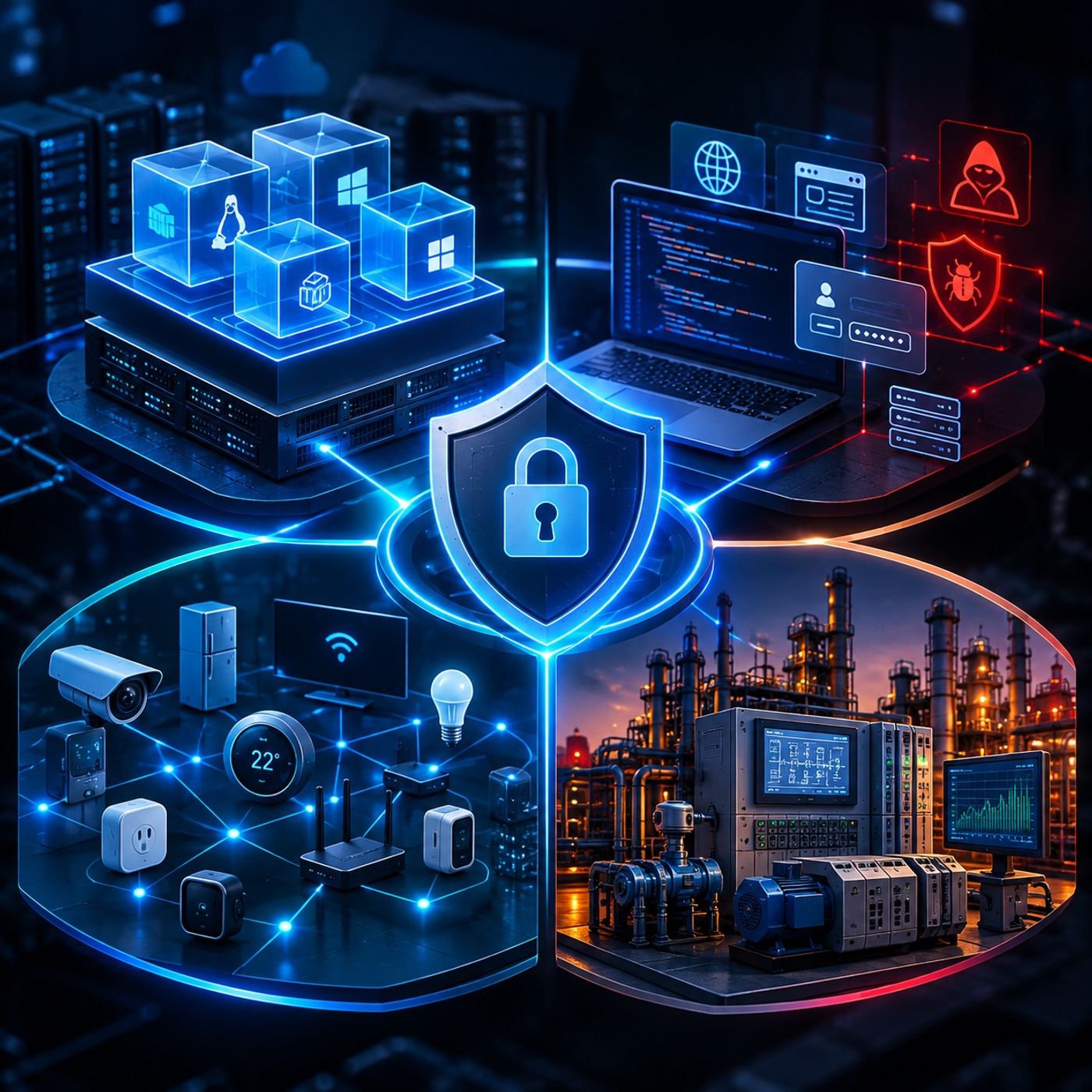
Course 46 - CompTIA Cybersecurity Analyst | Episode 19: From Virtual Machines to Web Applications and IoT
Published 4 days, 10 hours ago
Description
Episode OverviewThis episode examines critical vulnerabilities across three major areas of modern technical infrastructure: virtualization environments, web applications, and connected devices including IoT, SCADA, and Industrial Control Systems (ICS).Each environment introduces unique security challenges that cannot always be addressed through traditional network vulnerability scanning alone. The episode explores how weaknesses can affect virtualized infrastructure, application logic, and operational technology, while emphasizing the importance of appropriate patching, specialized scanning, network segmentation, and continuous vulnerability management.Key Topics Covered1. Virtualization Vulnerabilities and Infrastructure DefenseVirtualization creates an additional security layer between guest workloads and the physical infrastructure. A vulnerability in the hypervisor or virtualization platform can therefore have consequences beyond an individual virtual machine.VM EscapesA VM escape occurs when an attacker is able to break out of a guest virtual machine's isolation and interact with the underlying hypervisor or host environment.Such attacks generally depend on vulnerabilities in the virtualization platform, virtual device emulation, or related components.Potential consequences can include:
- Compromise of the hypervisor
- Access to host resources
- Exposure of other workloads
- Compromise of neighboring virtual machines
- Loss of isolation between security domains
Because of the potential impact, hypervisor and virtualization-platform vulnerabilities require particularly careful patch management.Comprehensive Virtualization PatchingSecurity management must cover both sides of the virtualization boundary:
- Physical hosts and hypervisors
- Guest operating systems
- Guest applications
- Virtual appliances
- Virtual networking components
Virtual machines should remain accessible to appropriate vulnerability-assessment mechanisms so that security teams can identify missing updates and vulnerable software inside guest environments.2. Virtual Networking SecurityModern hypervisors can provide virtualized versions of traditional network infrastructure, including:
- Virtual switches
- Virtual routers
- Virtual firewalls
- Network security appliances
- Virtual network interfaces
These components create additional attack surfaces that must be included in security assessments.A vulnerability-management program should therefore consider the virtualization layer, guest systems, and virtual network architecture as interconnected security components.3. Web Application VulnerabilitiesWeb applications introduce risks that cannot always be identified effectively through conventional network and infrastructure scanning.Application vulnerabilities often involve input handling, authentication, authorization, session management, and application logic rather than simply exposed network ports.SQL InjectionSQL Injection (SQLi) occurs when untrusted input is incorporated into database queries without adequate validation or parameterization.Historically, attackers have used specially crafted input, including Boolean expressions such as 1=1, to manipulate vulnerable queries.Potential consequences include:
- Authentication bypass
- Unauthorized database queries
- Data disclosure
- Data modification
- Destruction of database content
- Potential compromise of the application environment in certain configurations
Modern applications should use parameterized queries or prepared statements and apply appropriate input-handling and database-access controls.Cross-Site ScriptingCross-Site Scripting (XSS) occurs when an application causes atta