Episode Details
Back to Episodes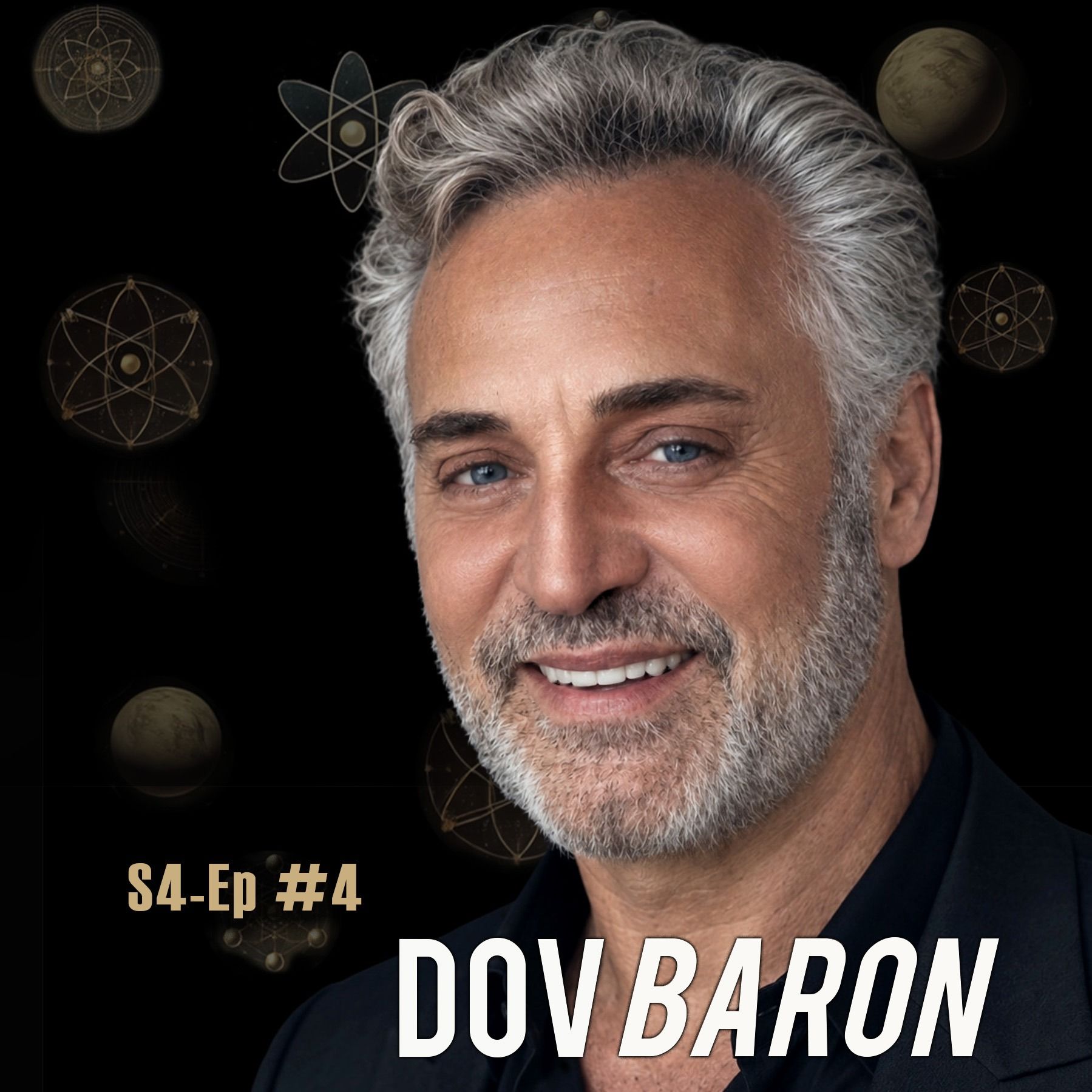
🧠 Polymathic Perspective | Generous Curiosity, Accessing the Highest Form of Intelligence | Season 4; Episode 4
Description
Dov opens this one with a confession. Years ago, broke and working a gas line in Western Australia, he knocked on a friend's door and was met by Kate, a woman he'd quietly written off as "not much there."
He dreaded the conversation. Four hours later, having discovered she was a painter of genuine brilliance, he understood he hadn't been stupid about her. He'd been something worse. He'd been incurious.
That small, uncomfortable story is the doorway into the practice Dov believes is worth crossing toward, the thing he promised at the open gate of Episode 3. He calls it generous curiosity: not the everyday, self-serving kind that fires on its own to scratch an itch, but the courage to ask, to listen, and to love. Giving and receiving in the same breath.
The episode moves across four scales of the same move.
The neuroscience, where curiosity switches on the brain's reward circuit and, as Matthias Gruber's work shows, measurably improves how we learn.
The diagnosis, where binary thinking is cheap, outrage is profitable, and we've been trained to crave the fast-food hit of a quick judgment over the slow meal of understanding.
The Architecture of Meaning, where a judgment becomes an emotion, becomes a behavior, becomes a culture, and curiosity is the one tool that intervenes upstream, at the meaning itself.
And history, where Nelson Mandela walked out of twenty-seven years in a cell curious about the people who had caged him, and built a Truth and Reconciliation Commission instead of a bonfire.
Dov is clear about what generous curiosity is not: not agreement, not niceness, not tolerating the intolerable. It asks only that you give up the comfort of being certain before you've looked. Simple, as he says, but not easy.
The gate is still open. This is what's worth crossing toward.
Episode highlights (curiosity gaps)
- The four-second judgment Dov made about Kate, and the four hours that demolished it
- Why your brain treats a good question like a treat, and a quick judgment like a drug
- The fast food of outrage versus the slow meal of understanding
- How a judgment hardens into an emotion, a behavior, and finally a culture
- Why Mandela learned the language of his jailers
- What generous curiosity is NOT, so you can't dismiss it as being nice
Topics covered (keyword paragraph, indexed by Apple search)
Topics in this episode include generous curiosity, the neuroscience of curiosity and the brain's reward system, Matthias Gruber's curiosity and learning research, snap judgment and cognitive bias, confirmation bias, binary thinking and political polarization, the attention economy and outrage, Emotional Meaning Architecture, how meaning drives emotion and behavior, Nelson Mandela and the Truth and Reconciliation Commission, the Parents Circle-Families Forum, reconciliation and forgiveness, psychological safety, and love as a form of intelligence.
About the show
The Polymathic Perspective is a documentary-style solo podcast where Dov Baron examines the emotional logic beneath power, culture, identity, and meaning, drawing on psychology, neuroscience, history, and philosophy. Each episode holds rigorous science and honest interpretation in the same frame, and tells you which is which. If your curiosity has been called a liability, this is the show that proves it is your greatest asset.
About Dov Baron
Dov Baron is the creator of two proprietary frameworks, the Emotional Meaning Architecture and the Emotional Source Code, which underpin his advisory work with founders and senior executives. He is a Vancouver-based leadership speaker, executive advisor, and author. He’