Episode Details
Back to Episodes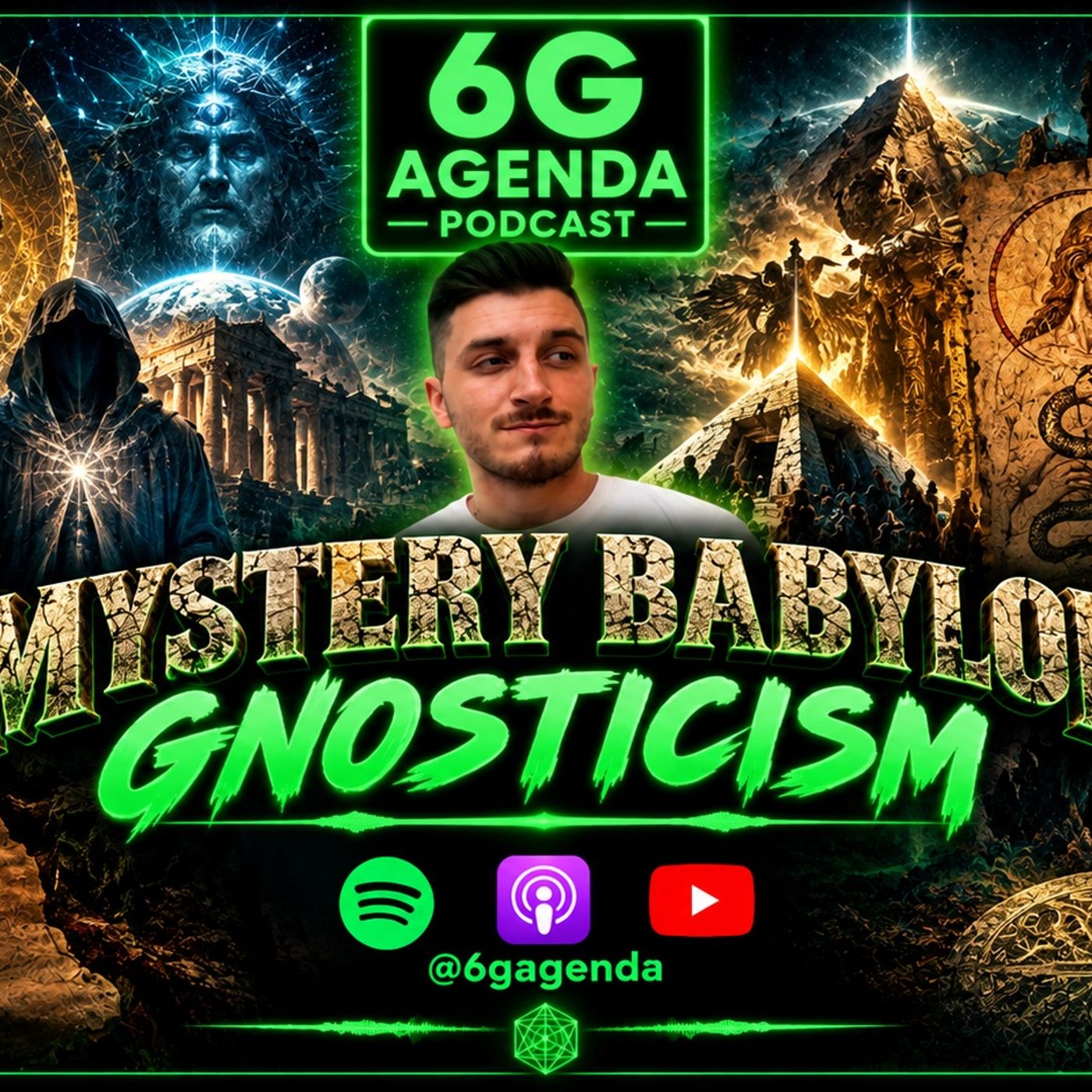
#176: Mystery Babylon Revisited Pt. 10 Gnosticism
Season 1
Episode 176
Published 1 week, 2 days ago
Description
Yes, those ads are annoying, but it helps support the show!
For Early Access, Ad-Free video episodes become a member on Spotify, YouTube or Join Patreon!
Mystery Babylon continues.
In this installment of 6G Agenda’s Mystery Babylon Revisited, we turn to one of the most influential and controversial movements in the history of religion and esoteric philosophy: Gnosticism.
Following the path laid out in Bill Cooper’s original Mystery Babylon series, we explore the origins of Gnostic thought, its relationship to early Christianity, and the competing ideas about God, creation, salvation and human nature that emerged during the formative centuries of the Christian world.What exactly is Gnosticism?
Why did certain early religious movements teach that humanity was trapped in a material world—and that salvation came through a special form of spiritual knowledge?
And how did these ideas become intertwined with the history of mystery religions, occult philosophy and secret teachings?
We examine the Gnostic understanding of the Demiurge, the divine spark, Sophia, hidden knowledge and the struggle between the material and spiritual worlds. We also investigate how different Gnostic groups interpreted the God of the Old Testament, the figure of Christ and the possibility that the visible world does not reveal the ultimate nature of reality.From there, we explore the historical conflict between emerging orthodox Christianity and the diverse movements later grouped under the label Gnostic.Were these traditions competing interpretations of Christianity, remnants of older religious philosophies, or attempts to synthesize different spiritual systems into a new worldview?
Then we bring the discussion back to the central thesis of Mystery Babylon.
We examine the connections and distinctions between Gnosticism, Neoplatonism, ancient mystery traditions, Hermetic philosophy and later esoteric movements. We also consider how Gnostic concepts have been reinterpreted by modern occultists and New Age thinkers—and why themes of hidden knowledge, spiritual awakening and liberation from an allegedly deceptive world continue to resonate today.In the framework of Cooper’s investigation, Gnosticism becomes part of a much larger question: whether competing religious traditions preserve fundamentally different understandings of humanity’s relationship with God, creation and spiritual authority.This episode is another deep dive into the ideas, symbols and religious movements that shaped the history of Western esotericism.
Topics covered include:
- Bill Cooper’s Mystery Babylon and Gnosticism
- The origins of Gnostic traditions
- Gnosticism and early Christianity
- The Nag Hammadi library
- The Demiurge and the creation of the material world
- Sophia and the divine feminine
- The divine spark within humanity
- Gnosis: salvation through spiritual knowledge
- Gnostic interpretations of the God of the Old Testament
- Christ in Gnostic traditions
- The material world versus the spiritual realm
- The Archons and cosmic hierarchy
- Orthodox Christianity and early religious conflicts
- The formation of Christian orthodoxy
- Gnosticism and Neoplatonism
- Hermetic philosophy
- Ancient mystery religions
- Esoteric Christianity
- Gnosticism and the occult
- Secret knowledge and spiritual initiation
- Gnostic themes in modern New Age spiri