Episode Details

Back to Episodes
Course 46 - CompTIA Cybersecurity Analyst | Episode 13: Perspectives, Credentials, and Configuration

Course 46 - CompTIA Cybersecurity Analyst | Episode 13: Perspectives, Credentials, and Configuration

Published 1 week, 3 days ago
Description
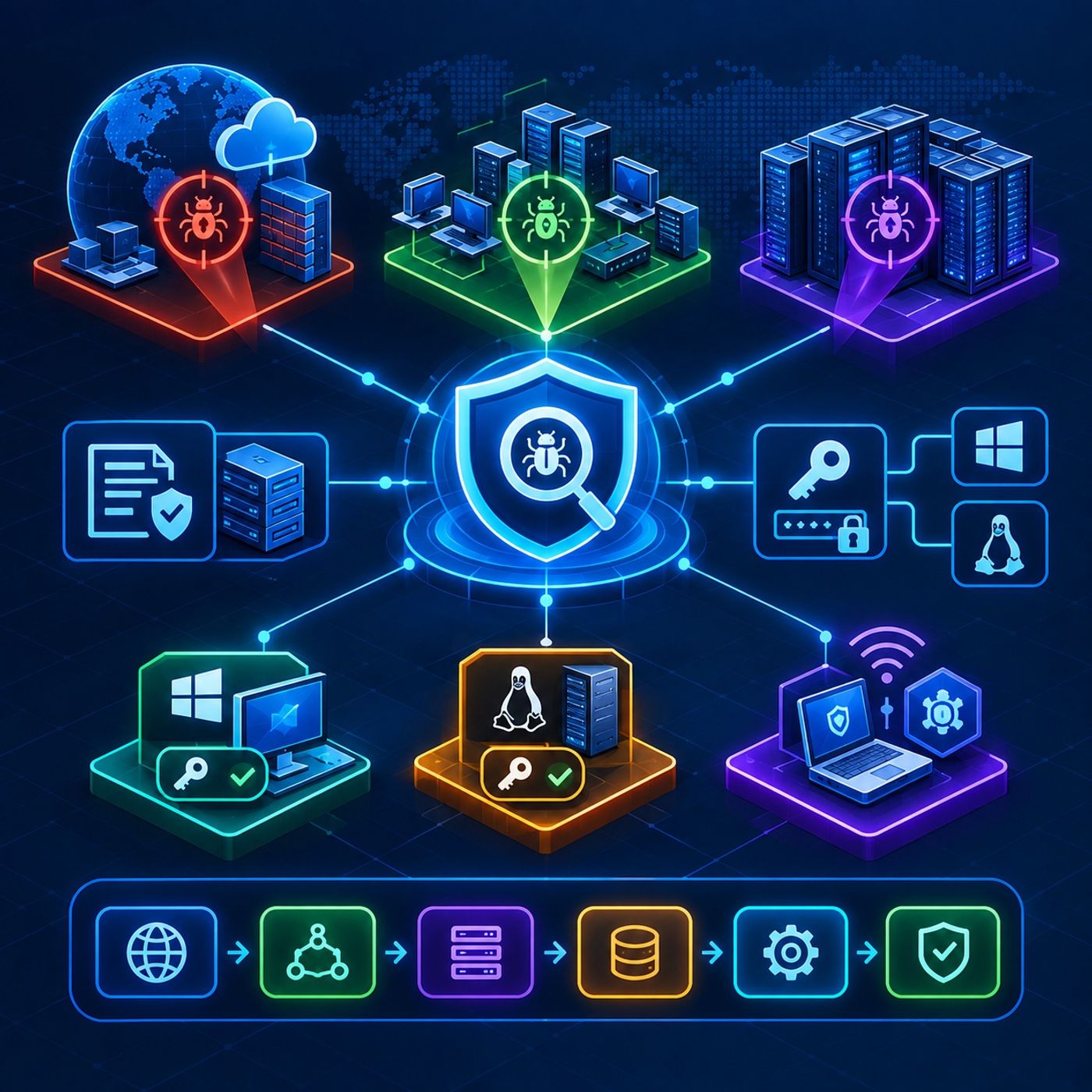
Episode OverviewThis episode explores the strategic decisions behind configuring effective enterprise vulnerability assessments. It examines how security teams can evaluate infrastructure from multiple perspectives, configure reusable scanning policies, and use authenticated assessments to obtain deeper visibility into operating systems, databases, and applications.The episode also covers credential management for Windows and Linux environments and introduces agent-based vulnerability scanning as a complementary approach for assets that may be difficult to assess through traditional network-based scanning.Key Topics Covered1. Multiple Vulnerability-Scanning PerspectivesA single scanning perspective cannot provide a complete picture of organizational risk.The episode examines three important assessment perspectives:
  • External Scanning — evaluates systems from outside the organization's network, helping identify Internet-facing exposure and weaknesses visible to external attackers.
  • Internal Scanning — evaluates infrastructure from within the trusted network and can reveal vulnerabilities that may become relevant after an attacker gains internal access.
  • Data Center Scanning — provides focused assessment of critical infrastructure within controlled data-center environments.
Using multiple perspectives allows security teams to evaluate how the same environment appears under different access conditions and threat scenarios.2. Regulatory Scanning RequirementsThe episode also examines how regulatory requirements can influence vulnerability-scanning strategies.PCI DSS, for example, includes requirements around vulnerability scanning for applicable cardholder-data environments, including internal vulnerability scanning and external vulnerability scanning performed by an approved scanning vendor under the applicable requirements.This demonstrates how vulnerability assessments can serve both security objectives and compliance obligations.Organizations should distinguish between what a particular regulation or standard explicitly requires and what represents an internal security best practice.3. Templated Scanning PoliciesEnterprise vulnerability platforms often provide reusable scan policies or templates that simplify the deployment of consistent assessment configurations.Instead of manually configuring every scan from scratch, security teams can establish standardized policies containing settings such as:
  • Scan targets
  • Discovery options
  • Vulnerability checks
  • Authentication methods
  • Performance controls
  • Scheduling parameters
  • Reporting preferences
Templates improve consistency and can reduce configuration errors when assessments are repeated across similar environments.4. Credentialed vs. Non-Credentialed ScanningA major focus of the episode is the difference between credentialed and non-credentialed vulnerability assessments.Non-Credentialed ScanningA non-credentialed scan examines systems primarily from the perspective of an external or unprivileged observer.It can identify remotely observable weaknesses such as:
  • Open ports
  • Exposed services
  • Network-accessible applications
  • Certain remotely detectable vulnerabilities
Credentialed ScanningA credentialed scan provides the scanner with authorized access to the target system, enabling much deeper inspection.Depending on the platform and permissions, this can provide visibility into:
  • Operating-system configuration
  • Installed software and patches
  • Local security settings
  • Databases
  • Applications
  • Configuration weaknesses
  • Host-level vulnerabilities
The deeper visibility of credentialed scanning can significantly improve the accuracy a
Listen Now

Love PodBriefly?

If you like Podbriefly.com, please consider donating to support the ongoing development.

Support Us