Episode Details
Back to Episodes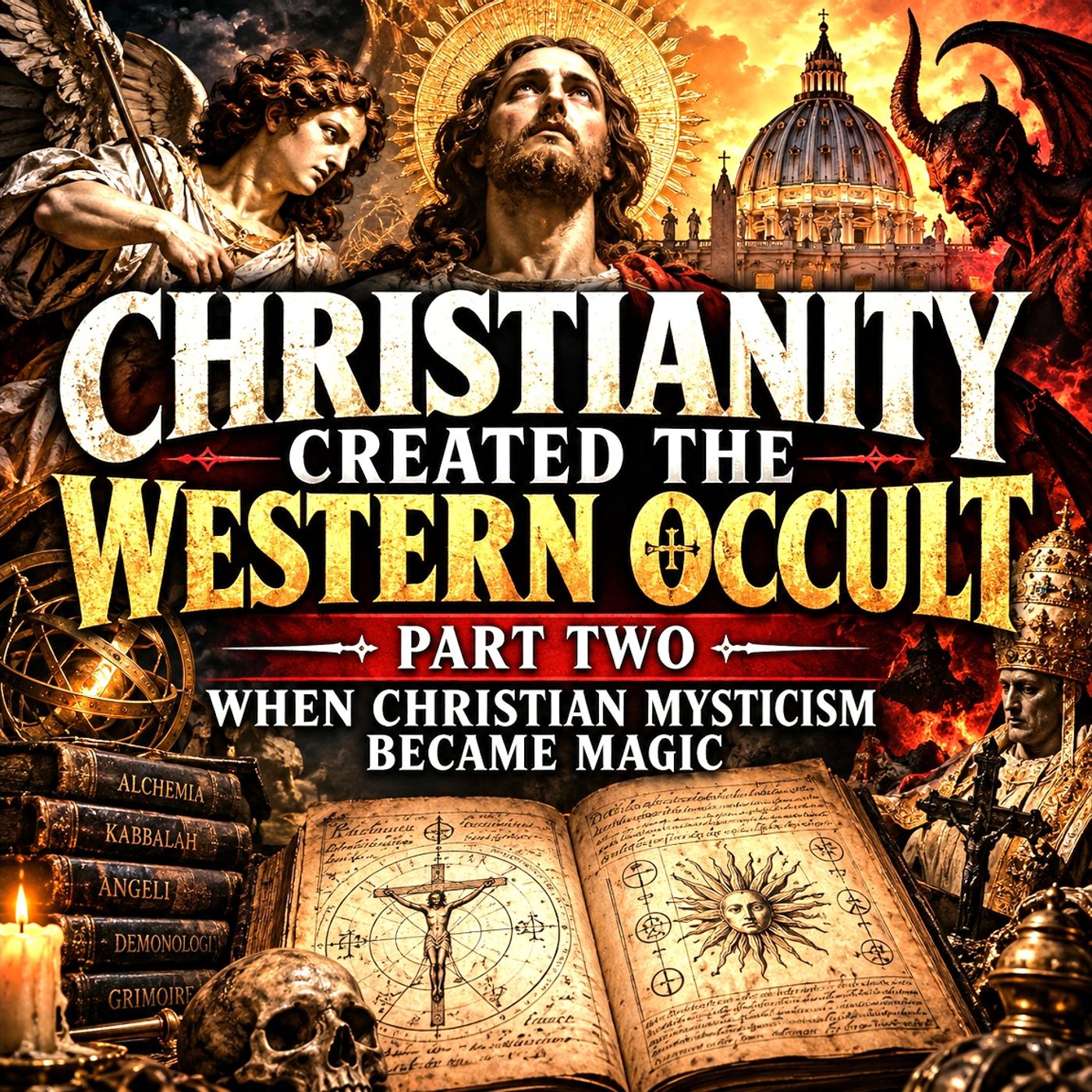
Christianity Created The Western Occult Part Two: When Christian Mysticism Became Magic
Published 7 hours ago
Description
Links For The Occult Rejects
https://linktr.ee/theoccultrejects
Occult Research Institute
https://www.occultresearchinstitute.org/
Substack
https://substack.com/@theoccultrejects?r=7auau0&utm_campaign=profile&utm_medium=profile-page
Cash App
https://cash.app/$theoccultrejects
Venmo
@TheOccultRejects
Patreon
https://www.patreon.com/TheOccultRejects
PART TWO BIBLIOGRAPHY
Christianity Created the Western Occult
Primary Sources
Paracelsus. Paracelsus: Essential Theoretical Writings. Edited and translated by Andrew Weeks. Leiden/Boston: Brill, 2008. This is the edition I’d use for Paracelsus rather than modern occult compilations; it gives the German and English texts with extensive scholarly commentary. Wellcome Collection
Dee, John. John Dee’s Five Books of Mystery: Original Sourcebook of Enochian Magic. Edited and translated by Joseph H. Peterson. Weiser Books, 2003. A modern edition of Dee’s Mysteriorum Libri Quinque and one of the most useful primary-source collections for the early angelic sessions. Red Wheel/Weiser
Böhme, Jakob. Aurora: The Day-Spring, or Dawning of the Day in the Orient. Originally written 1612. Any scholarly or reliable critical edition can be used for the primary material concerning Böhme’s early cosmology.
Böhme, Jakob. The Way to Christ. Useful for the explicitly Christian and regenerative side of Böhme rather than treating him merely as an abstract occult cosmologist.
Swedenborg, Emanuel. Heaven and Hell. Originally published in Latin in 1758. I’d use the New Century Edition, translated by George F. Dole, because it includes scholarly historical material and annotations. Swedenborg Foundation
Saint-Martin, Louis-Claude de. Theosophic Correspondence between Louis Claude de Saint-Martin and Kirchberger, Baron de Liebistorf. Translated by Edward Burton Penny. Especially useful for documenting Saint-Martin’s engagement with Böhme and his increasingly interior understanding of Christian theosophy. Theosophy Society
Eckartshausen, Karl von. The Cloud Upon the Sanctuary. The A. E. Waite translation is historically useful because Waite’s transmission of the text is itself part of its later occult reception.
Lévi, Éliphas. Transcendental Magic: Its Doctrine and Ritual. Translated by A. E. Waite. Important as a primary document for Lévi’s synthesis of Kabbalah, ceremonial magic, Christian symbolism, priesthood, polarity, and magical theory.
Lévi, Éliphas. The History of Magic. Again, use this as a primary source for what Lévi believed, not as reliable modern historiography.
Waite, Arthur Edward. The Hidden Church of the Holy Graal. Essential for understanding the specifically Christian-mystical dimension of Waite’s esotericism.
Waite, Arthur Edward. The Secret Tradition in Freemasonry. Useful for Waite’s conception of mystical initiation and the “secret tradition.”
Fortune, Dion. The Mystical Qabalah. First published 1935. Essential primary material for Fortune’s attempt to interpret Qabalah through the twentieth-century Western Mystery Tradition.
Medieval Grimoires, Ritual Magic & Angelic Practice
This is the group I would rely upon heavily for the material we added concerning Christian prayer, exorcism, angels, grimoires, consecration, and the unstable boundary between religion and magic.
Kieckhefer, Richard. Forbidden Rites: A Necromancer’s Manual of the Fifteenth Century. Pennsylvania State University Press, 1997/1998. Absolutely essential. Kieckhefer edits and analyzes a real medieval magical manuscript containing prayers, conjurations, astral operations, spirit catalogues, and ceremonies for consecrating magical books. PSU Press
Fanger, Claire, ed. Invoking Angels: Theurgic Ideas and Practices, Thirteenth to Sixteenth Centuries. Pennsylvania State University Press, 2012. One of the strongest sources for our thesis because it specifically examines medieval and
https://linktr.ee/theoccultrejects
Occult Research Institute
https://www.occultresearchinstitute.org/
Substack
https://substack.com/@theoccultrejects?r=7auau0&utm_campaign=profile&utm_medium=profile-page
Cash App
https://cash.app/$theoccultrejects
Venmo
@TheOccultRejects
Patreon
https://www.patreon.com/TheOccultRejects
PART TWO BIBLIOGRAPHY
Christianity Created the Western Occult
Primary Sources
Paracelsus. Paracelsus: Essential Theoretical Writings. Edited and translated by Andrew Weeks. Leiden/Boston: Brill, 2008. This is the edition I’d use for Paracelsus rather than modern occult compilations; it gives the German and English texts with extensive scholarly commentary. Wellcome Collection
Dee, John. John Dee’s Five Books of Mystery: Original Sourcebook of Enochian Magic. Edited and translated by Joseph H. Peterson. Weiser Books, 2003. A modern edition of Dee’s Mysteriorum Libri Quinque and one of the most useful primary-source collections for the early angelic sessions. Red Wheel/Weiser
Böhme, Jakob. Aurora: The Day-Spring, or Dawning of the Day in the Orient. Originally written 1612. Any scholarly or reliable critical edition can be used for the primary material concerning Böhme’s early cosmology.
Böhme, Jakob. The Way to Christ. Useful for the explicitly Christian and regenerative side of Böhme rather than treating him merely as an abstract occult cosmologist.
Swedenborg, Emanuel. Heaven and Hell. Originally published in Latin in 1758. I’d use the New Century Edition, translated by George F. Dole, because it includes scholarly historical material and annotations. Swedenborg Foundation
Saint-Martin, Louis-Claude de. Theosophic Correspondence between Louis Claude de Saint-Martin and Kirchberger, Baron de Liebistorf. Translated by Edward Burton Penny. Especially useful for documenting Saint-Martin’s engagement with Böhme and his increasingly interior understanding of Christian theosophy. Theosophy Society
Eckartshausen, Karl von. The Cloud Upon the Sanctuary. The A. E. Waite translation is historically useful because Waite’s transmission of the text is itself part of its later occult reception.
Lévi, Éliphas. Transcendental Magic: Its Doctrine and Ritual. Translated by A. E. Waite. Important as a primary document for Lévi’s synthesis of Kabbalah, ceremonial magic, Christian symbolism, priesthood, polarity, and magical theory.
Lévi, Éliphas. The History of Magic. Again, use this as a primary source for what Lévi believed, not as reliable modern historiography.
Waite, Arthur Edward. The Hidden Church of the Holy Graal. Essential for understanding the specifically Christian-mystical dimension of Waite’s esotericism.
Waite, Arthur Edward. The Secret Tradition in Freemasonry. Useful for Waite’s conception of mystical initiation and the “secret tradition.”
Fortune, Dion. The Mystical Qabalah. First published 1935. Essential primary material for Fortune’s attempt to interpret Qabalah through the twentieth-century Western Mystery Tradition.
Medieval Grimoires, Ritual Magic & Angelic Practice
This is the group I would rely upon heavily for the material we added concerning Christian prayer, exorcism, angels, grimoires, consecration, and the unstable boundary between religion and magic.
Kieckhefer, Richard. Forbidden Rites: A Necromancer’s Manual of the Fifteenth Century. Pennsylvania State University Press, 1997/1998. Absolutely essential. Kieckhefer edits and analyzes a real medieval magical manuscript containing prayers, conjurations, astral operations, spirit catalogues, and ceremonies for consecrating magical books. PSU Press
Fanger, Claire, ed. Invoking Angels: Theurgic Ideas and Practices, Thirteenth to Sixteenth Centuries. Pennsylvania State University Press, 2012. One of the strongest sources for our thesis because it specifically examines medieval and