Episode Details
Back to Episodes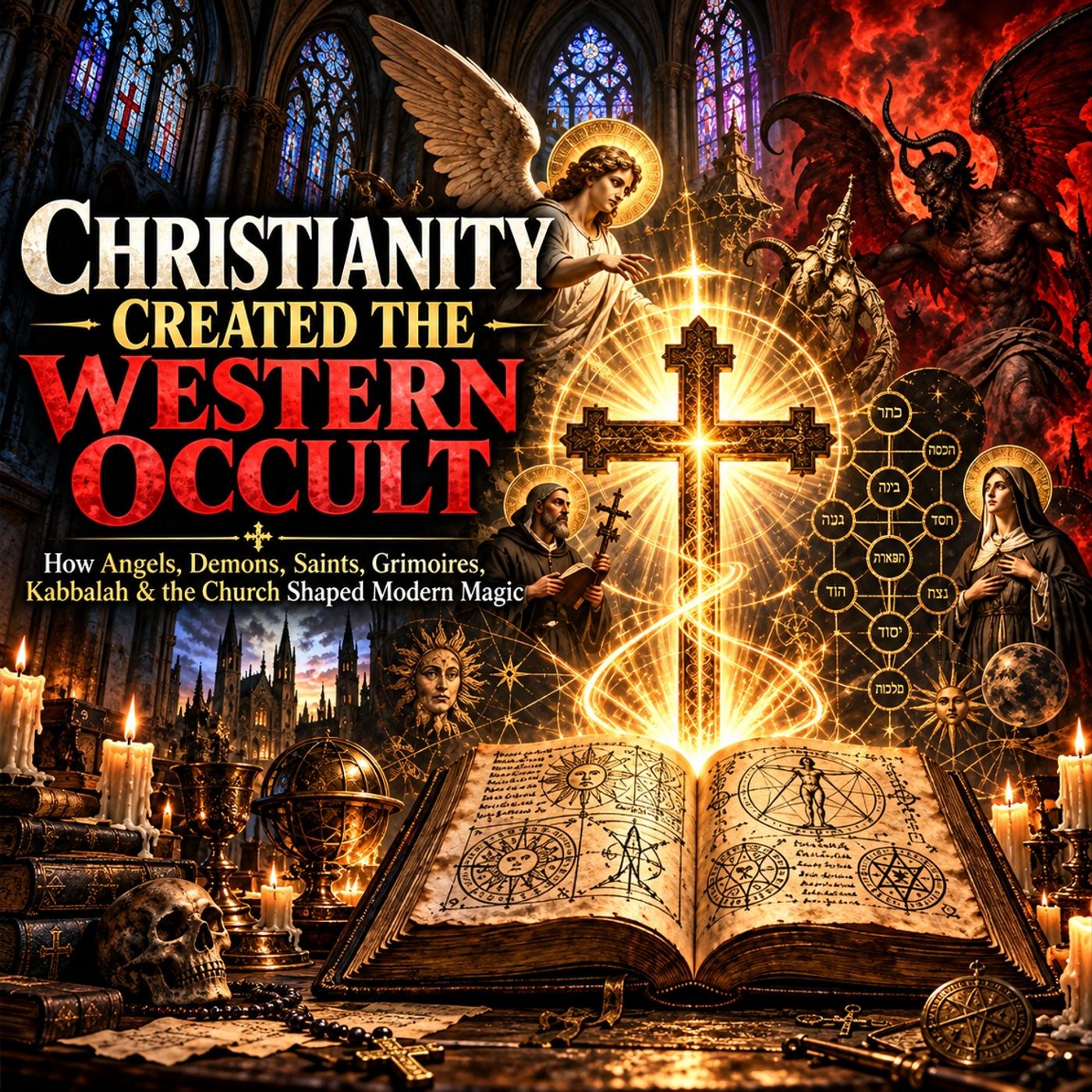
Christianity Created the Western Occult Part 1: The Christian Occult Worldview
Published 1 day, 4 hours ago
Description
Links For The Occult Rejects
https://linktr.ee/theoccultrejects
Occult Research Institute
https://www.occultresearchinstitute.org/
Substack
https://substack.com/@theoccultrejects?r=7auau0&utm_campaign=profile&utm_medium=profile-page
Cash App
https://cash.app/$theoccultrejects
Venmo
@TheOccultRejects
Patreon
https://www.patreon.com/TheOccultRejects
Primary Sources
Agrippa, Heinrich Cornelius. Three Books of Occult Philosophy. Trans. James Freake; ed. and annotated by Donald Tyson. Llewellyn, 1993. The work itself dates to Agrippa’s developing project from 1510, with the complete revised three-book edition appearing in 1533. Google Books
Augustine of Hippo. Confessions. Trans. Henry Chadwick. Oxford University Press, 1991. Particularly important for Augustine’s encounter with the “books of the Platonists,” inward ascent, and his Christian appropriation of Platonic metaphysics. WorldCat
Ficino, Marsilio. Three Books on Life. Ed. and trans. Carol V. Kaske and John R. Clark. Medieval & Renaissance Texts & Studies/Renaissance Society of America, 1989. This is one of the most important primary texts for the astrology, medicine, music, planetary influence, and natural-magic portions of the episode. Google Books
Meister Eckhart. The Essential Sermons, Commentaries, Treatises, and Defense. Trans. Edmund Colledge and Bernard McGinn. Paulist Press, 1981. Google Books
Nicholas of Cusa. On Learned Ignorance: A Translation and an Appraisal of De Docta Ignorantia. Trans. Jasper Hopkins. 2nd ed. Arthur J. Banning Press, 1985. WorldCat
Pico della Mirandola, Giovanni. Syncretism in the West: Pico’s 900 Theses (1486): The Evolution of Traditional Religious and Philosophical Systems. Ed. and trans. Stephen A. Farmer. Medieval & Renaissance Texts & Studies, 1998. This should be one of our major Pico sources rather than relying on summaries of the 900 Conclusions. WorldCat
Pseudo-Dionysius the Areopagite. The Complete Works. Trans. Colm Luibheid, with Paul Rorem. Paulist Press, 1987. Includes The Divine Names, The Celestial Hierarchy, The Ecclesiastical Hierarchy, and Mystical Theology. Cambridge University Press
Core Modern Scholarship
Faivre, Antoine. Access to Western Esotericism. State University of New York Press, 1994. Very useful for correspondence, living nature, imagination, mediation, transformation, Christian Kabbalah, Hermeticism, and defining Western esotericism without treating it as one secret continuous religion. JSTOR
Goodrick-Clarke, Nicholas. The Western Esoteric Traditions: A Historical Introduction. Oxford University Press, 2008. An excellent broad academic overview covering Renaissance magic, Cabala, planetary and angel magic, and later Western esoteric developments. OUP Academic
Hanegraaff, Wouter J. Esotericism and the Academy: Rejected Knowledge in Western Culture. Cambridge University Press, 2012. Important for keeping our larger historical thesis rigorous and avoiding the mythology of one uninterrupted underground occult tradition. Cambridge University Press
Hanegraaff, Wouter J. Western Esotericism: A Guide for the Perplexed. Bloomsbury Academic, 2013. Probably the best compact methodological source for explaining what scholars mean by “Western esotericism,” including magic, astrology, alchemy, Rosicrucianism, Christian theosophy, and occultism. Bloomsbury
Magee, Glenn Alexander, ed. The Cambridge Handbook of Western Mysticism and Esotericism. Cambridge University Press, 2016. Especially useful for our argument that mysticism and esotericism overlap historically without being identical categories. Cambridge University Press
Walker, D. P. Spiritual and Demonic Magic: From Ficino to Campanella. Originally 1958; Pennsylvania State University Press edition, 2000. Still a foundational scholarly study of Ficino and Renaissance magic, although we should supplement it with newer scholarship rathe
https://linktr.ee/theoccultrejects
Occult Research Institute
https://www.occultresearchinstitute.org/
Substack
https://substack.com/@theoccultrejects?r=7auau0&utm_campaign=profile&utm_medium=profile-page
Cash App
https://cash.app/$theoccultrejects
Venmo
@TheOccultRejects
Patreon
https://www.patreon.com/TheOccultRejects
Primary Sources
Agrippa, Heinrich Cornelius. Three Books of Occult Philosophy. Trans. James Freake; ed. and annotated by Donald Tyson. Llewellyn, 1993. The work itself dates to Agrippa’s developing project from 1510, with the complete revised three-book edition appearing in 1533. Google Books
Augustine of Hippo. Confessions. Trans. Henry Chadwick. Oxford University Press, 1991. Particularly important for Augustine’s encounter with the “books of the Platonists,” inward ascent, and his Christian appropriation of Platonic metaphysics. WorldCat
Ficino, Marsilio. Three Books on Life. Ed. and trans. Carol V. Kaske and John R. Clark. Medieval & Renaissance Texts & Studies/Renaissance Society of America, 1989. This is one of the most important primary texts for the astrology, medicine, music, planetary influence, and natural-magic portions of the episode. Google Books
Meister Eckhart. The Essential Sermons, Commentaries, Treatises, and Defense. Trans. Edmund Colledge and Bernard McGinn. Paulist Press, 1981. Google Books
Nicholas of Cusa. On Learned Ignorance: A Translation and an Appraisal of De Docta Ignorantia. Trans. Jasper Hopkins. 2nd ed. Arthur J. Banning Press, 1985. WorldCat
Pico della Mirandola, Giovanni. Syncretism in the West: Pico’s 900 Theses (1486): The Evolution of Traditional Religious and Philosophical Systems. Ed. and trans. Stephen A. Farmer. Medieval & Renaissance Texts & Studies, 1998. This should be one of our major Pico sources rather than relying on summaries of the 900 Conclusions. WorldCat
Pseudo-Dionysius the Areopagite. The Complete Works. Trans. Colm Luibheid, with Paul Rorem. Paulist Press, 1987. Includes The Divine Names, The Celestial Hierarchy, The Ecclesiastical Hierarchy, and Mystical Theology. Cambridge University Press
Core Modern Scholarship
Faivre, Antoine. Access to Western Esotericism. State University of New York Press, 1994. Very useful for correspondence, living nature, imagination, mediation, transformation, Christian Kabbalah, Hermeticism, and defining Western esotericism without treating it as one secret continuous religion. JSTOR
Goodrick-Clarke, Nicholas. The Western Esoteric Traditions: A Historical Introduction. Oxford University Press, 2008. An excellent broad academic overview covering Renaissance magic, Cabala, planetary and angel magic, and later Western esoteric developments. OUP Academic
Hanegraaff, Wouter J. Esotericism and the Academy: Rejected Knowledge in Western Culture. Cambridge University Press, 2012. Important for keeping our larger historical thesis rigorous and avoiding the mythology of one uninterrupted underground occult tradition. Cambridge University Press
Hanegraaff, Wouter J. Western Esotericism: A Guide for the Perplexed. Bloomsbury Academic, 2013. Probably the best compact methodological source for explaining what scholars mean by “Western esotericism,” including magic, astrology, alchemy, Rosicrucianism, Christian theosophy, and occultism. Bloomsbury
Magee, Glenn Alexander, ed. The Cambridge Handbook of Western Mysticism and Esotericism. Cambridge University Press, 2016. Especially useful for our argument that mysticism and esotericism overlap historically without being identical categories. Cambridge University Press
Walker, D. P. Spiritual and Demonic Magic: From Ficino to Campanella. Originally 1958; Pennsylvania State University Press edition, 2000. Still a foundational scholarly study of Ficino and Renaissance magic, although we should supplement it with newer scholarship rathe