Episode Details

Back to Episodes
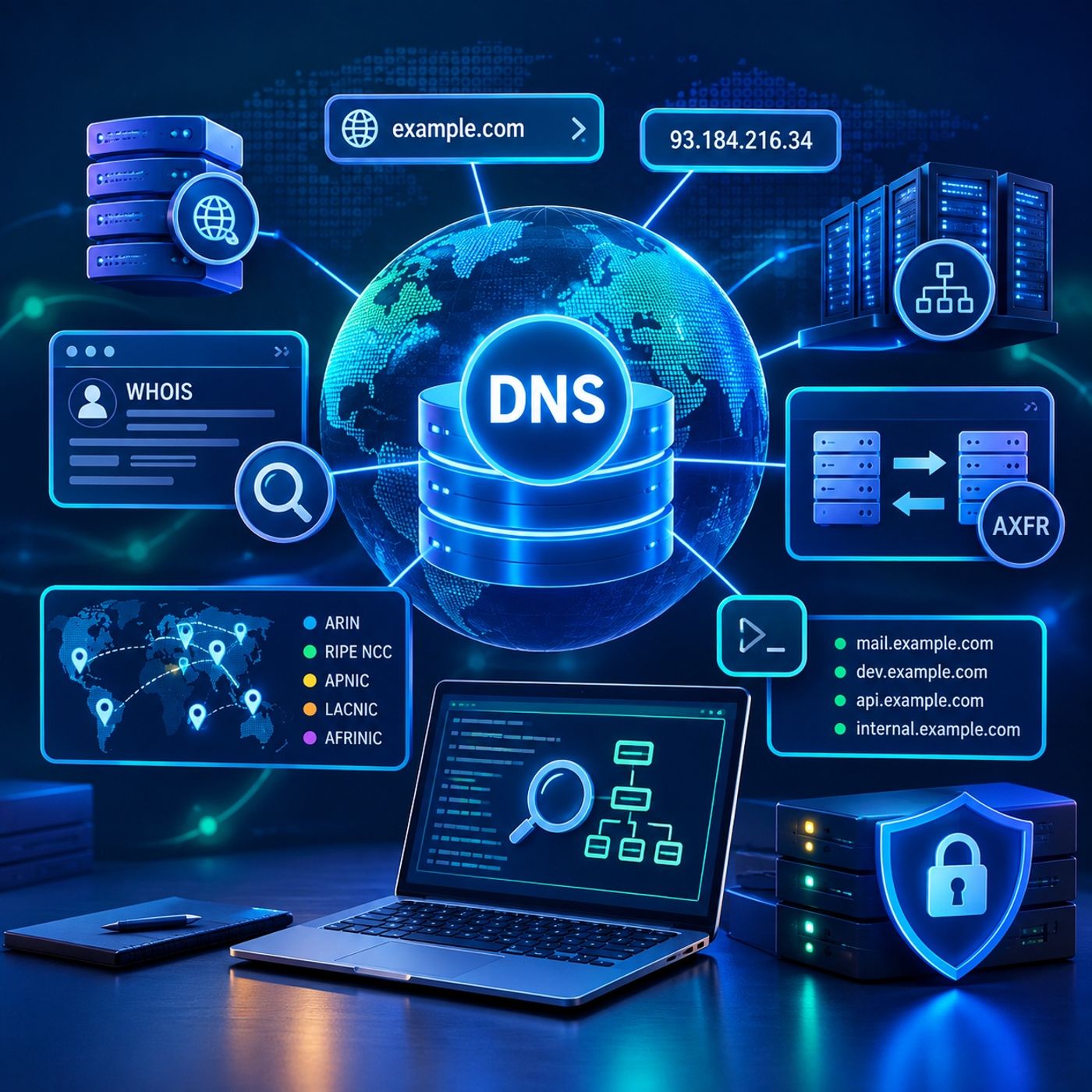
Course 46 - CompTIA Cybersecurity Analyst | Episode 9: Domain Names, IP Ranges, and Zone Transfers

Course 46 - CompTIA Cybersecurity Analyst | Episode 9: Domain Names, IP Ranges, and Zone Transfers

Published 2 weeks ago
Description
Episode OverviewThis episode explores the fundamentals of DNS reconnaissance and network footprinting, examining how security professionals can use Internet addressing information and DNS infrastructure to build a clearer picture of an organization's external network.The discussion begins with the relationship between human-readable domain names and IP addresses, then moves into global IP address allocation, WHOIS-based information gathering, and DNS zone transfers. It concludes with alternative subdomain enumeration techniques and defensive measures designed to prevent unauthorized DNS information disclosure.Key Topics Covered1. Domain Names, IP Addresses, and Internet AllocationThe episode begins with the foundations of Internet addressing and name resolution.It examines how domain names provide human-readable identifiers that can be resolved to IP addresses, while domain registries and registrars support the management of top-level domains (TLDs), including generic TLDs such as .com and country-code TLDs.The discussion also introduces the organizations responsible for coordinating regional Internet number resources, including:
  • ARIN — American Registry for Internet Numbers
  • RIPE NCC — serving Europe, the Middle East, and Central Asia
  • APNIC — Asia Pacific Network Information Centre
  • LACNIC — Latin America and the Caribbean
  • AFRINIC — African Network Information Centre
Understanding this allocation structure provides useful context for determining where IP address resources are registered and how Internet infrastructure is organized globally.2. WHOIS and Registration IntelligenceThe episode then examines WHOIS lookups as a source of reconnaissance information.It distinguishes between querying domain registration information and investigating the registration or allocation details associated with IP address ranges. Depending on the registry and service involved, this information can help security professionals understand ownership, registration boundaries, and the organizations associated with Internet resources.This type of information gathering forms part of the broader reconnaissance process before technical network assessment begins.3. DNS Zone TransfersThe episode moves into one of the most significant DNS reconnaissance concepts: zone transfers.DNS servers use zone transfers to replicate DNS zone information between authoritative servers. When improperly configured, an unauthorized party may be able to request a copy of a DNS zone and obtain information about the organization's DNS namespace.The episode introduces the dig utility and the AXFR query mechanism used to test zone-transfer behavior in an authorized environment.An improperly restricted transfer can potentially expose:
  • Hostnames and subdomains
  • Internal or external network addresses
  • Mail servers
  • Application infrastructure
  • Other DNS records describing the organization's environment
Because this information can significantly simplify network reconnaissance, DNS zone-transfer permissions should be carefully restricted.4. DNS Brute-Force EnumerationWhen a complete zone transfer is unavailable, the episode examines DNS-based subdomain enumeration as an alternative discovery technique.Automated Python or shell scripts can systematically query candidate hostnames and identify names that successfully resolve through DNS.This approach demonstrates an important reconnaissance principle: when one information source is unavailable, security professionals may combine other publicly observable signals to reconstruct portions of an organization's external infrastructure.In authorized assessments, such enumeration should be appropriately scoped and rate-limited to avoid unnecessary load on DNS infrastructure.5. Defensive DNS ControlsThe final section focuses on protecting DNS infrastructure against una
Listen Now

Love PodBriefly?

If you like Podbriefly.com, please consider donating to support the ongoing development.

Support Us