Episode Details
Back to Episodes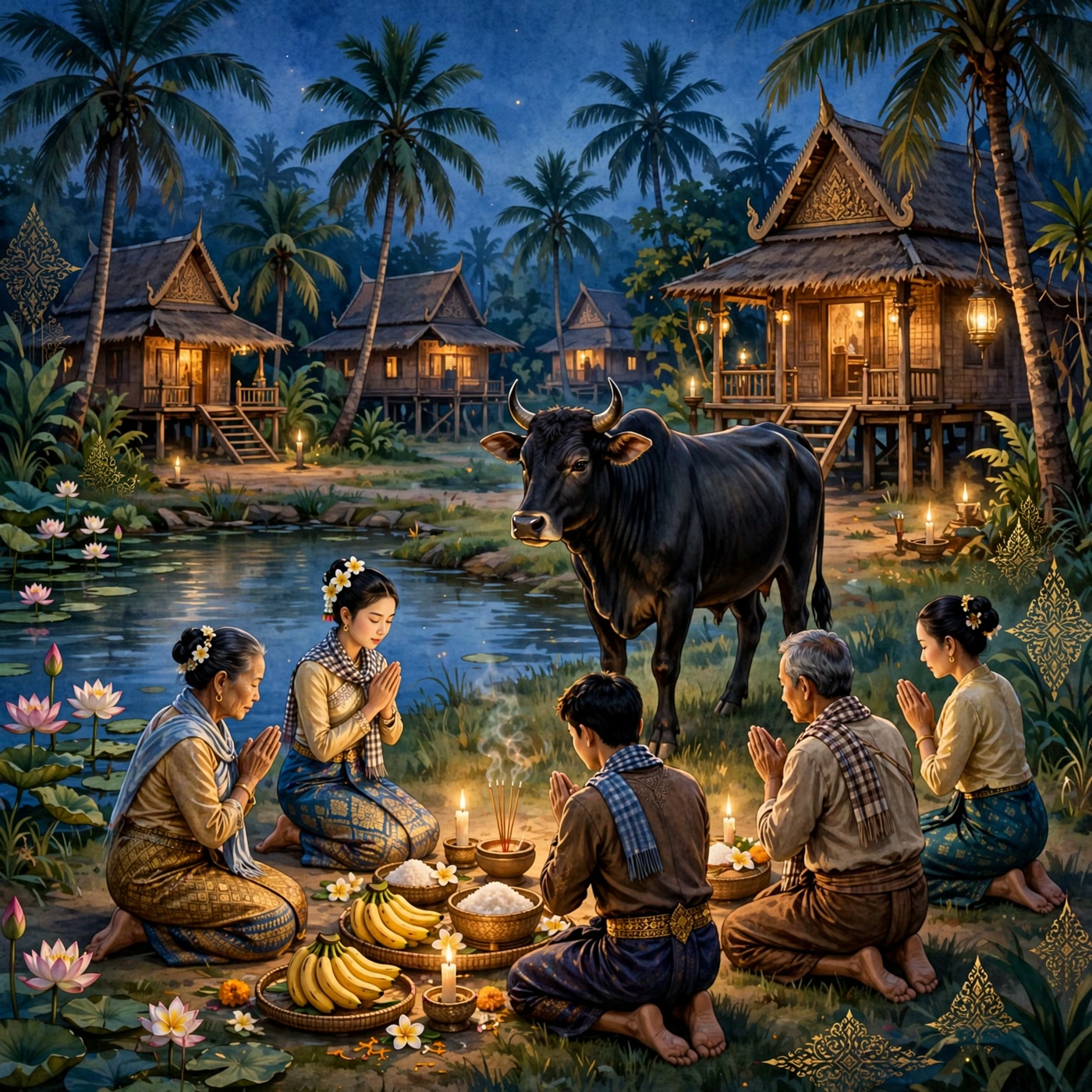
The Gatiloke — Part 7 of 23 (The Worship of the Pond Water · The Dangko Tree · The Black Bull · Grandmother Tep · Mount Krom and Mount Trangil · Ta Hua Lan and His Two Sons-in-Law · The Fool Who Rode the Buffalo)
Description
The Gatiloke opens the treatise of the Eight Worldly Conditions — gain and loss, fame and disgrace, blame and praise, pleasure and pain — and turns on what foolish people worship when they will not stop to think. A buffalo's healed eyes make a shrine of a pond, until the authorities come to forbid it. A fallen tree rises a little, by the pull of its own roots, and is stripped of its bark and roots for medicine until it dies. A stray black bull is taken for the Sacred Bull come home from Siam, and the crowd that chases it with offerings is scattered by the beast itself. An image of Grandmother Tep is worshipped by people who cannot say who she ever was. Two bare mountains are explained by the hairs of Hanuman. A father-in-law's old tales are answered, one after another, by the son-in-law who thinks. And a man rides his buffalo to the field carrying the rice on his own head, out of pity for the buffalo — and will not hear it that he is a fool.
Chapters:
00:04 — The Worship of the Pond Water
01:02 — The Worship of the Dangko Tree
02:10 — The Worship of the Black Bull
07:50 — The Worship of Grandmother Tep
11:09 — Mount Krom in Siem Reap and Mount Trangil
12:33 — Ta Hua Lan and His Two Sons-in-Law
16:09 — The Fool Who Rode the Buffalo and Carried the Rice Himself
From the Gatiloke by Suttantaprija Ind (1859–1924), Cambodia's treasury of Khmer folk tales, first published in parts in Phnom Penh in 1914–1921 — public domain, and told here in a fresh in-house English rendering made from the Khmer text, in the book's own order. One question-chapter near the collection's opening is held back under house rule — its matter is murder itself, and such a tale is not read until it is ruled on; it stands recorded in the collection's written register, in its place. One further tale of the book's second part — the tale of Bhikkhu Sok, the Pnong teacher — is likewise held back under house rule: its matter is a whole lineage put to death, and such a tale is not read until it is ruled on; it stands recorded in the register, in its place. One further tale of the treatise — the tale of the Singha-To who wanted the chief's daughter — is likewise held back under house rule: its close is a beating given to a creature first stripped of its defences, and such a tale is not read until it is ruled on; it stands recorded in the register, in its place.
KacheliTV — world classics, read aloud.