Episode Details
Back to Episodes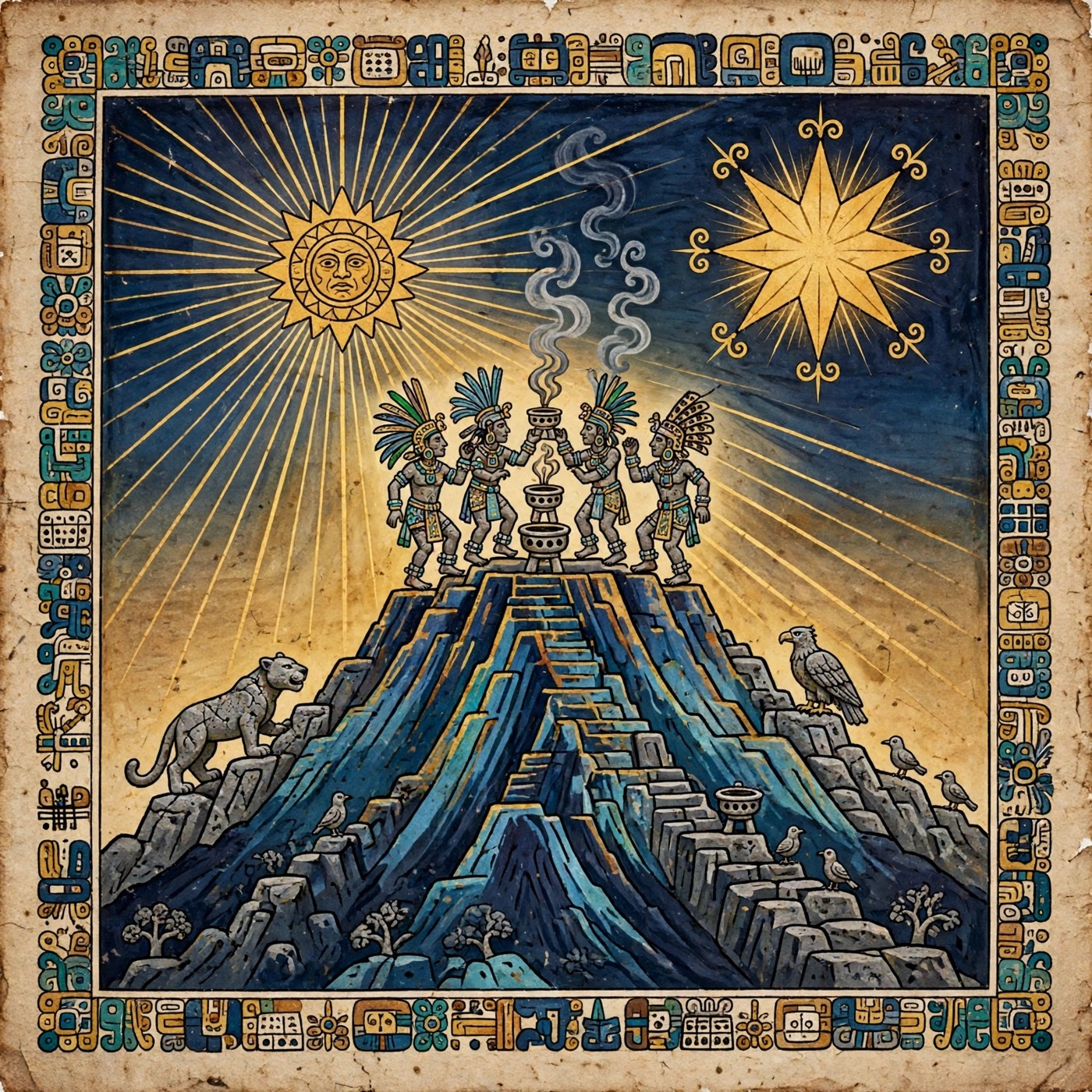
Popol Vuh — Part 11 of 15 (The Dawn)
Description
In The Hiding of the Gods, Tohil, Avilix and Hacavitz speak to Balam-Quitzé, Balam-Agab, Mahucutah and Iqi-Balam: the dawn draws near, and they must be carried away and hidden, each one separately, lest the enemy take them within the walls; and the fathers carry them into the woods — Avilix into the great ravine called Euabal-Civan, Hacavitz established upon a great pyramid where a city is also founded, and Tohil hidden by Balam-Quitzé in the great forest, in the mountain called Patohil, among serpents and tigers and vipers; and the four fathers keep watch together upon Mount Hacavitz without sleep and without rest, their hearts groaning over the dawn to come, and the gods of Tamub and of Ilocab and all the nations, small and great, await with them the coming forth of the Morning Star. In The Dawn, the Morning Star comes forth first, with her resplendent face, before the sun, and the fathers open the bundle of their incense that came from the East — Mixtam-Pom, Caviztan-Pom and the Incense of God — and burn it dancing with majesty toward the rising sun, with sweet tears; and the sun comes forth and the animals, small and great, are filled with gladness, and the lion and the tiger roar and Queletzu is the first bird to sing, and the sacrificers of all the nations are prostrated in joy; and the face of the earth is dried by the sun, who shows himself like a man, and Tohil, Avilix and Hacavitz are turned to stone, and the gods of the animals with them, and the fathers multiply upon the mountain, which becomes their city, and there begins their song Kamucu, We See, remembering the brothers left behind in Tulan, whom their own dawn lit in the lands today named Mexico and in the East at Tepeu and Oliman. In Thanksgiving Before Tohil, the first fathers go before the hidden Tohil and Avilix and render thanks to his face for the rising of the day, burning only resin and the residue of noh with wild anise; and Tohil speaks from among the rocks and gives the sacrificers their rule of conduct — here shall be our mountains and our valleys; watch over your people; do not give us in spectacle to the tribes, but give us the children of the grass and the bushes, the females of the deer and of the birds, and make manifest our symbols to the tribes; and the gods are transfigured as young boys at the coming of the gifts, and the hunting of the young of the birds and of the beasts begins, received by the sacrificers, and the sons burn resin and wild anise and the herb called Serpent's Head before the symbols of their fathers upon the mountain, and by day they go through all the mountains, feeding on the chrysalises of horseflies and of hornets and of bees, with nothing good to eat and nothing good to drink. In the source's tenth chapter, one passage stands excluded from this telling under the collection's standard — the blood of the deer and the birds that the gods asked for, poured out at the stone of Tohil and drunk by the gods; it is not told here, and no completeness is claimed for the telling beyond what it tells. These are the K'iche' people's own book, written down by K'iche' authors in the 1550s and preserved in Fr. Ximénez's copy, read here with respect as the sacred and historical book it is.
Chapters:
0:00 Opening
0:04 The Hiding of the Gods
5:34 The Dawn
13:20 Thanksgiving Before Tohil
From the Popol Vuh in the French translation of the Abbé Brasseur de Bourbourg (Paris, 1861), from the K'iche' text preserved in the copy of Francisco Ximénez — a fresh in-house English rendering.
Popol Vuh.
KacheliTV — world classics, read aloud.