Episode Details
Back to Episodes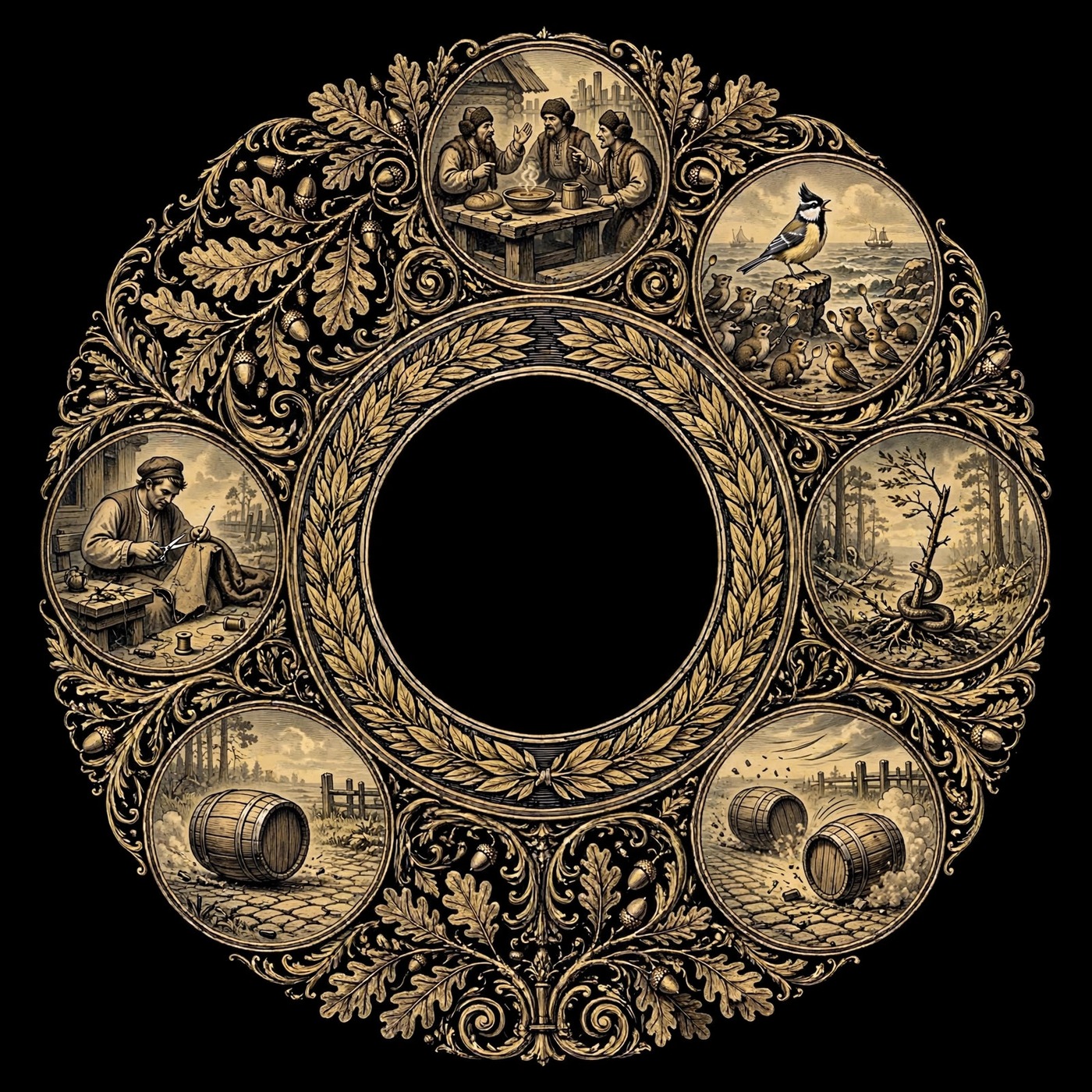
The Fables of Ivan Krylov — Episode Thirty-Six
Description
The Fables of Ivan Krylov — Episode Thirty-Six
Five fables by Ivan Krylov (1769–1844), in new English verse translations made for this show, read aloud over a gentle instrumental bed.
Three Peasants (Три Мужика, Book VIII, No. 23) — Three carters stop in a village for the night and are set one small bowl of cabbage soup, bread, and what is left of the porridge to share between them. The sharpest of the three sees how little there is for three, and — where force cannot take it, a little guile must try — starts his companions talking: Foma will be levied, there is a rumour of war with China, and the tribute is to be paid in tea. While the two literate peasants judge how the war should go and deploy their armies in words, he says nothing — and eats the soup and porridge all himself. Krylov's closing stanza is for the man who talks most willingly about what is none of his business.
The Titmouse (Синица, Book I, No. 15) — A Titmouse sets out to sea boasting that she will set the sea itself on fire, and the talk of it spreads through the world at once. Fear seizes Neptune's capital; birds fly in flocks and beasts run from the woods to watch how Ocean will burn, and lovers of feasting arrive first on the shore with spoons, hoping for a fish soup richer than any tax-farmer ever served. They wait, whispering that it will boil, that it will catch — and the sea does not burn, and does not even boil. The Titmouse swims home in shame: she made much fame, but never set the sea alight. Krylov's closing quatrain, touching no one's face, says why a deed unfinished is nothing to boast of.
The Tree (Дерево, Book III, No. 14) — A young Tree sees a Peasant carrying an axe and begs him: cut down the forest around me — I can see no sunlight, my roots have no room, the forest has woven vaults above me; in a year I would be the beauty of this country, and my shade would cover the whole valley, but now I am thin as a switch. The Peasant does it a friend's service and clears a great space — and the triumph is short: sun scorches it, hail and rain beat it, and the wind snaps it at last. There is no separate moral stanza; the Snake's closing speech tells the fallen Tree exactly whose doing its trouble was.
Trishka's Caftan (Тришкин кафтан, Book IV, No. 8) — Trishka's caftan has worn through at the elbows, so why think long? He takes his needle, cuts a quarter off each sleeve, and pays up his elbows: the caftan is ready — only his arms stand a quarter barer. Everyone laughs, so Trishka, no fool, will mend that trouble too: he cuts off the tails and skirts and lengthens the sleeves, and stands merry in a caftan longer than a camisole. Krylov's closing lines turn the same trick on certain gentlemen who tangle their affairs and then set them right.
The Two Barrels (Две Бочки, Book VI, No. 5) — Two Barrels travel the road: one with wine, plodding quietly at a small step; the other empty, rushing at a gallop with clatter and thunder along the paving, dust in a column, and passers-by hurrying aside in fright at the sound of it from afar. But loud as that Barrel is, its use is not as great as the first one's. Krylov's closing lines say who shouts about his deeds without ceasing — and that a great man is loud in his deeds alone, and thinks his strong thought without noise.
Krylov Fables.
KacheliTV — Russian classics, read aloud.