Episode Details
Back to Episodes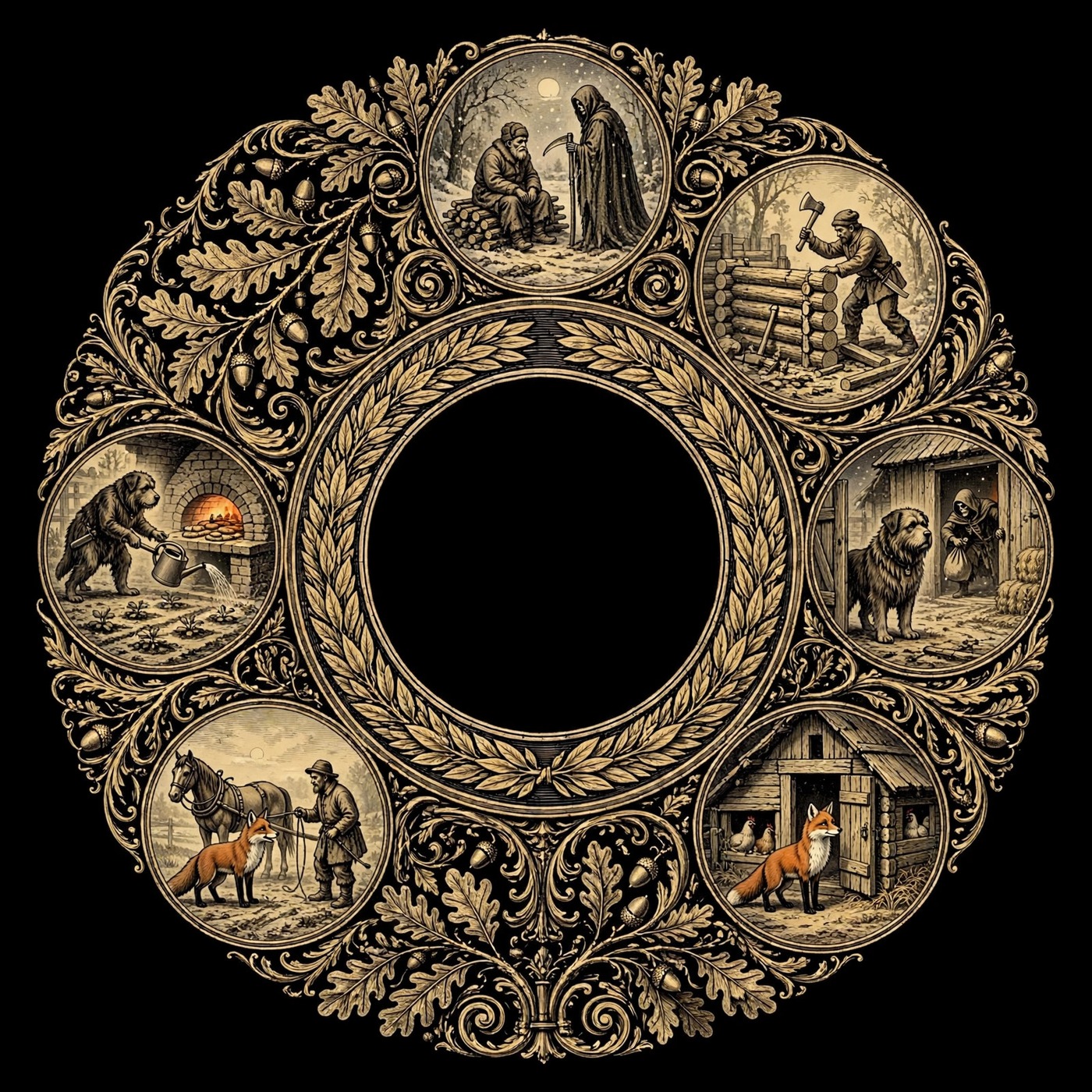
The Fables of Ivan Krylov — Episode Twenty-Seven
Description
The Fables of Ivan Krylov — Episode Twenty-Seven
Five fables by Ivan Krylov (1769–1844), in new English verse translations made for this show, read aloud over a gentle instrumental bed.
The Peasant and Death (Крестьянин и Смерть, Book V, No. 10) — An old man shrivelled by need and labour drags a heavy load of brushwood toward his smoky hut, sits down on it, and counts his miseries: want, a wife and children, the poll tax, the corvée, the rent — and not one joyful day in his life. In his despondency he calls on Death, and Death, who is never far away, comes at once. What the frightened old man asks of her is Krylov's gentle surprise, and the closing moral is for everyone: however sickening life may be, dying is sicker still.
The Peasant and the Axe (Крестьянин и Топор, Book V, No. 13) — A Peasant hewing logs for his hut grows angry with his Axe: he hews the nonsense himself, yet the Axe is to blame for everything. "Good-for-nothing!" he cries — from now on the Axe shall trim mere garden stakes, while he, with his skill and cleverness, will do with a simple knife what another man cannot hew with an axe. The Axe's humble answer, closing the fable, carries its whole warning about blunting a good tool for nothing.
The Peasant and the Dog (Крестьянин и Собака, Book IX, No. 6) — A great economist of a Peasant hires his Dog, Barbos, to guard the yard — and to bake the bread, and to weed and water the seedlings besides. Barbos takes on all of it and bargains for the wages of three. While the master is at the fair, everything fails at once: no bread, no seedlings, and a thief cleans out the storehouse. Barbos, of course, has an excuse ready for every failure, and each excuse is another of his jobs.
The Peasant and the Fox, from Book Three (Крестьянин и Лисица, Book III, No. 11) — Meeting the Fox, the Peasant pities her dangerous trade: is every hen worth risking her skin in the henhouse? The Fox swears she is honest at heart — it is need, and children, and besides, is she the only one who lives by theft? Moved, the Peasant offers her honest bread: let her guard his henhouse against foxes, for who knows foxes' tricks better than a Fox? She grows fat and well-fed, but not more honest, and Krylov's closing moral is the famous one: give a thief a million, and he will not stop stealing.
The Peasant and the Fox, from Book Eight (Крестьянин и Лисица, Book VIII, No. 15) — A different, much shorter fable with the same title. The Fox asks the Peasant how his horse has earned such friendship: she is always with him, kept in plenty and tender care, on the road and in the field — and yet she is just about the stupidest of all beasts. The Peasant's plain answer closes the fable and explains his whole philosophy: the strength is not in the mind at all — he needs her to carry him, and to obey the whip.
Krylov Fables.
KacheliTV — Russian classics, read aloud.