Episode Details
Back to Episodes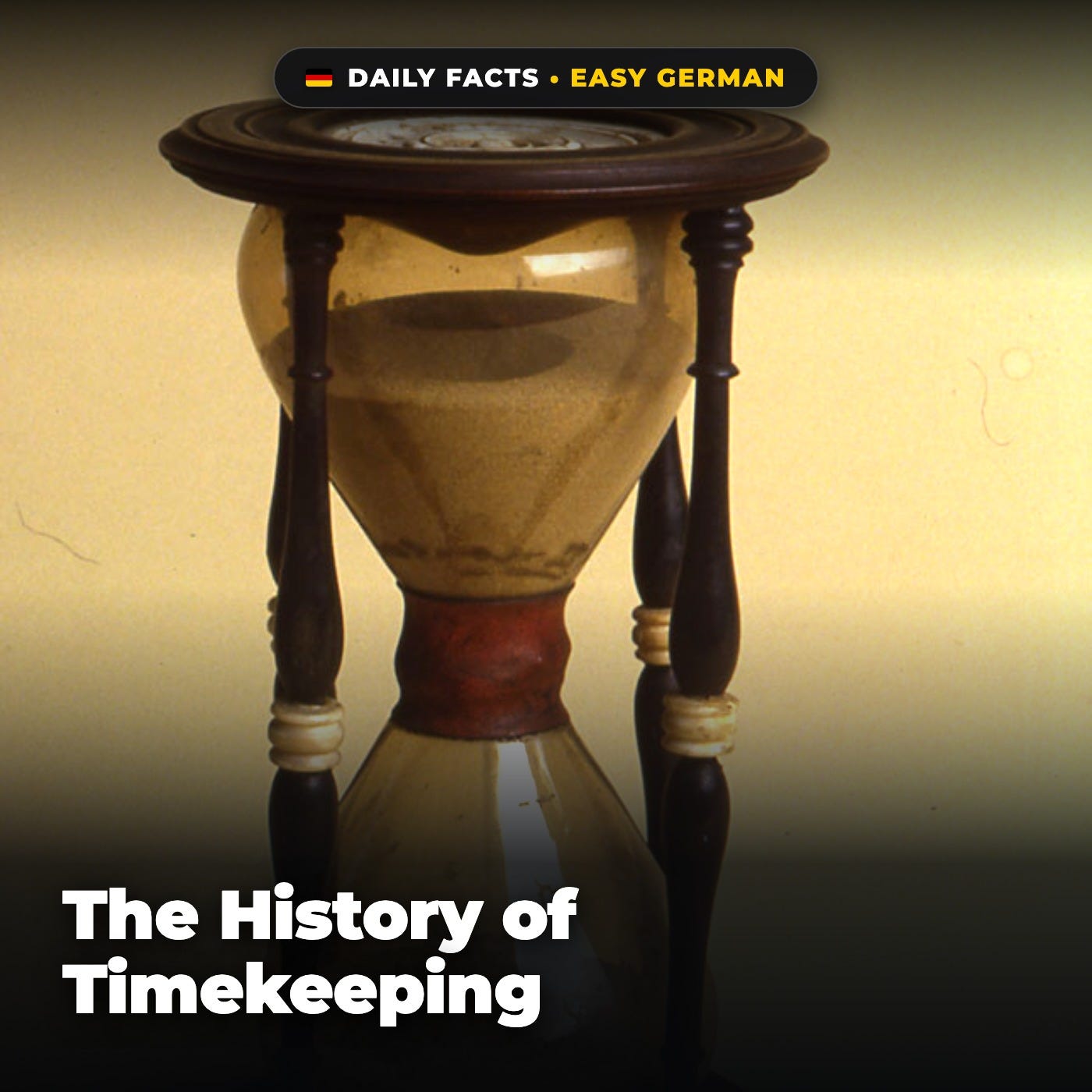
The History of Timekeeping in Easy German
Published 1 week, 5 days ago
Description
Transcription: https://dailyfactsineasygerman.substack.com/p/the-history-of-timekeeping-in-easy?showTranscript=true
Discover "The History of Timekeeping" in clear, natural German!
Look at your wrist and wonder: why do we divide our days into 24 hours and 60 minutes? Trace the evolution of human timekeeping from ancient sky-watchers to atomic precision.
Discover how ancient Egyptians used shadow sundials and the stars, how Babylonians gave us the base-60 system, and how mechanical pendulum clocks and modern quartz crystals transformed time into the heartbeat of civilization.
Key Topics & Highlights:
• Ancient Egyptians divided day and night into 12 hours each based on shadow sticks and star constellations.
• The 60-minute and 60-second divisions originate from the ancient Babylonian base-60 numbering system.
• Mechanical clocks with pendulums, invented by Christiaan Huygens in 1656, increased accuracy to seconds per day.
• Today's global time is synchronized using atomic clocks measuring the vibrations of cesium atoms.
Key German Vocabulary:
• die Zeit (time)
• die Uhr (clock / watch)
• die Stunde (hour)
• die Minute (minute)
Chapters:
00:00 - Introduction & Measuring Every Second
04:49 - Sundials, Water Clocks & Ancient Obelisks
10:50 - Mechanical Tower Clocks in Medieval Europe
14:53 - Marine Chronometers & Longitude at Sea
18:17 - Atomic Clocks & Modern Precision
Audio: 100% German • Spoken slowly and clearly (0.8x speed)
This is a public episode. If you would like to discuss this with other subscribers or get access to bonus episodes, visit dailyfactsineasygerman.substack.com