Episode Details
Back to Episodes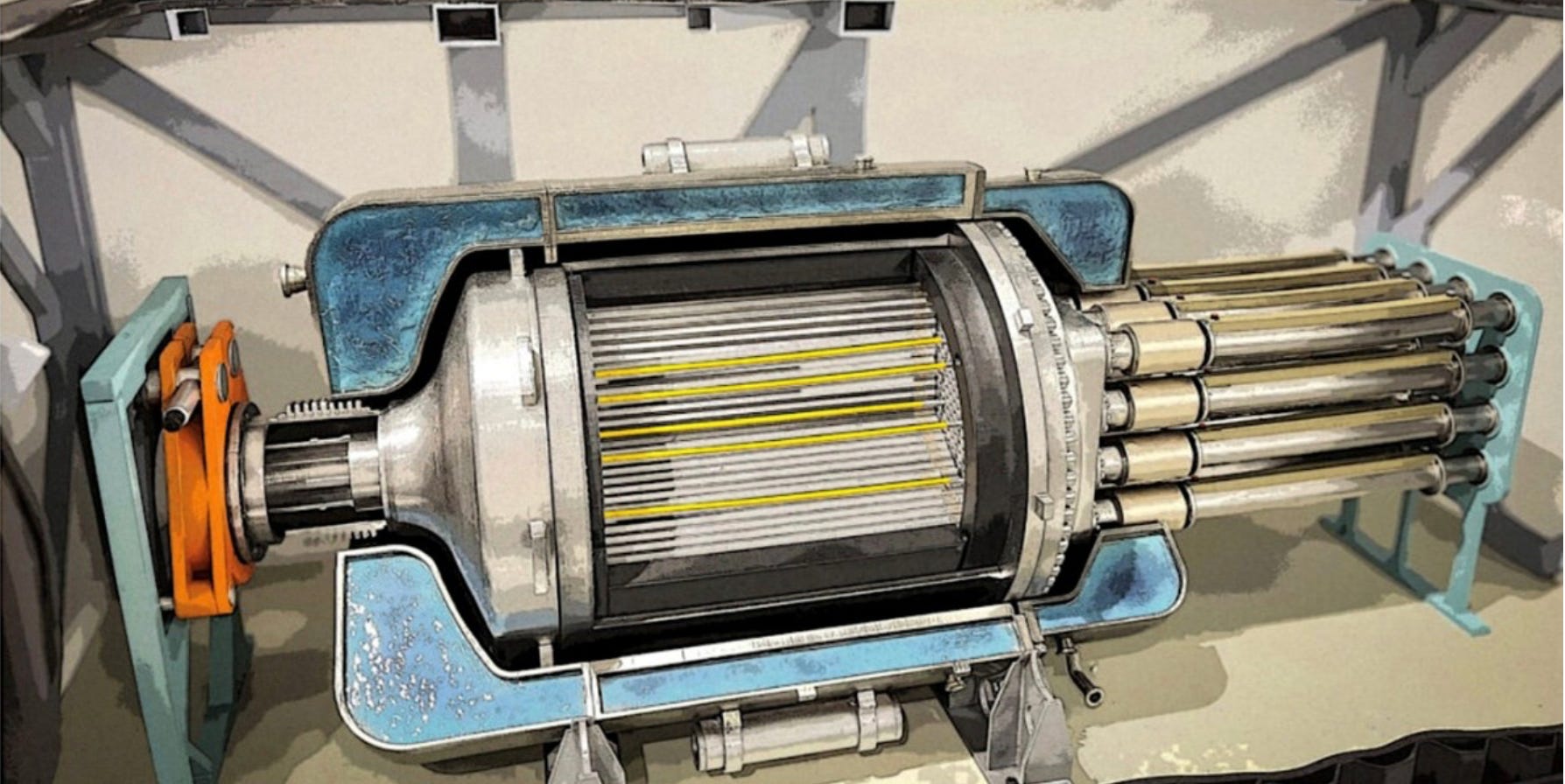
How the Project Pele Microreactor Works
Description
Pele is a transportable, high temperature, gas cooled reactor rated at 1.5 megawatts of electricity, fueled with 40,000 TRISO compacts that reached Idaho on November 5, 2025. It operates under Department of Energy authorization, outside Nuclear Regulatory Commission licensing. The prime contract, reported at about $300 million in June 2022, bought a prototype that now carries a three year schedule slip.
In August 2023 the program manager stated a goal of a running reactor at Idaho before the end of 2025. In late summer 2026 BWXT crews installed the core barrel in Lynchburg, Virginia, and the reactor has not yet shipped. Anyone planning a remote site, a campus microgrid, or an investment in advanced reactor suppliers is reading that gap between a 2025 promise and a 2027 shipment, whether they know it or not.
What Went into the Pele Core and Why Does TRISO Matter?
The Pele core is built from TRISO fuel, in which each uranium kernel carries its own containment. A kernel roughly a millimeter across is coated with a porous carbon buffer, an inner pyrolytic carbon layer, a layer of silicon carbide, and an outer pyrolytic carbon layer. The silicon carbide acts as a pressure vessel the size of a grain of sand.
Thousands of those particles are pressed into compacts held in graphite, and the graphite slows neutrons and carries heat while a gas pulls that heat to the power conversion equipment. The uranium is high assay low enriched, which means above 5 percent and below 20 percent in uranium 235, and a 2022 program announcement reported that BWXT would make the fuel from material in the Department of Energy highly enriched uranium inventory. Public sources do not state the enrichment.
As a nuclear trained submarine officer, I learned that every component of a submarine reactor plant earns a shock and tilt qualification before it reaches the boat. The Pele plant ships as four 20 foot ISO containers, and BWXT states that it meets shock and vibration requirements for truck, train, and aircraft transport. That requirement is the engineering demand I would watch most closely, because a reactor that gets lifted, trucked, and reassembled has no shipyard behind it.
Why Is the Pele Schedule Slipping Toward 2028?
No public document assigns the slip to one cause, and the milestone record shows where the time went. The Department of Energy authorized long lead items in December 2022. The system design review finished in August 2024. Ground broke at the Critical Infrastructure Test Range Complex on September 24, 2024. Core fabrication started in July 2025, fuel production finished in November 2025, and core stacking finished in June 2026.
The June 2022 award allotted two years to deliver a prototype. An earlier plan called for transport to Idaho in 2026, and the current plan ships the reactor in 2027, fuels it, and runs it for three years. Formal testing arrives as early as 2027 and electricity as soon as 2028. First of a kind fabrication of both the fuel and the core sits underneath every one of those dates. The 40,000 compacts have waited at Idaho since November 5, 2025 for a reactor to receive them, and each month of delay extends that wait while the fuel plant, the reactor builder, and the test site carry fixed costs.
What Does the Pele Contract Cost Per Megawatt Hour?
The reported contract value divides out to about $7,610 per megawatt hour. At 1.5 megawatts of continuous output the prototype generates 13,140 megawatt hours a year, or 39,420 over three years, and $300 million divided by 39,420 is $7,610.
That number mixes development, tooling, fuel qualification, and demonstration with generation, so it prices a prototype and says nothing about a production unit. BWXT asserts that the plant offsets up to 1.5 million gallons of diesel each year and removes hundreds of fuel truck deliveries. A utility or base commander cannot test those claims against a unit price, because none