Episode Details
Back to Episodes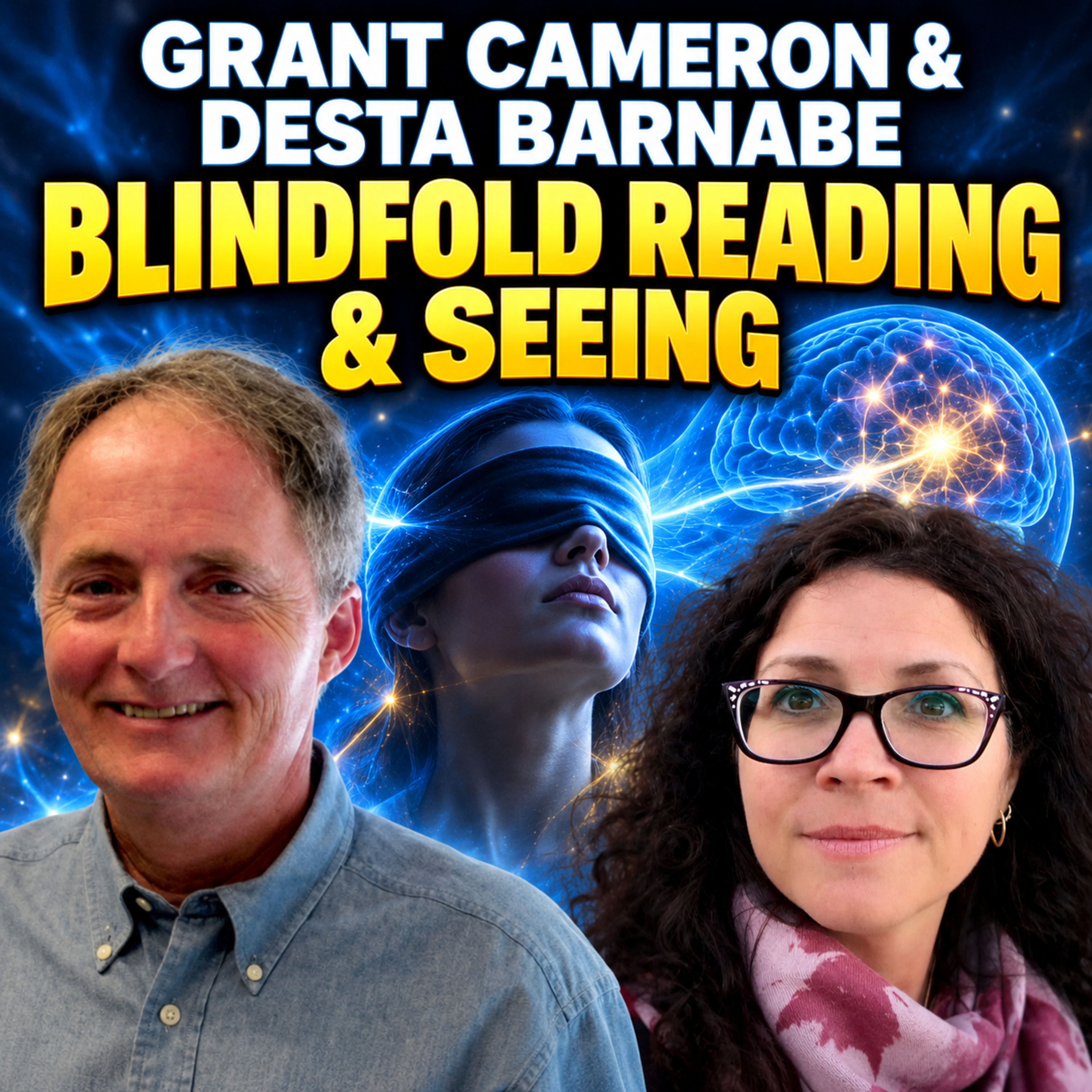
Grant Cameron and Desta Barnabe: Blindness, Blindfold Reading, and Seeing
Description
Canpeople who are blind learn to perceive colors, shapes, and theirsurroundings through methods other than ordinary eyesight? In thisfascinating discussion, Grant Cameron and Desta Barnabe exploreblindfold reading, intuitive perception, and the possibility thatpeople can develop unusual perceptual abilities through training andpractice.
Grantbegins by explaining his interest in investigating blindfold readingafter a podcaster challenged the practice, suggesting it could beexplained as a magic trick. Grant reasoned that working with peoplewho are completely blind could provide a particularly interesting wayto investigate these claims, since they cannot simply peek through ablindfold.
Destashares her experiences attending training sessions with Rob Freemanin London, Ontario, where she encountered four blind participants.The discussion includes stories about Kelly Greenway, a woman bornwithout eyes, who reportedly described colors and aspects of hersurroundings during interactions with Grant. He recounts instances inwhich she appeared to identify clothing colors, recognize objects,describe nearby buildings, and even help him navigate publictransportation.
Theconversation also explores another blind woman who believes colorscan be distinguished through their associated sensations orfrequencies. These accounts raise questions about how people perceivetheir environment and whether training can develop abilities beyondconventional expectations.
Destadescribes her own experiments with blindfold reading and extrasensoryperception (ESP). Using eye patches, a blindfold, and additionalcoverings, she practiced identifying colors and symbols on cards. Sherecounts occasions when she correctly identified a series of cardswhile her eyes were closed, including one reported run of 14consecutive correct answers.
However,Desta also expresses an important reservation. When participants wearblindfolds while their eyes remain open and light is present, shequestions whether the results demonstrate extrasensory perception orwhether ordinary vision could still play a role. For her, experimentsconducted without relying on physical eyesight would provide a morecompelling test.
Thediscussion touches on historical accounts of children reportedlyidentifying symbols through touch, remote viewing, dowsing,intuition, and the idea that consciousness may play a role inperception. Desta suggests that practice may help people become moresensitive to subtle cues, while distinguishing this possibility fromclaims of direct mind-based vision.
Grantand Desta conclude by discussing the possibility of conductingfurther demonstrations, including controlled tests involving colorsand cards.
Canblindfold reading reveal an overlooked human ability, or can thereported results be explained through conventional perception?Join Grant Cameron and Desta Barnabe as they examine theseintriguing experiences and consider what further testing mightreveal.