Episode Details
Back to Episodes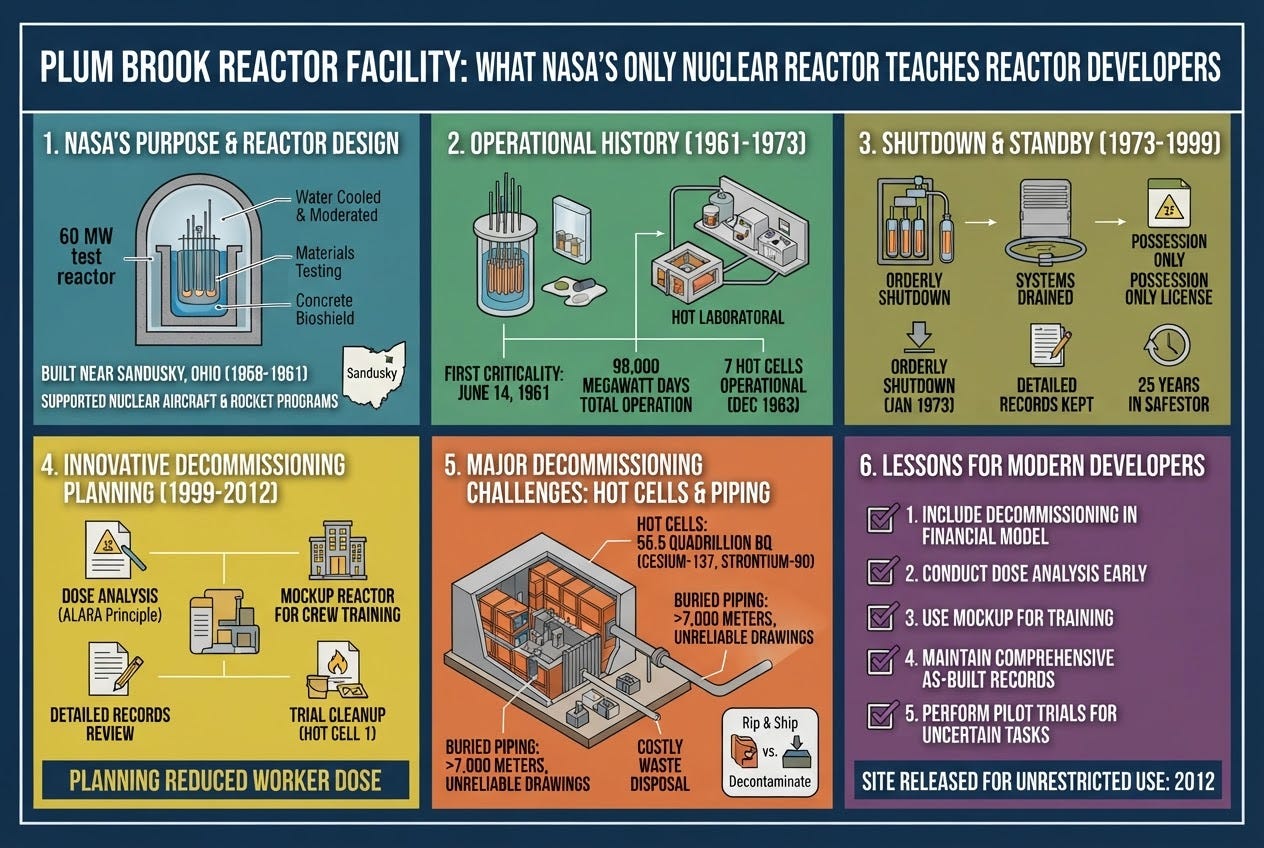
NASA’s Plum Brook Reactor
Description
NASA’s Plum Brook Reactor Facility in Ohio cost about $15 million to build and roughly $230 million to decommission before the Nuclear Regulatory Commission terminated its licenses in 2012.
Two causes explain the gap. The nuclear aircraft and nuclear rocket programs that justified the reactor ended by 1973, and the plant then idled for nearly 25 years under a possess but do not operate license. The cleanup work that remained sat in buried piping, activated steel, and hot cells that the records described poorly.
Plum Brook shows what the exit costs when the customer leaves, and why the exit belongs in the first financial model.
How Does a 60 Megawatt Test Reactor End Up With a $230 Million Exit Bill?
NASA bought the land near Sandusky in 1956 and built the reactor to test materials for a nuclear airplane. The airplane was cancelled in 1961, the reactor reached criticality on June 14, 1961 anyway, and it then served the nuclear rocket program. About two weeks after the last Apollo mission, NASA ordered it shut down. In roughly ten years it had produced about 98,000 megawatt days.
Then the facility waited. Under a possess but do not operate license, NASA carried the structures for nearly 25 years. A 2015 audit found that the reactor building alone carried about $12.86 million of deferred maintenance before demolition. NASA submitted its decommissioning plan under 10 CFR 50.82(b) on December 20, 1999, and the NRC approved it on March 20, 2002.
The decommissioning team projected about $230 million over 12 years. A later published tally says $253 million. I use the lower figure because it is the project’s own projection, and I flag the difference because I could not reconcile the two from the public record.
What Did the Reactor Vessel Cleanup Reveal About Dose Planning?
The vessel taught planners that a missing dose analysis costs more than the analysis. The open vessel read 11.0 millisieverts per hour at the top. The shielded work platform planners first chose would have left 0.5 millisieverts per hour where workers stood, and that failed the ALARA test. The replacement used three nested shrapnel shields of 18 metric tons each, and the general area dose rate fell to 20 microsieverts per hour.
Crews removed 36 metric tons of steel and aluminum in just over a year for a total work dose of 127 millisieverts, about one fifth of the platform plan. They had rehearsed on the 100 kilowatt Mockup Reactor, where the highest contact dose was 0.02 millisieverts per hour.
As a nuclear trained submarine officer aboard USS William H. Bates, I stood watches where the log was the only memory the plant had. Plum Brook’s 1973 shutdown teams kept the same kind of records, and 30 years later those records told planners that laboratory hoods had been cleaned. That single entry removed picric acid from the hazard list.
Why Do Buried Pipes and Hot Cells Decide the Final Cost?
Pipes and hot cells decided the final cost because they held contamination where drawings failed. The site carried more than 7,000 meters of piping reaching 17 meters below grade, and as built drawings for floor drains proved unreliable. Cleaning pipe in place cost about $75 to $125 per foot, and digging it out after a concrete cutout cost about $350 per foot. The in place method carried a projected saving of about $10 million.
The hot cells followed the same logic. In 2005 the team compared rip and ship disposal with decontaminating first. Studies showed little cost difference, so NASA tested the method on Hot Cell 1, about 40 percent of total cell area. It came in $1 million under the rip and ship estimate and avoided about 2.3 million kilograms of radioactive waste.
What Should Reactor Developers Price Before First Criticality?
Developers should price five items before first criticality: decommissioning funding under 10 CFR 50.75, a dose analysis for the end of life work, a mockup for crew