Episode Details
Back to Episodes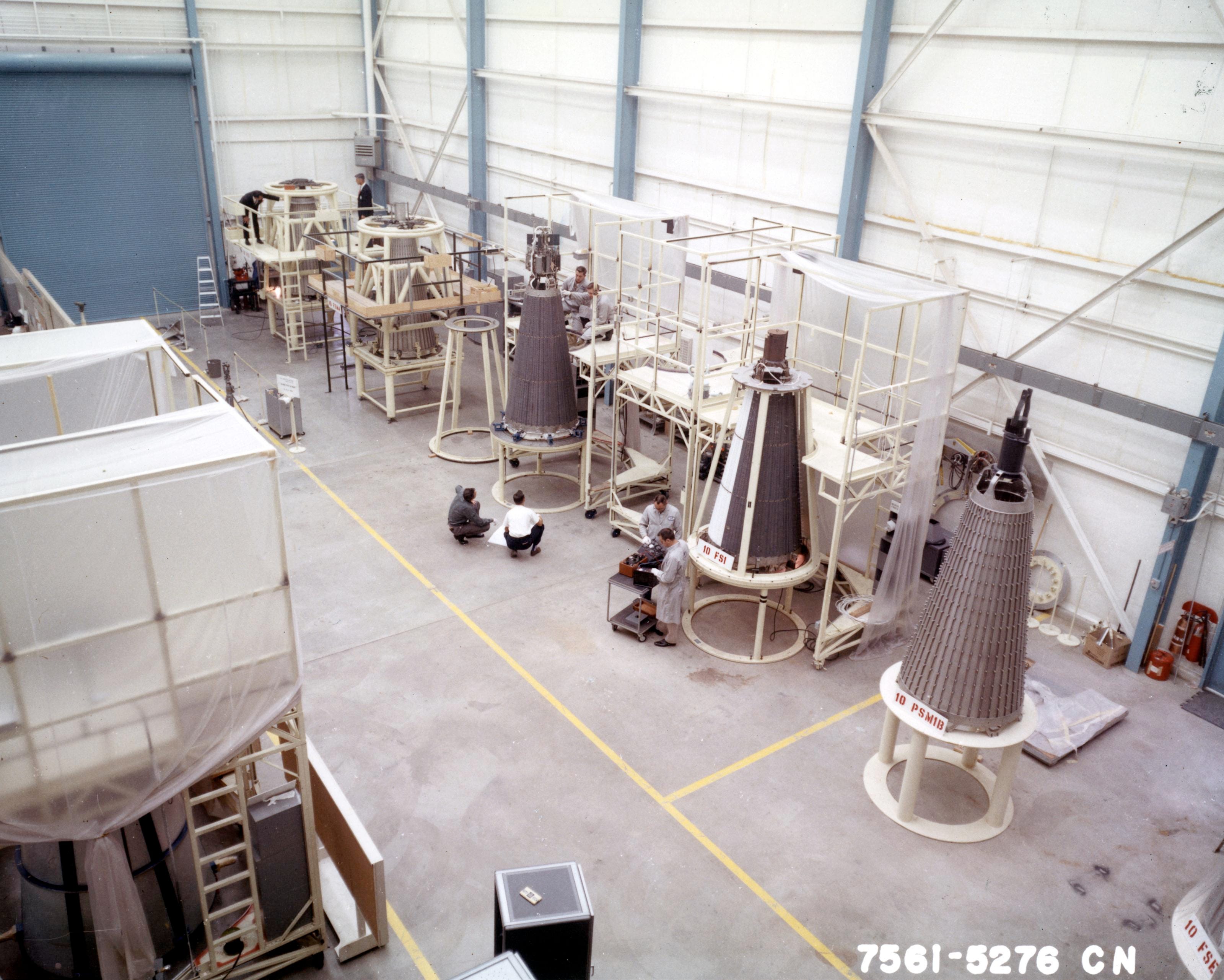
SNAP 10A Space Reactor
Description
The SNAP 10A reactor, launched April 3, 1965, remains the only American fission reactor operated in space, and a failed voltage regulator ended its mission after 43 days.
The cause sat outside the core. A voltage regulator on the Agena upper stage failed, the reactor shut itself down on May 16, 1965, and the design had no way to restart. The reactor still circles the Earth in a polar orbit near 1,300 kilometers, and it has been shedding debris since 1979.
Atomics International built it for the Atomic Energy Commission SNAP program. Thirty seven rods of uranium zirconium hydride made about 30 kilowatts of heat, a sodium potassium alloy carried that heat to silicon germanium thermoelectric junctions, and the system was meant to deliver 500 watts of electricity for a year. Output after the remote startup in orbit beat that goal.
Why Did a Voltage Regulator Kill a Working Reactor?
A fault in the Agena spacecraft, which carried the reactor, tripped the reactor’s automatic shutdown on day 43. Accounts differ on whether the culprit was a high voltage failure, a failed regulator, or bad commands. They agree that the reactor itself was healthy.
The shutdown worked as designed, and that is the problem. It ejected the reflector, the material that bounces neutrons back into the core, and a core without its reflector cannot sustain a chain reaction. Nothing in the design allowed that reflector to return. In my years as a nuclear trained submarine officer, a plant trip from a nonnuclear cause such as a power supply fault came with a recovery procedure written long before the trip occurred. SNAP 10A had a safe stop and no way back.
How Did Engineers Make a Launched Reactor Safe?
They destroyed prototypes and started the reactor only after it reached orbit. In 1962 the Air Force ran 14 tests at Holloman Air Force Base, burning reactor hardware in fire at 4,500 degrees Fahrenheit, dropping it onto concrete at about 80 feet per second, and driving it into water at up to 596 feet per second. At 560 feet per second on concrete the assembly disintegrated, and the report could not say whether a nuclear excursion occurred. In water the core vessel survived.
The report also lists what the engineers could not measure. Instruments failed or were missing in several tests, and the authors asked for position sensors on the control drums and break wires on the reflector band. Because the reactor started only in orbit, the core held no fission products at launch. That one decision removed the worst launch accident case.
Why Is the Reactor Still a Problem in Orbit Today?
The reactor sits at an altitude where estimates of its orbital lifetime run to about 1,000 years, and it has been shedding pieces since November 1979. The U.S. Space Surveillance Network tracks 51 objects from it, and radar measurements published in 2006 found at least 60 more fragments, all but two smaller than 10 centimeters. No one has established the cause. A collision is one candidate.
The radioactive hazard is small. Thirty kilowatts for 43 days fissions no more than about 1.4 grams of uranium 235, my own arithmetic at 200 million electron volts per fission and full power every day. The hazard is mechanical, because every fragment adds to the debris population in a busy polar orbit band. Soviet reactors from the same era produced a separate problem, with ejected cores venting liquid NaK coolant as droplets that NASA has modeled as their own debris population.
What Should Reactor Developers Take From SNAP 10A?
The lesson is that a space reactor is judged as a complete system and an end of life plan. The reactor core ran well. The mission ended because of a part the core did not contain, and the reactor was left in an orbit that no policy then required anyone to leave.
Policy now asks the question SNAP 10A never faced. Space Policy Directive 6 of December 16, 2020, requires a low Earth orbit reactor t