Episode Details
Back to Episodes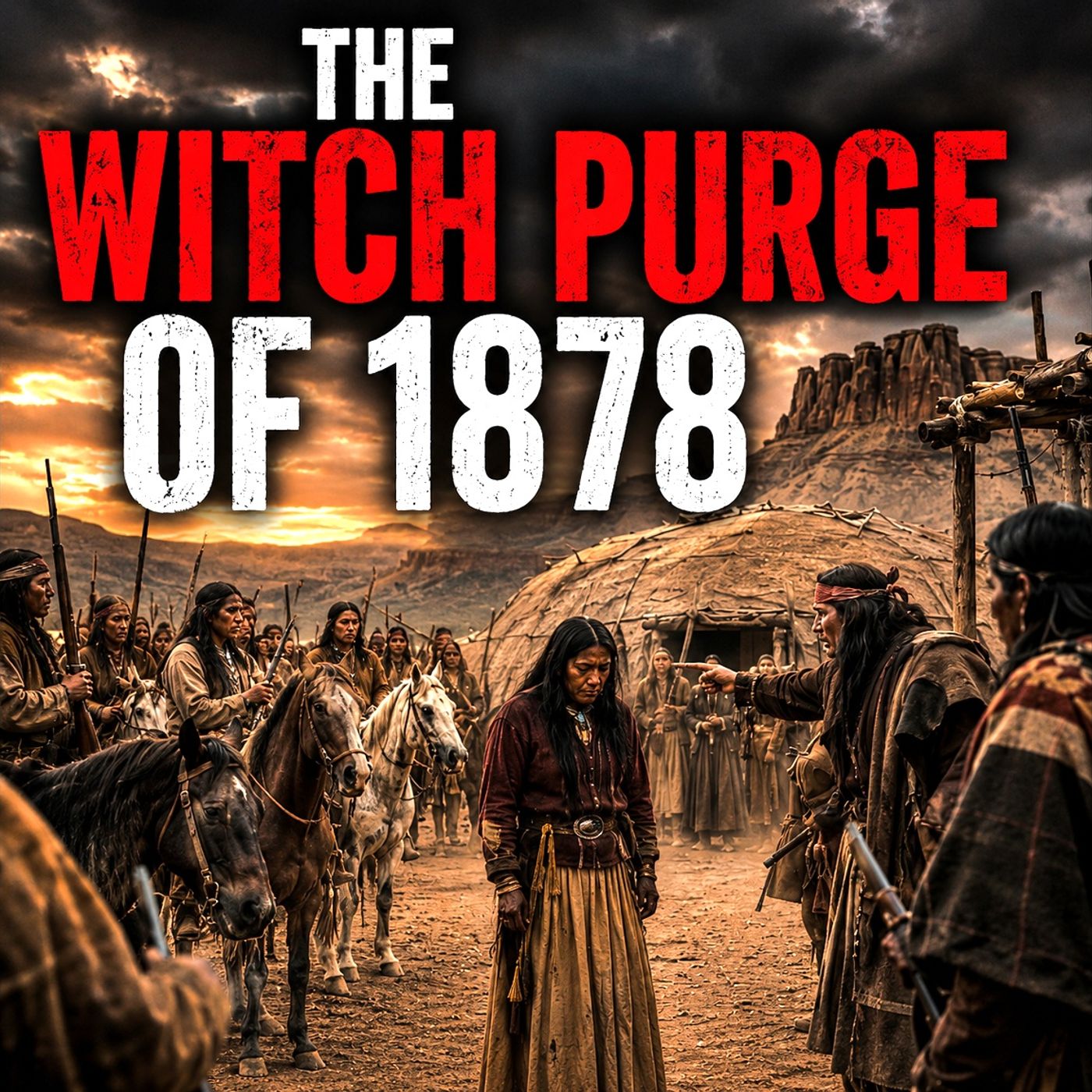
The Witch Purge of 1878
Published 1 week, 1 day ago
Description
Links For The Occult Rejects
https://linktr.ee/theoccultrejects
Occult Research Institute
https://www.occultresearchinstitute.org/
Substack
https://substack.com/@theoccultrejects?r=7auau0&utm_campaign=profile&utm_medium=profile-page
Cash App
https://cash.app/$theoccultrejects
Venmo
@TheOccultRejects
Patreon
https://www.patreon.com/TheOccultRejects
BIBLIOGRAPHY
Core Source on the 1878 Purge
Blue, Martha. The Witch Purge of 1878: Oral and Documentary History in the Early Navajo Reservation Years. Navajo Oral History Monograph Series, No. 1. Tsaile, Arizona: Navajo Community College Press, 1988.
This is the single most important source for the episode. Blue combines documentary records from 1878 with later Diné oral histories and specifically investigates the Ganado-area killings, Hastiin Biwosi, Ganado Mucho, American intervention, accusations against medicine men, and the larger early-reservation crisis. The book is 35 pages and was published by Navajo Community College Press.
Blue also reproduces or discusses several near-contemporary sources that we relied upon through her work, including Charles Hubbell’s May 31, 1878 correspondence, Indian Agent John E. Pyle’s diary, Lieutenant McGunnigle’s 1878 military report, Fort Wingate correspondence connected with Lieutenant Colonel P. T. Swaine, and later Diné oral histories including the 1970 Amos Johnson interview. I would cite these through Blue unless we obtain the original archival documents themselves, rather than pretending we consulted originals we did not.
Diné Witchcraft and Accusation
Kluckhohn, Clyde. Navaho Witchcraft. Papers of the Peabody Museum of American Archaeology and Ethnology, Harvard University, Vol. 22, No. 2. Cambridge, Massachusetts: Peabody Museum, 1944.
This is the major source behind our discussion of different categories of harmful supernatural practice, accusations involving ceremonial specialists, supernatural projectiles, personal materials, confession, interrogation, punishment, jealousy, reputation, and the later memory of the post–Fort Sumner period as one of heightened witchcraft accusations. Harvard’s Peabody Museum confirms the original 1944 publication details.
Important production note: Kluckhohn was researching decades after 1878, so in the script his material should continue to be introduced as later ethnographic evidence about the wider Diné belief system, not as eyewitness testimony from the purge.
Diné History and the Early Reservation Years
Iverson, Peter. Diné: A History of the Navajos. Photographs by Monty Roessel. Albuquerque: University of New Mexico Press, 2002.
Extremely useful for placing the purge inside the larger history of the return from Bosque Redondo, economic hardship, early reservation life, accusations of harmful witchcraft, and the later recovery of stability. University of New Mexico Press describes the book as drawing from archival research, traditional accounts, interviews, and historical material.
Spicer, Edward H. Cycles of Conquest: The Impact of Spain, Mexico, and the United States on the Indians of the Southwest, 1533–1960. Tucson: University of Arizona Press, 1962.
Used particularly for the larger political interpretation involving Manuelito, Ganado Mucho, raiding, livestock theft, early reservation governance, and efforts to suppress renewed depredations. Spicer is useful precisely because his interpretation does not always line up perfectly with Blue or Kluckhohn, allowing us to show that historians have disagreed about exactly how political the purge was.
Witch Hunts in the Wider American Context
Davies, Owen. America Bewitched: The Story of Witchcraft After Salem. Oxford: Oxford University Press, 2013.
Useful for comparing the Navajo purge with the broader persistence of witchcraft accusations and witch killings in the United States
https://linktr.ee/theoccultrejects
Occult Research Institute
https://www.occultresearchinstitute.org/
Substack
https://substack.com/@theoccultrejects?r=7auau0&utm_campaign=profile&utm_medium=profile-page
Cash App
https://cash.app/$theoccultrejects
Venmo
@TheOccultRejects
Patreon
https://www.patreon.com/TheOccultRejects
BIBLIOGRAPHY
Core Source on the 1878 Purge
Blue, Martha. The Witch Purge of 1878: Oral and Documentary History in the Early Navajo Reservation Years. Navajo Oral History Monograph Series, No. 1. Tsaile, Arizona: Navajo Community College Press, 1988.
This is the single most important source for the episode. Blue combines documentary records from 1878 with later Diné oral histories and specifically investigates the Ganado-area killings, Hastiin Biwosi, Ganado Mucho, American intervention, accusations against medicine men, and the larger early-reservation crisis. The book is 35 pages and was published by Navajo Community College Press.
Blue also reproduces or discusses several near-contemporary sources that we relied upon through her work, including Charles Hubbell’s May 31, 1878 correspondence, Indian Agent John E. Pyle’s diary, Lieutenant McGunnigle’s 1878 military report, Fort Wingate correspondence connected with Lieutenant Colonel P. T. Swaine, and later Diné oral histories including the 1970 Amos Johnson interview. I would cite these through Blue unless we obtain the original archival documents themselves, rather than pretending we consulted originals we did not.
Diné Witchcraft and Accusation
Kluckhohn, Clyde. Navaho Witchcraft. Papers of the Peabody Museum of American Archaeology and Ethnology, Harvard University, Vol. 22, No. 2. Cambridge, Massachusetts: Peabody Museum, 1944.
This is the major source behind our discussion of different categories of harmful supernatural practice, accusations involving ceremonial specialists, supernatural projectiles, personal materials, confession, interrogation, punishment, jealousy, reputation, and the later memory of the post–Fort Sumner period as one of heightened witchcraft accusations. Harvard’s Peabody Museum confirms the original 1944 publication details.
Important production note: Kluckhohn was researching decades after 1878, so in the script his material should continue to be introduced as later ethnographic evidence about the wider Diné belief system, not as eyewitness testimony from the purge.
Diné History and the Early Reservation Years
Iverson, Peter. Diné: A History of the Navajos. Photographs by Monty Roessel. Albuquerque: University of New Mexico Press, 2002.
Extremely useful for placing the purge inside the larger history of the return from Bosque Redondo, economic hardship, early reservation life, accusations of harmful witchcraft, and the later recovery of stability. University of New Mexico Press describes the book as drawing from archival research, traditional accounts, interviews, and historical material.
Spicer, Edward H. Cycles of Conquest: The Impact of Spain, Mexico, and the United States on the Indians of the Southwest, 1533–1960. Tucson: University of Arizona Press, 1962.
Used particularly for the larger political interpretation involving Manuelito, Ganado Mucho, raiding, livestock theft, early reservation governance, and efforts to suppress renewed depredations. Spicer is useful precisely because his interpretation does not always line up perfectly with Blue or Kluckhohn, allowing us to show that historians have disagreed about exactly how political the purge was.
Witch Hunts in the Wider American Context
Davies, Owen. America Bewitched: The Story of Witchcraft After Salem. Oxford: Oxford University Press, 2013.
Useful for comparing the Navajo purge with the broader persistence of witchcraft accusations and witch killings in the United States