Episode Details
Back to Episodes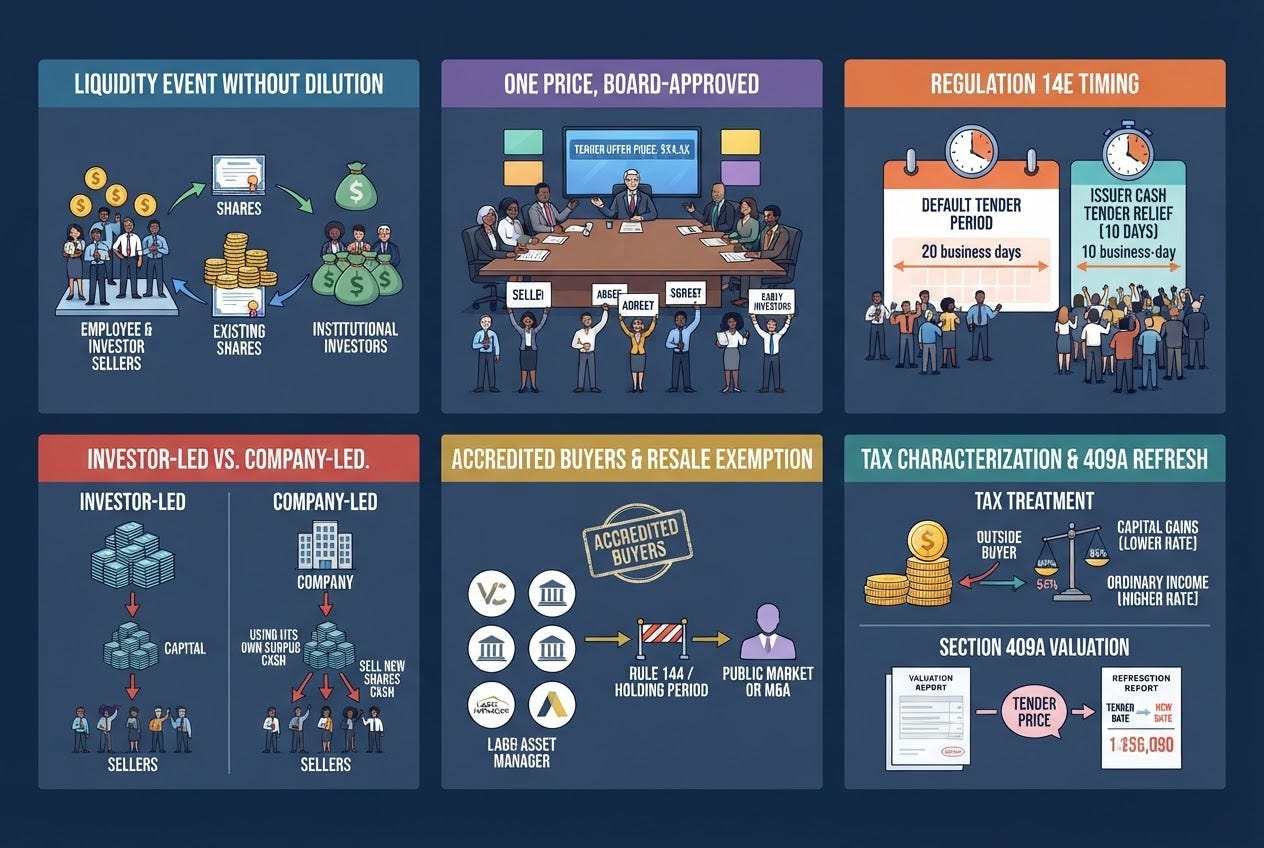
How To Structure a Startup Tender Offer Without a Primary Round
Description
A founder can give employees and early investors liquidity without a primary round by running a tender offer, as ElevenLabs did on September 30, 2026 at a $22 billion valuation. The $300 million sale doubled the $11 billion valuation set in the February 2026 Series D, and Wellington and T. Rowe Price led the buyers. The structure works when outside investors buy existing shares at one price, the board clears investor consents before launch, and the tax and option pricing consequences are settled first. Buyers purchasing existing shares add no dilution for the holders who stay.
Most founders plan a tender around the securities rules and miss the clock that the tax rules start. Once investors pay $22 billion for a company whose last primary round priced it at $11 billion, that price is information a Section 409A valuation must reflect, and an option granted the following week at the old strike price hands the IRS an exhibit against the company. One trade report renders the tender amount in pounds in one passage; this piece uses the dollar figure, which matches the headline and the valuation.
What securities rules govern a private company tender offer?
Regulation 14E governs every tender offer, including those by private companies, and Rule 14e-1 requires 20 business days. SEC staff relief dated April 16, 2026 allows 10 business days for non reporting issuer cash tenders at a fixed price.
Rule 13e-4 reaches only registered or reporting issuers, so a private company files no Schedule TO, but Section 14(e) still forbids material misstatements in the offer memorandum. Sellers rely on Section 4(a)(7) of the Securities Act, which requires accredited buyers, no general solicitation, a class outstanding at least 90 days, and no bad actor disqualification. Institutions like the ones that joined this deal meet that test. The relief as summarized covers only offers by the issuer, so a founder who wants ten business days runs an issuer tender and takes on the surplus test described below.
In my practice the document that sets the closing date is rarely the offer memorandum. It is the last waiver of a right of first refusal or co sale right, because each investor reads the notice period in its own favor.
How should a founder set price, eligibility, and board approval?
A company repurchase is lawful only out of surplus under DGCL Section 160(a)(1), so the board must confirm surplus at the tender price before the company buys a single share.
One price for every seller is the market norm. Tendering common or older preferred typically carries a 5 percent to 20 percent discount to the latest preferred price, yet tenders at least one year after a primary round showed a median discount of 0 percent in each of the last five semiannual periods. Current employees often need two years of tenure and sell up to 20 percent of vested holdings, former employees and investors often sell up to 100 percent, and founders often carry a separate proceeds cap.
Directors and officers who sell have a personal interest in those numbers. DGCL Section 144, as amended in 2025, supplies safe harbor procedures, and the Delaware Supreme Court upheld the amendments on February 27, 2026 in Rutledge v. Clearway Energy Group LLC. Approval by disinterested directors is the cleaner record. Stripe showed a hybrid on February 24, 2026: outside investors funded most of a tender at a $159 billion valuation while the company repurchased some shares itself, which capped the cash leaving the balance sheet.
Who pays tax, and at what rate?
A seller pays long term capital gain at a top federal rate of 20 percent on a bona fide investment sale, and ordinary income at up to 37 percent plus payroll tax on any premium treated as compensation under IRC Section 83.
No regulation says when a premium becomes compensation. Counsel weighs who the buyer is, who the sellers are, and which class is sold. An outside investor buy