Episode Details
Back to Episodes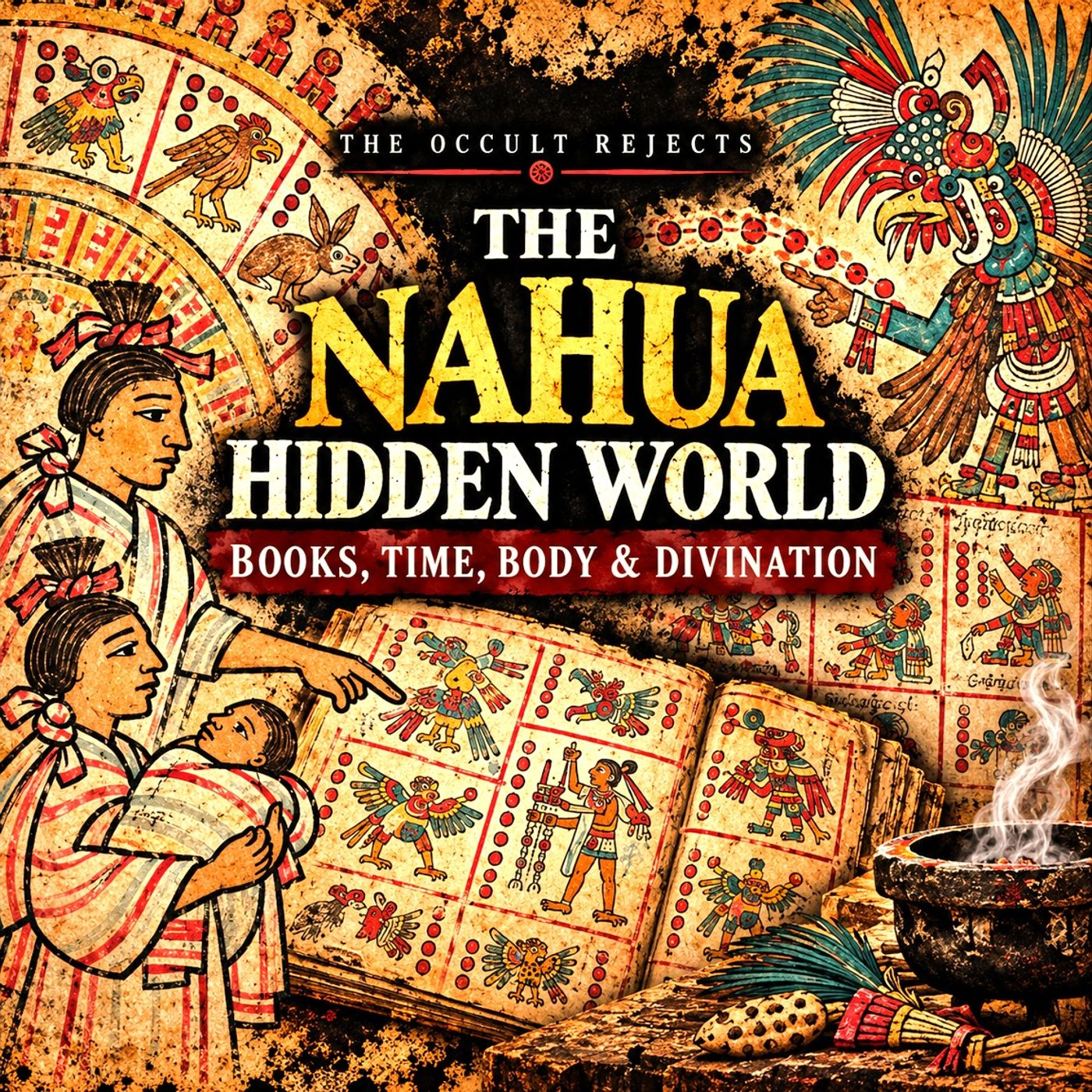
The Nahua Hidden World Part 1: Books, Time, Body & Divination
Published 1 week, 4 days ago
Description
Links For The Occult Rejects
https://linktr.ee/theoccultrejects
Occult Research Institute
https://www.occultresearchinstitute.org/
Substack
https://substack.com/@theoccultrejects?r=7auau0&utm_campaign=profile&utm_medium=profile-page
Cash App
https://cash.app/$theoccultrejects
Venmo
@TheOccultRejects
Patreon
https://www.patreon.com/TheOccultRejects
BibliographyPrimary and Digital SourcesInstituto Nacional de Antropología e Historia (INAH). “Confirman antigüedad prehispánica del Códice Tonalámatl de Aubin.” Boletín 402, August 31, 2026.Instituto Nacional de Antropología e Historia (INAH). Tonalámatl de Aubin. Codices of Mexico Digital Catalog.Sahagún, Bernardino de, Antonio Valeriano, Alonso Vegerano, Martín Jacobita, Pedro de San Buenaventura, Diego de Grado, Bonifacio Maximiliano, Mateo Severino, et al. Historia general de las cosas de Nueva España (Florentine Codex). Ms. Mediceo Palatino 218–20. Biblioteca Medicea Laurenziana, Florence, 1577. Digital Florentine Codex / Códice Florentino Digital. Edited by Kim N. Richter, Alicia Maria Houtrouw, Kevin Terraciano, Jeanette Favrot Peterson, Diana Magaloni, and Lisa Sousa. Los Angeles: Getty Research Institute, 2023.Nahua Religion, Calendrics, Personhood, and DivinationDehouve, Danièle. “Embedded Glottograms in the Images of the Gods in Ancient Central Mexico.” Ancient Mesoamerica 36, no. 2 (2025): 242–263. https://doi.org/10.1017/S0956536125100758.Díaz Álvarez, Ana. “Tlapohualli, la cuenta de las cosas. Reflexiones en torno a la reconstrucción de los calendarios nahuas.” Estudios de Cultura Náhuatl 44 (2012).Dupey García, Élodie. “Rethinking the Reverse of the Codex Cospi: Ritual Offerings to Divine Effigies in Temples.” Ancient Mesoamerica. Published online July 20, 2026.González Torres, Yólotl. “La adivinación por medio del maíz.” Estudios de Cultura Náhuatl 48 (2014): 213–233.Kruell, Gabriel Kenrick. “Algunas precisiones terminológicas sobre el calendario náhuatl.” Estudios de Cultura Náhuatl 54 (2017): 135–164.López Austin, Alfredo. “Cuarenta clases de magos del mundo náhuatl.” Estudios de Cultura Náhuatl 7 (1967): 87–117.Madajczak, Julia. “Life-Giver: The Pre-Hispanic Nahua Concept of ‘Father’ through Colonial Written Sources.” Ancient Mesoamerica 28, no. 2 (2017): 371–381. https://doi.org/10.1017/S0956536117000086.Martínez González, Roberto. El nahualismo. Antropológica 19. Mexico City: Universidad Nacional Autónoma de México, Instituto de Investigaciones Históricas, 2016.Olko, Justyna, and Julia Madajczak. “An Animating Principle in Confrontation with Christianity? De(re)constructing the Nahua ‘Soul.’” Ancient Mesoamerica 30, no. 1 (2019): 75–88. https://doi.org/10.1017/S0956536118000329.Rojas, Araceli. “Casting Maize Seeds in an Ayöök Community: An Approach to the Study of Divination in Mesoamerica.” Ancient Mesoamerica 27, no. 2 (2016): 461–478.Ritual, Sound, and Embodied PracticeBrylak, Agnieszka. “Some Remarks on the Teponazcuicatl of the Pre-Hispanic Nahua.” Ancient Mesoamerica 27, no. 2 (2016).Morado Hernández, Elías Israel. “Una aproximación al Códice florentino desde la escucha.” Anales del Instituto de Investigaciones Estéticas 47, no. 127 (2025).Seligman, Rebecca, and Ryan A. Brown. “Theory and Method at the Intersection of Anthropology and Cultural Neuroscience.” Social Cognitive and Affective Neuroscience 5, nos. 2–3 (2010): 130–137. https://doi.org/10.1093/scan/nsp032.Obsidian Mirrors, Tezcatlipoca, and Visual PerceptionCampbell, Stuart, Elizabeth Healey, Yaroslav Kuzmin, and Michael D. Glascock. “The Mirror, the Mag
https://linktr.ee/theoccultrejects
Occult Research Institute
https://www.occultresearchinstitute.org/
Substack
https://substack.com/@theoccultrejects?r=7auau0&utm_campaign=profile&utm_medium=profile-page
Cash App
https://cash.app/$theoccultrejects
Venmo
@TheOccultRejects
Patreon
https://www.patreon.com/TheOccultRejects
BibliographyPrimary and Digital SourcesInstituto Nacional de Antropología e Historia (INAH). “Confirman antigüedad prehispánica del Códice Tonalámatl de Aubin.” Boletín 402, August 31, 2026.Instituto Nacional de Antropología e Historia (INAH). Tonalámatl de Aubin. Codices of Mexico Digital Catalog.Sahagún, Bernardino de, Antonio Valeriano, Alonso Vegerano, Martín Jacobita, Pedro de San Buenaventura, Diego de Grado, Bonifacio Maximiliano, Mateo Severino, et al. Historia general de las cosas de Nueva España (Florentine Codex). Ms. Mediceo Palatino 218–20. Biblioteca Medicea Laurenziana, Florence, 1577. Digital Florentine Codex / Códice Florentino Digital. Edited by Kim N. Richter, Alicia Maria Houtrouw, Kevin Terraciano, Jeanette Favrot Peterson, Diana Magaloni, and Lisa Sousa. Los Angeles: Getty Research Institute, 2023.Nahua Religion, Calendrics, Personhood, and DivinationDehouve, Danièle. “Embedded Glottograms in the Images of the Gods in Ancient Central Mexico.” Ancient Mesoamerica 36, no. 2 (2025): 242–263. https://doi.org/10.1017/S0956536125100758.Díaz Álvarez, Ana. “Tlapohualli, la cuenta de las cosas. Reflexiones en torno a la reconstrucción de los calendarios nahuas.” Estudios de Cultura Náhuatl 44 (2012).Dupey García, Élodie. “Rethinking the Reverse of the Codex Cospi: Ritual Offerings to Divine Effigies in Temples.” Ancient Mesoamerica. Published online July 20, 2026.González Torres, Yólotl. “La adivinación por medio del maíz.” Estudios de Cultura Náhuatl 48 (2014): 213–233.Kruell, Gabriel Kenrick. “Algunas precisiones terminológicas sobre el calendario náhuatl.” Estudios de Cultura Náhuatl 54 (2017): 135–164.López Austin, Alfredo. “Cuarenta clases de magos del mundo náhuatl.” Estudios de Cultura Náhuatl 7 (1967): 87–117.Madajczak, Julia. “Life-Giver: The Pre-Hispanic Nahua Concept of ‘Father’ through Colonial Written Sources.” Ancient Mesoamerica 28, no. 2 (2017): 371–381. https://doi.org/10.1017/S0956536117000086.Martínez González, Roberto. El nahualismo. Antropológica 19. Mexico City: Universidad Nacional Autónoma de México, Instituto de Investigaciones Históricas, 2016.Olko, Justyna, and Julia Madajczak. “An Animating Principle in Confrontation with Christianity? De(re)constructing the Nahua ‘Soul.’” Ancient Mesoamerica 30, no. 1 (2019): 75–88. https://doi.org/10.1017/S0956536118000329.Rojas, Araceli. “Casting Maize Seeds in an Ayöök Community: An Approach to the Study of Divination in Mesoamerica.” Ancient Mesoamerica 27, no. 2 (2016): 461–478.Ritual, Sound, and Embodied PracticeBrylak, Agnieszka. “Some Remarks on the Teponazcuicatl of the Pre-Hispanic Nahua.” Ancient Mesoamerica 27, no. 2 (2016).Morado Hernández, Elías Israel. “Una aproximación al Códice florentino desde la escucha.” Anales del Instituto de Investigaciones Estéticas 47, no. 127 (2025).Seligman, Rebecca, and Ryan A. Brown. “Theory and Method at the Intersection of Anthropology and Cultural Neuroscience.” Social Cognitive and Affective Neuroscience 5, nos. 2–3 (2010): 130–137. https://doi.org/10.1093/scan/nsp032.Obsidian Mirrors, Tezcatlipoca, and Visual PerceptionCampbell, Stuart, Elizabeth Healey, Yaroslav Kuzmin, and Michael D. Glascock. “The Mirror, the Mag